Swarmhit vs Waalaxy
Waalaxy makes freemium LinkedIn automation genuinely easy: pick a template, launch, done. Swarmhit keeps the ease and removes the ceiling: sequences you design yourself, campaigns that rotate across every sender, one inbox for the whole team, and AI that actually reads the prospect.
- Custom sequences, not templates
- Multi-sender campaigns
- From $29/month per sender
Swarmhit
$29/mo
Per sender, annual billing
$39 monthly, every feature on every plan.
Waalaxy
$19 to $69/mo
Per user by tier; invite quotas and email features unlock as you pay up.
Swarmhit
1B+
Contacts, 60M companies
Native database, refreshed weekly, with free monthly credits.
Waalaxy
Import only
LinkedIn searches, your network or CSV; email finder on per-lookup credits.
Swarmhit
7
LinkedIn action types
Invites, messages, InMail, voice notes, post comments, profile visits, follows.
Waalaxy
4
Action types on Waalaxy.
Swarmhit
1
Unified inbox across all senders
Assignment and interest tags; reply on behalf of any sender.
Waalaxy
Per account
Unified access needs paid add-ons; teammates cannot reply for each other.
How does Waalaxy compare to Swarmhit?
Swarmhit
Waalaxy
Build campaigns
Run multiple senders
Manage replies
Find prospects
Stay safe and connected
Pricing
Comparison data last verified on 10 August 2026.
3 reasons to choose Swarmhit over Waalaxy
Build your own logic
Waalaxy campaigns start from a prebuilt template list; you pick the closest match. Swarmhit gives you a visual builder where you draw the sequence you actually want, with branches on connection status and replies.
Every sender, one workspace
Waalaxy runs one LinkedIn account per seat with no rotation. Swarmhit rotates one campaign across your whole sender pool and lands every reply in one inbox the team shares.
Personalization beyond variables
Waalaxy fills templates with variables and a prompt-based AI writer. Swarmhit's AI reads each prospect's profile, posts, and company news, and drafts openers that reference something real.
What does Swarmhit do differently?
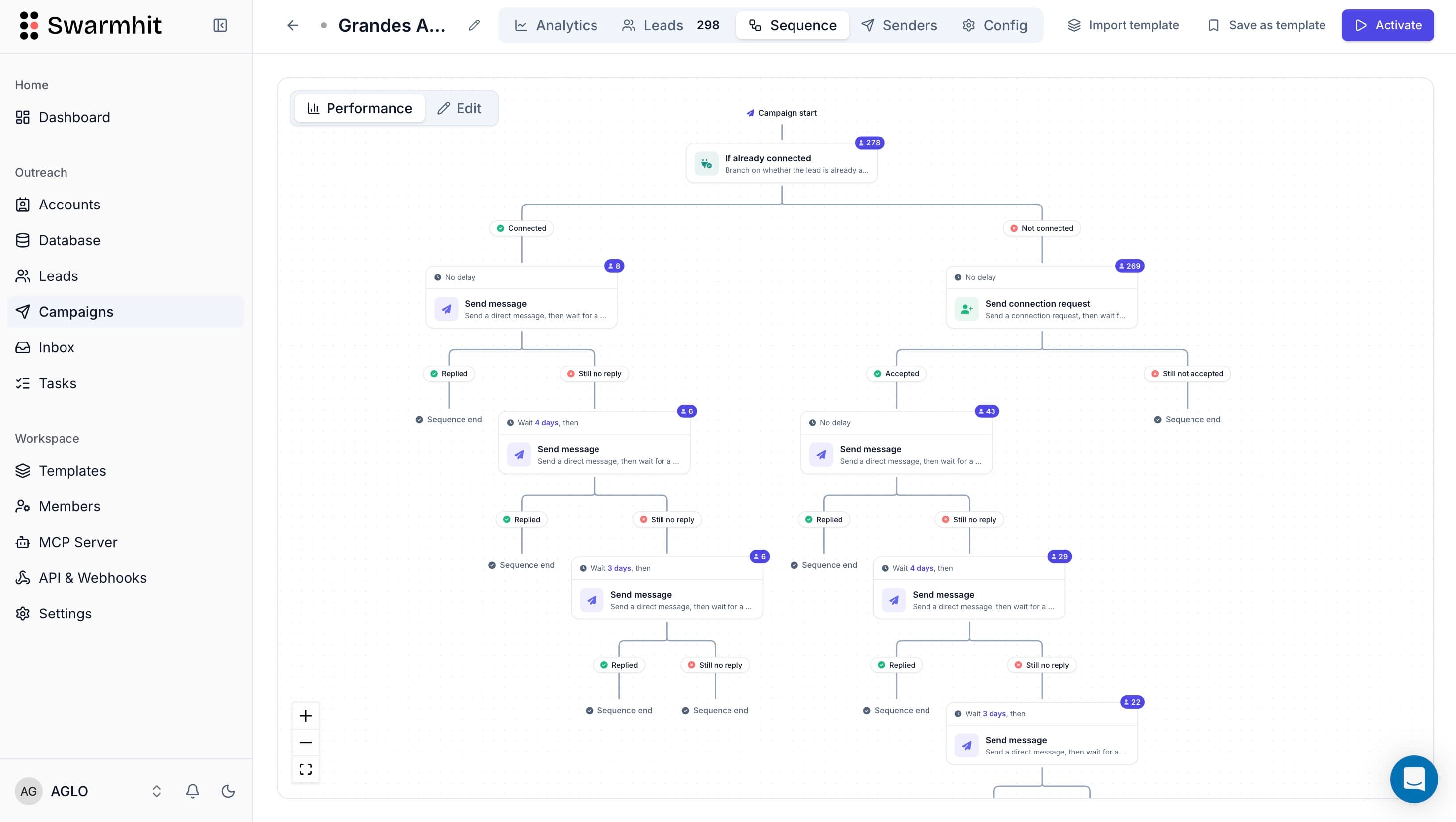
Draw the sequence you actually want
Swarmhit's visual builder lets you branch on whether the lead is already connected, whether they replied, and how long to wait, then mixes invites, messages, voice notes, post comments, and InMail in one flow. No template list stands between you and your outreach logic.
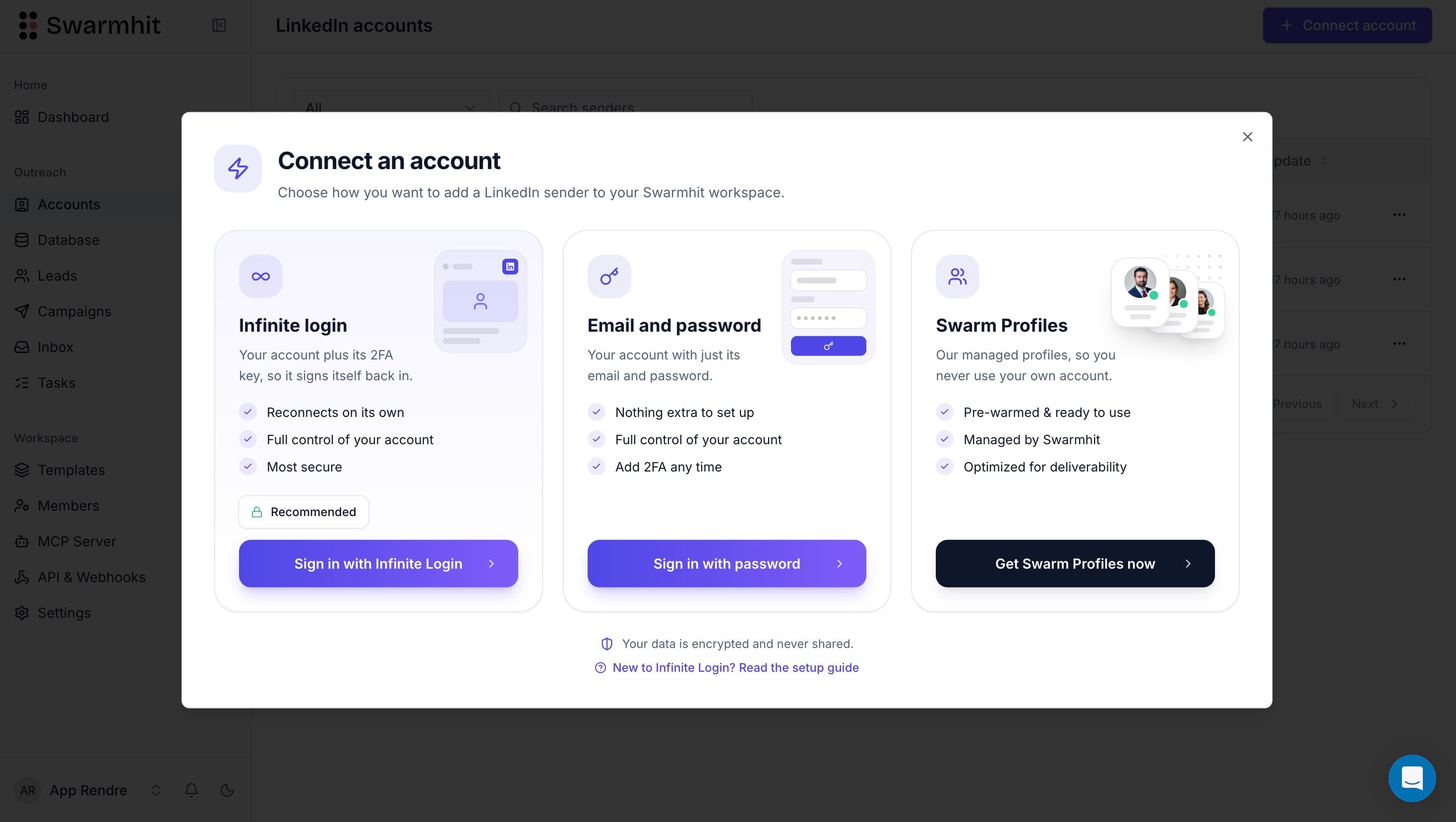
One campaign, many senders
Build a campaign once and Swarmhit spreads it across your sender pool automatically, each account with its own limits, warmup state, and dedicated proxy. Adding a sender is a click and one flat per-sender price, not another seat running its own copies.
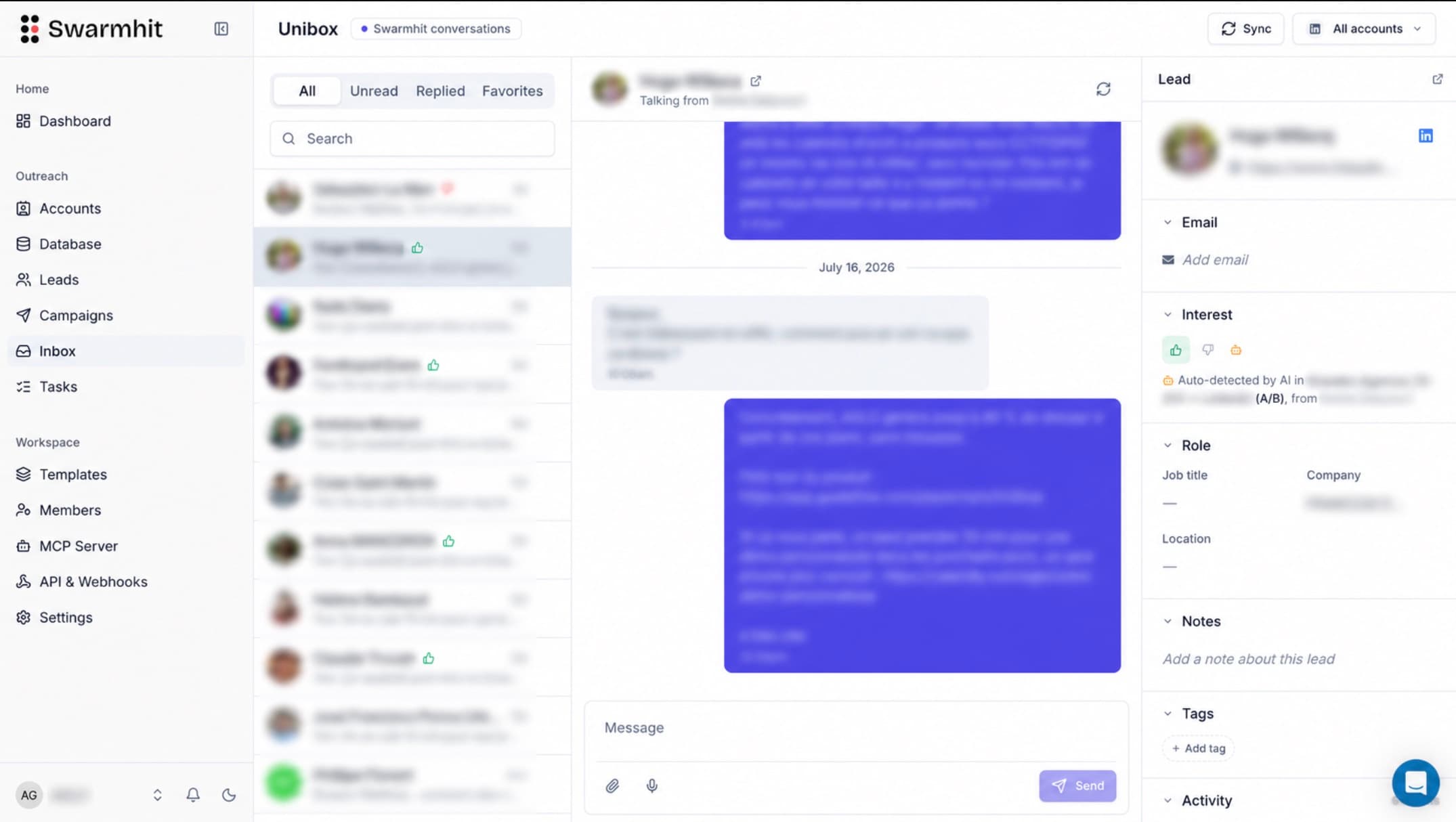
One inbox for the whole team
Every reply from every sender lands in one inbox with assignment and interest tags. Anyone with the right role can answer on behalf of any sender. On Waalaxy, replies live with whoever owns the seat.
Messages written from the prospect, not a form
Waami writes from the inputs you type into a form. Swarmhit's AI reads the prospect's profile, recent posts, and company news, and drafts an opener that references something real, for every prospect in the campaign.
Safety as infrastructure, not a quota
Dedicated proxy per sender, managed auto-warmup, live account health checks, and smart daily caps ship on every Swarmhit plan. No browser extension in the loop, and no restriction stories from staying under the monthly quota.
When is Waalaxy the better fit?
A great on-ramp for one person
If you are one person testing LinkedIn outreach for the first time, Waalaxy is a great on-ramp: free to start, template-guided, and live in minutes.
Templates cover the classic flows
The templates cover the classic flows and the quotas are generous enough for a light personal pipeline.
Swarmhit starts paying for itself the day you need a sequence the template list does not offer, a second sender, or replies your whole team can see and answer. The day the template list runs out, Swarmhit is the stronger Waalaxy alternative.
TL;DR verdict
Waalaxy is the friendliest way to send your first LinkedIn campaign: a low entry price, prebuilt templates, and a two-minute setup. It strains as soon as outreach becomes a system: sequences are locked to a template list, each seat drives exactly one account with no rotation, the unified inbox costs extra, and users report account restrictions despite the quotas. Swarmhit is built for that next stage: custom sequences, multi-sender campaigns, one shared inbox, and per-sender pricing from $29/month with every feature included. That next stage is where the search for a Waalaxy alternative begins.
Why teams look for a Waalaxy alternative
Waalaxy is many people’s first automation tool, and outgrowing it is almost a rite of passage. The template library that made week one easy becomes the wall in month three, when the sequence you actually want (branch on reply, comment before inviting, voice note after acceptance) is not on the list. That is the classic Waalaxy alternative moment: not frustration with what it does, just a sequence idea it cannot express.
Quotas and seats do the rest. One seat drives one account, the shared inbox is a paid add-on, and the entry tier’s 300 invitations a month fade once outreach becomes a weekly system. Measure any Waalaxy competitor by whether it removes all three ceilings at once: sequence freedom, sender rotation, and an inbox the whole team reads.
What does Waalaxy get right?
Credit where due: Waalaxy has probably onboarded more people into LinkedIn automation than any other tool. The freemium plan lets anyone try outreach without a card, the interface is clean, the template library covers the classic invitation-then-follow-up flows, and importing prospects from a LinkedIn search, your network, or post commenters takes a couple of clicks. Verified reviewers consistently praise the value for money and report being live within minutes of connecting their account.
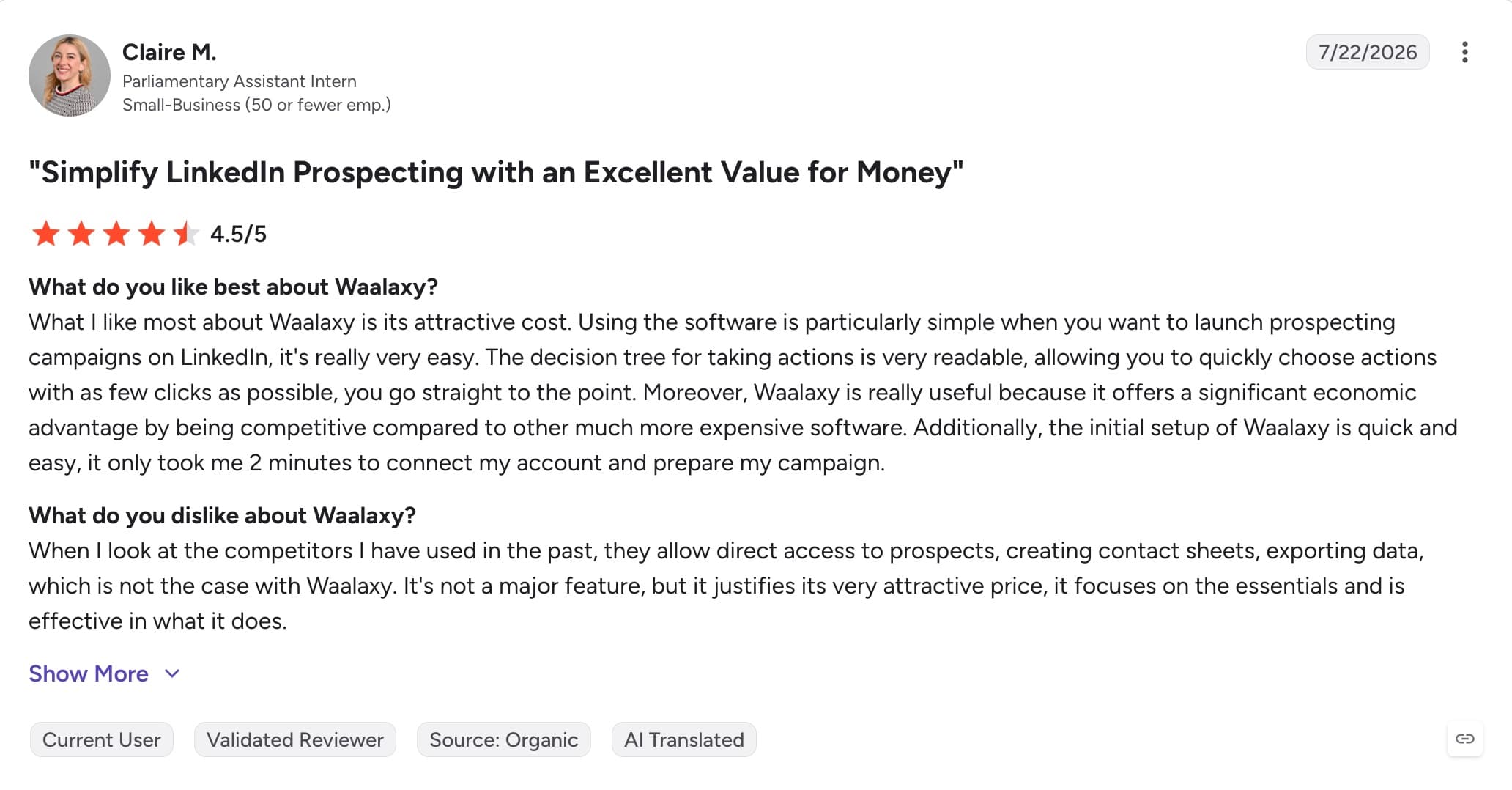
The problems start when outreach stops being an experiment and becomes the way your team builds pipeline.
Where does Waalaxy hit its ceiling?
Can you build your own sequences?
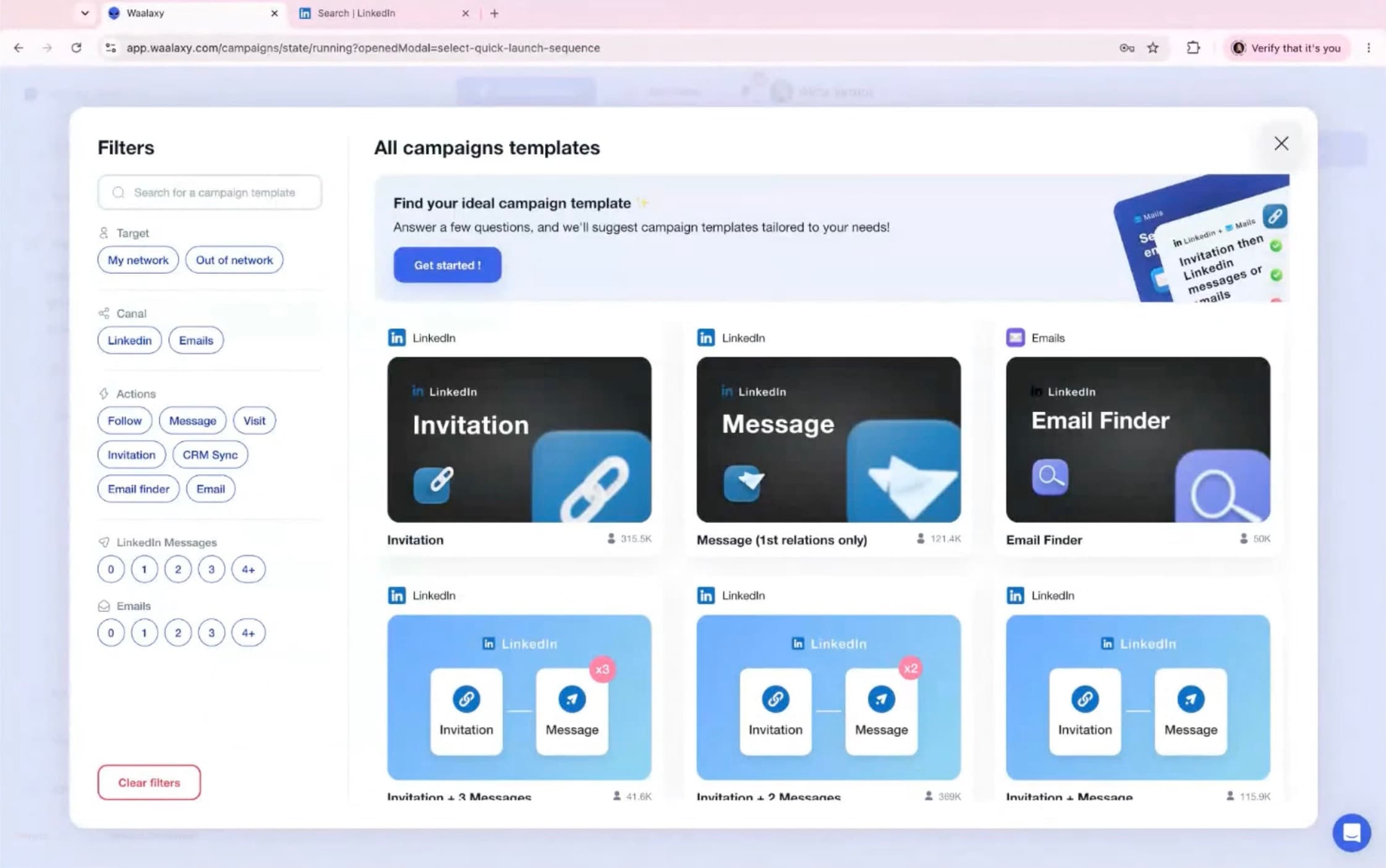
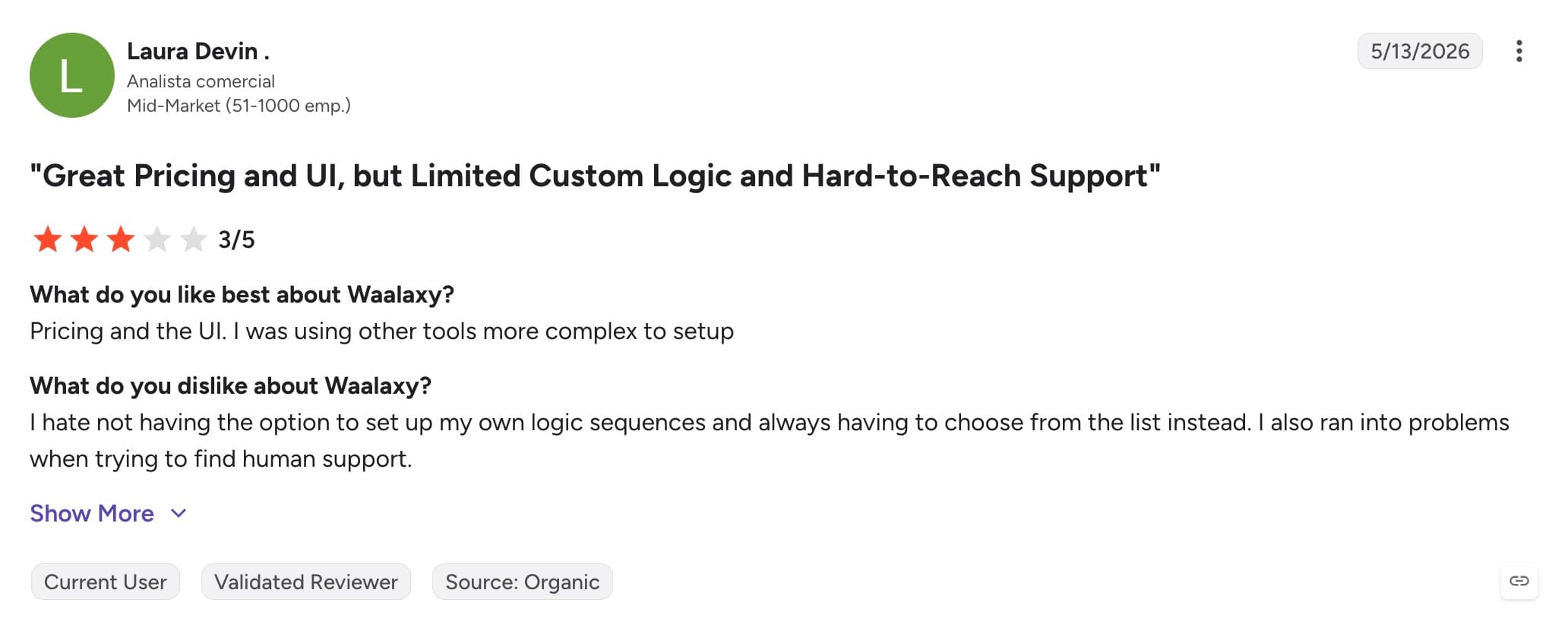
Not really. Campaign creation in Waalaxy means choosing from a list of prebuilt templates: invitation, invitation plus two messages, email finder, and so on. That list is genuinely well designed, but the moment your outreach logic differs from the closest template, you are stuck. Verified G2 reviewers name this directly as the thing they hate: there is no way to set up your own logic sequences, only to pick from the list.
How personal can messages really get?
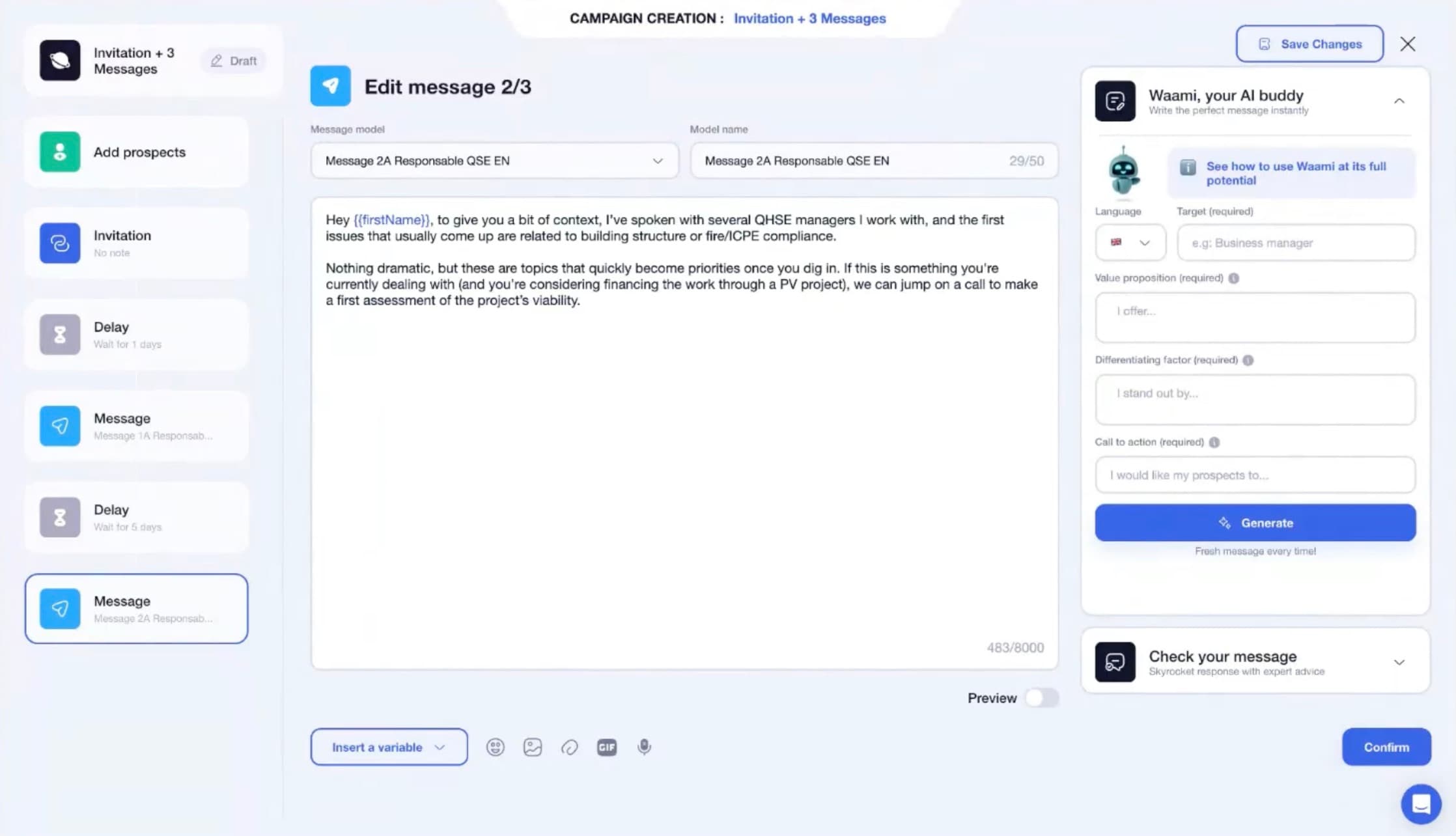
Personalization runs on template variables like first name and company, plus Waami, an AI assistant you feed a target, value proposition, and call to action to generate a message. That is fine for a first campaign. It also means every message is built from the same handful of merge fields, and users on G2 say the variables are not very sophisticated. Nothing reads the prospect's activity, posts, or company news before writing.
What happens when you add a teammate or a second account?
Waalaxy is priced and built per seat, one LinkedIn account each. There is no sender rotation, so a campaign belongs to one account, and scaling means buying more seats and duplicating work across them. Multi-account workspaces exist, but as an Enterprise feature with a five-seat minimum. Reply handling stays personal too: inbox access beyond one account requires paid add-ons, and nobody can answer on a teammate's behalf.
Is the extension model safe?
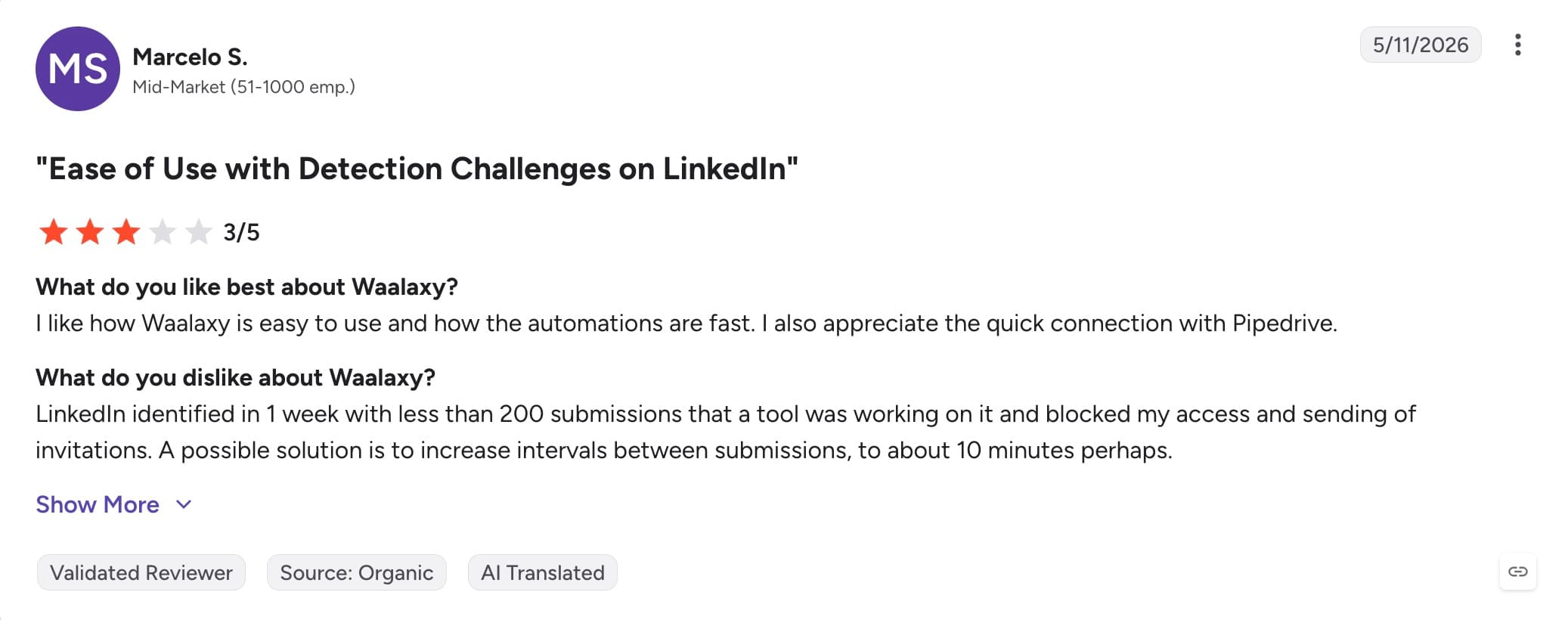
Waalaxy runs campaigns in the cloud but authenticates through a Chrome extension, and it enforces monthly invitation quotas by tier. Even so, verified reviewers report LinkedIn detecting automation and restricting their account within a week at fewer than 200 submissions. No tool can make automation risk-free, but there is no dedicated proxy per account, no managed warmup, and no live health monitoring standing between your sender and a restriction.
What do the tiers actually gate?
There is a 14-day trial rather than a permanent free plan. Pro at $19 caps you at 300 invitations monthly, Advanced at $39 raises it to 800 and adds API access, and cold email sequences only arrive with Business at $69 per user per month, with yearly billing taking 20 percent off. Along the way you meet per-lookup email finder credits and inbox add-ons. Reviewers who praise the pricing in the same breath report struggling to reach human support when something breaks.
What does each tool cost as you grow?
| Senders | Swarmhit | Waalaxy (Advanced) |
|---|---|---|
| 1 | $29/mo | $39/mo |
| 3 | $87/mo | $117/mo across 3 seats, each running its own campaigns |
| 5 | $145/mo | $195/mo, or negotiate the 5-seat Enterprise tier |
| 10 | $290/mo | $390/mo, plus duplicated campaigns and inboxes to manage |
Waalaxy Advanced at $39/user/month (monthly billing; yearly takes 20 percent off) is where teams land once they need the 800-invite quota, and cold email sequences still require the $69 Business tier. Swarmhit runs $29/month per sender on annual billing ($39 monthly), every feature on every plan, so the math stays linear as you add senders instead of stacking seats and add-ons.
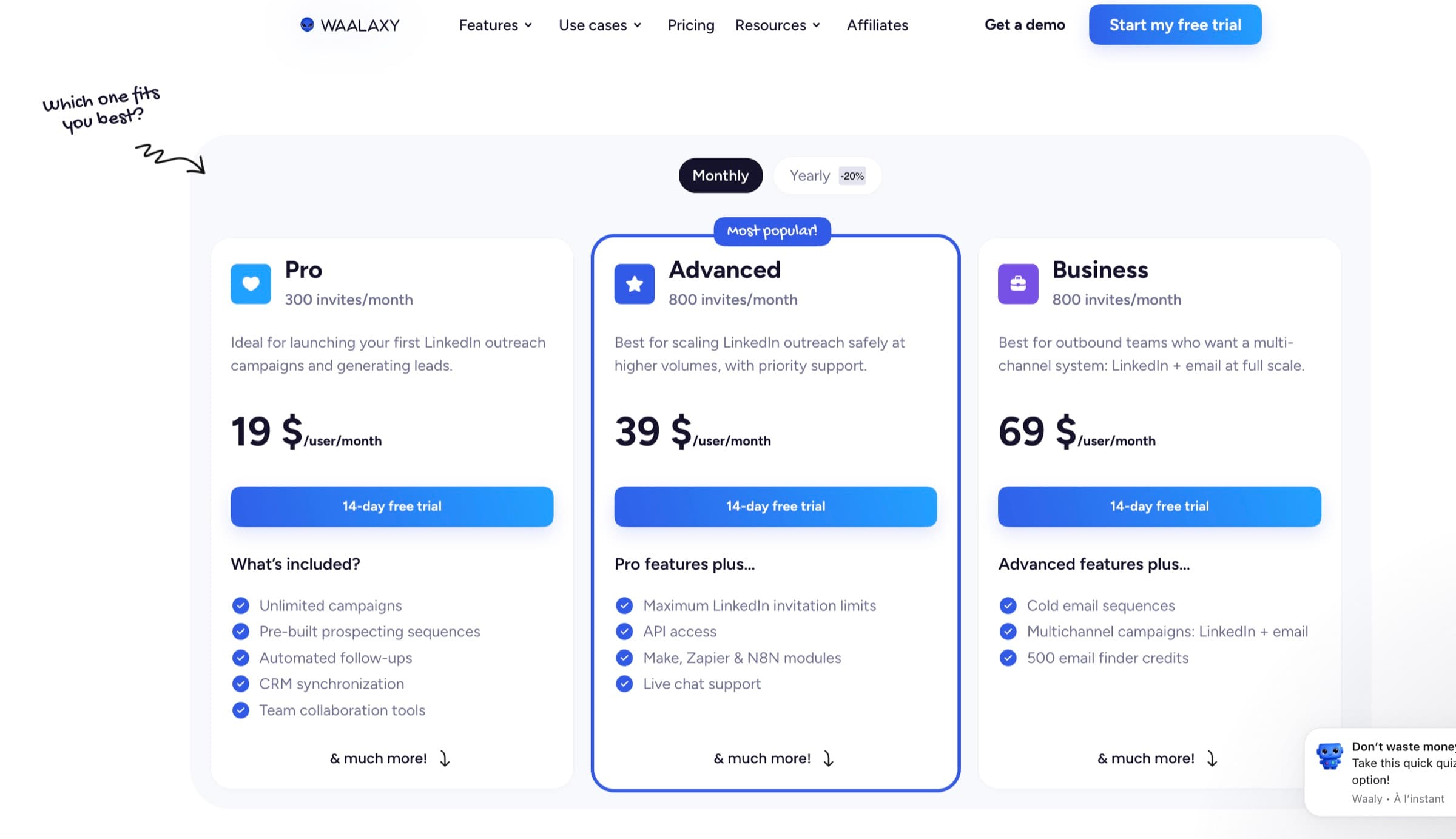
Competitor pricing on this page was re-checked against the vendor’s own pricing page on 10 August 2026, when Waalaxy’s published rates were materially lower than at our previous check. Vendors change prices without notice, so treat anything older than a month as indicative.
How hard is switching from Waalaxy to Swarmhit?
Minutes, not days, and it behaves like a straight Waalaxy replacement: export your prospects as CSV and import them into Swarmhit, or rebuild the audience from Swarmhit’s 1B+ contact database or a Sales Navigator search. Your template logic translates directly into the visual builder, which then lets you add the branches and actions Waalaxy could not express: voice notes, post comments, InMail, reply-based paths. Connected accounts go through managed warmup before ramping to full volume.
FAQ
Swarmhit vs Waalaxy, answered.
Keep the ease,
remove the ceiling.
Custom sequences, multi-sender campaigns, one shared inbox, and per-sender pricing from $29/month with every feature included.