

The best Apollo.io alternatives in 2026 are Clay, Cognism, Lusha, ZoomInfo, LeadIQ, RocketReach, UpLead, Kaspr and People Data Labs. Apollo is the default for a reason: a 240M+ contact database, a sequencer, and a free tier, all for $49 per seat per month on annual billing. Teams leave when the credit model, the export rules or the European phone coverage stops fitting.
Every price below was read from the vendor's own pricing page on 10 August 2026. Where a vendor hides pricing behind sales, this guide says gated rather than guessing, because a made-up number is worse than no number when you are building a budget.
- Apollo runs $49, $79 or $119 per seat per month on annual billing, with a free tier at 900 credits per seat per year.
- The catch most teams hit is export credits: credits are consumed when data leaves Apollo, and reselling or powering external products with Apollo data is not allowed under its terms.
- For European mobile numbers, Cognism's phone-verified Diamond Data is the specific reason teams switch; for developers, People Data Labs and Coresignal sell the raw data instead.
- Clay is not a database competitor so much as an orchestration layer that queries many of these vendors at once.
Tool by tool, with the credit models spelled out, below.
What Apollo costs, and where the model bites
Apollo prices per seat with credits attached. On annual billing it is $49 for Basic, $79 for Professional and $119 for Organization with a three seat minimum; monthly billing runs $65 and $99, and Organization is annual only. Credit grants scale with the tier: 30,000 per seat per year on Basic, 48,000 on Professional, 72,000 on Organization, granted upfront. The free Starter plan carries 900 credits per seat per year and is genuinely usable for testing.
Two rules in the small print decide whether Apollo fits. Credits are consumed on export, which Apollo defines as moving a contact outside Apollo, including CSV, CRM sync and Person API enrichment into another system. And its terms state that using these plans to power external products or resell Apollo data is not allowed. If your plan was to build a product on Apollo's data, that sentence is the whole answer.
A note on a claim you will still see repeated: Apollo is often described as offering unlimited email credits. Current plans grant finite per-seat credits, and the Fair Use Policy caps what an Unlimited Plan can consume. Price the credits you actually need.
All ten tools at a glance
Published rates on 10 August 2026. Gated means the vendor does not show a price without a sales conversation.
| Tool | Entry price | Model | Best for |
|---|---|---|---|
| Apollo | Free, then $49 per seat annual | Seat plus credits | All-in-one prospecting and sequencing |
| Clay | Free, then from $167 per month | Credits across many providers | Orchestrating other vendors' data |
| Cognism | From $14,000 a year | Credits, 5 seats included | European mobile numbers |
| Lusha | Free, then $37.45 per month annual | Credits per reveal | Quick reveals inside LinkedIn |
| ZoomInfo | Gated | Platform licence | Enterprise US coverage |
| LeadIQ | Free, then $15 per month annual | Credits, slider-priced | Job-change tracking |
| RocketReach | $33 per month annual | Lookups on monthly, exports on annual | Pay per verified lookup |
| UpLead | $74 per month annual | 1 credit per contact | Accuracy guarantee |
| Kaspr | Free, then 45 EUR per month annual | Phone credits per user | LinkedIn-native reveals |
| People Data Labs | Free, then $98 per month | Per record matched | Building on raw data |
The column that matters is model, not price. A seat price with credits, a per-lookup fee and a per-record API charge produce wildly different bills for the same work, and only one of them scales the way a product does.
The 9 best Apollo alternatives
1. Clay
Clay is the answer when the problem is not which database but how many. It runs waterfall enrichment across dozens of providers, so a contact that Apollo misses gets retried against other sources automatically, and its AI research agents pull facts no database holds. It is credit-based rather than seat-based, which suits spiky campaign work. The honest caveat is that Clay is a build-it-yourself layer: powerful in the hands of someone who enjoys the tooling, and an expensive way to do simple list-building if nobody owns it. Our full comparison covers the pricing mechanics, and our Unipile comparison covers the API-layer end of the same market.
2. Cognism
The European answer, and the clearest single reason to leave Apollo. Cognism's Diamond Data is phone-verified by humans: in its own words, a routine process calls the numbers and confirms the right person picks up. It claims over 10 million phone-verified contacts globally, that phone-verified numbers are three times more likely to connect, and that 95 percent of director-level and above contacts are refreshed every 30 days. It also scrubs against do-not-call registries in the US, Australia, UK, France, Germany and other European countries.
Pricing is gated: two packages, Standard and Pro, each including five seats, with credits defined as one credit per revealed contact and no charge for re-viewing a contact you already revealed. Intent data comes through Bombora. If your outbound runs on cold calls into Europe, this is the switch worth taking a demo for. Sales Navigator sits underneath much of this market as the source of the search itself, and its own API story is narrower than most teams expect.
If Cognism's pricing is the obstacle rather than its data, our Cognism alternatives guide ranks nine options by what they cost and what they verify.
3. Lusha
The fastest path from a LinkedIn profile to a phone number. Lusha runs a free tier at 40 credits a month and paid plans from $37.45 per month on annual billing for 4,800 credits a year, through Pro at $48.95 with two free seats, to Premium at $259.95 with five. Credits roll over up to twice the monthly cap on the paid tiers. Its compare table lists GDPR, CCPA, SOC 2, ISO 27701 and do-not-call compliance rows.
Two cautions. The annual prices above were promotional when we checked, with list prices of $49.90, $69.90 and $399.90 struck through, so verify before budgeting. And Lusha is a reveal tool rather than a sequencer: it replaces Apollo's data half, not its outreach half.
4. ZoomInfo
The enterprise incumbent, and the most honest thing to say about it is that we could not read its pricing page: it is gated behind sales and a bot challenge blocked automated access on our verification day. What is not in dispute is the shape of the deal, an annual platform licence with seat and credit tiers negotiated per contract, usually landing well above everything else in this article. Teams choose it for US coverage depth and the surrounding workflow suite, and leave it when the renewal arrives without the usage to justify it.
5. LeadIQ
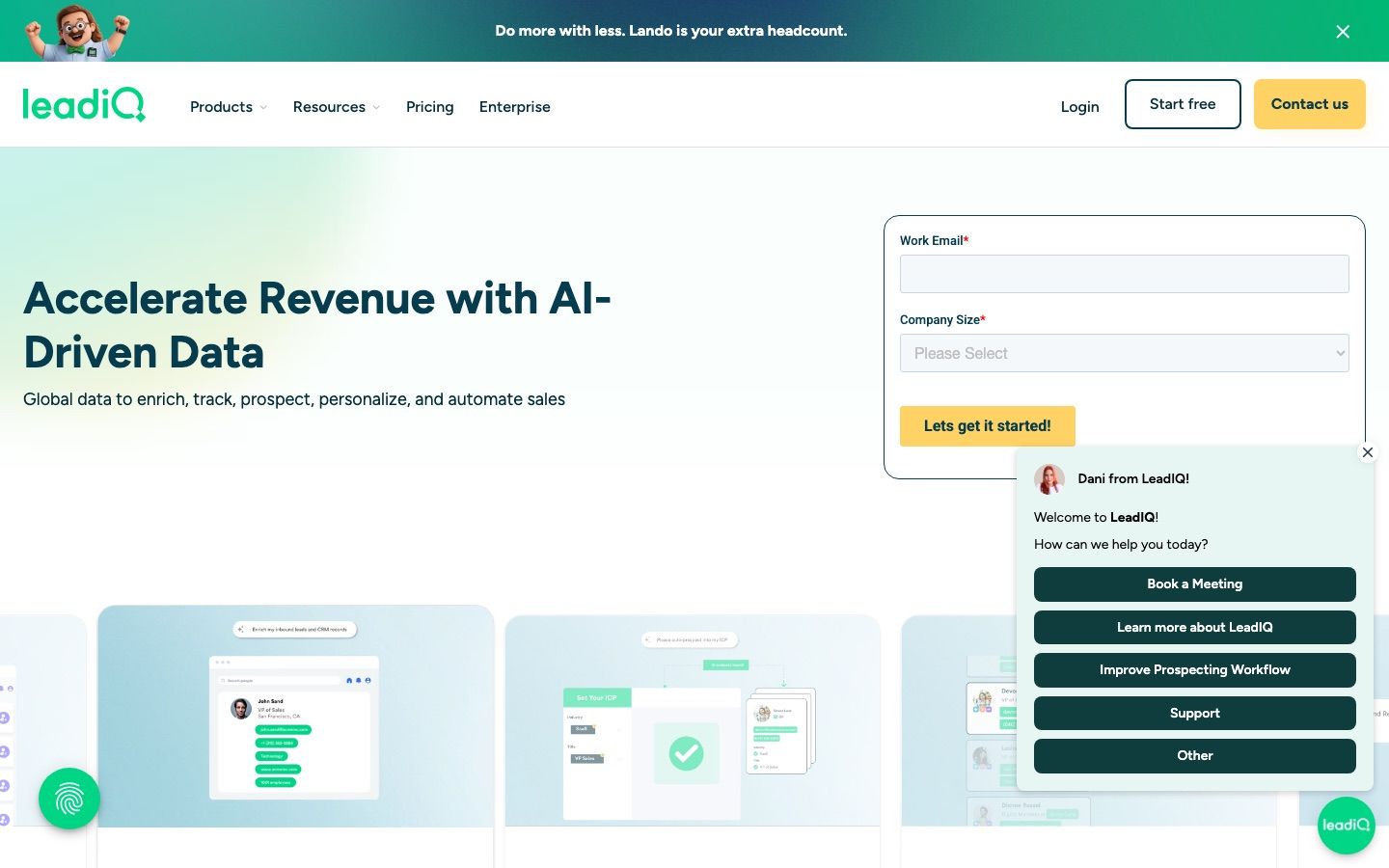
The prospecting-workflow pick, priced by a credit slider rather than a fixed tier: a free plan with 50 credits, then Pro from $15 per month on annual billing at the minimum volume, or $20 monthly, rising with the slider. Its credit costs are unusually transparent: one credit for an email, ten for a phone number, eleven for both, three for account enrichment. It publishes a live dataset of 750 million professional profiles refreshed monthly, with up to 200 million records re-verified as people change roles, and its job-change tracking for champions is the feature people actually stay for. API access is on every tier including free.
6. RocketReach
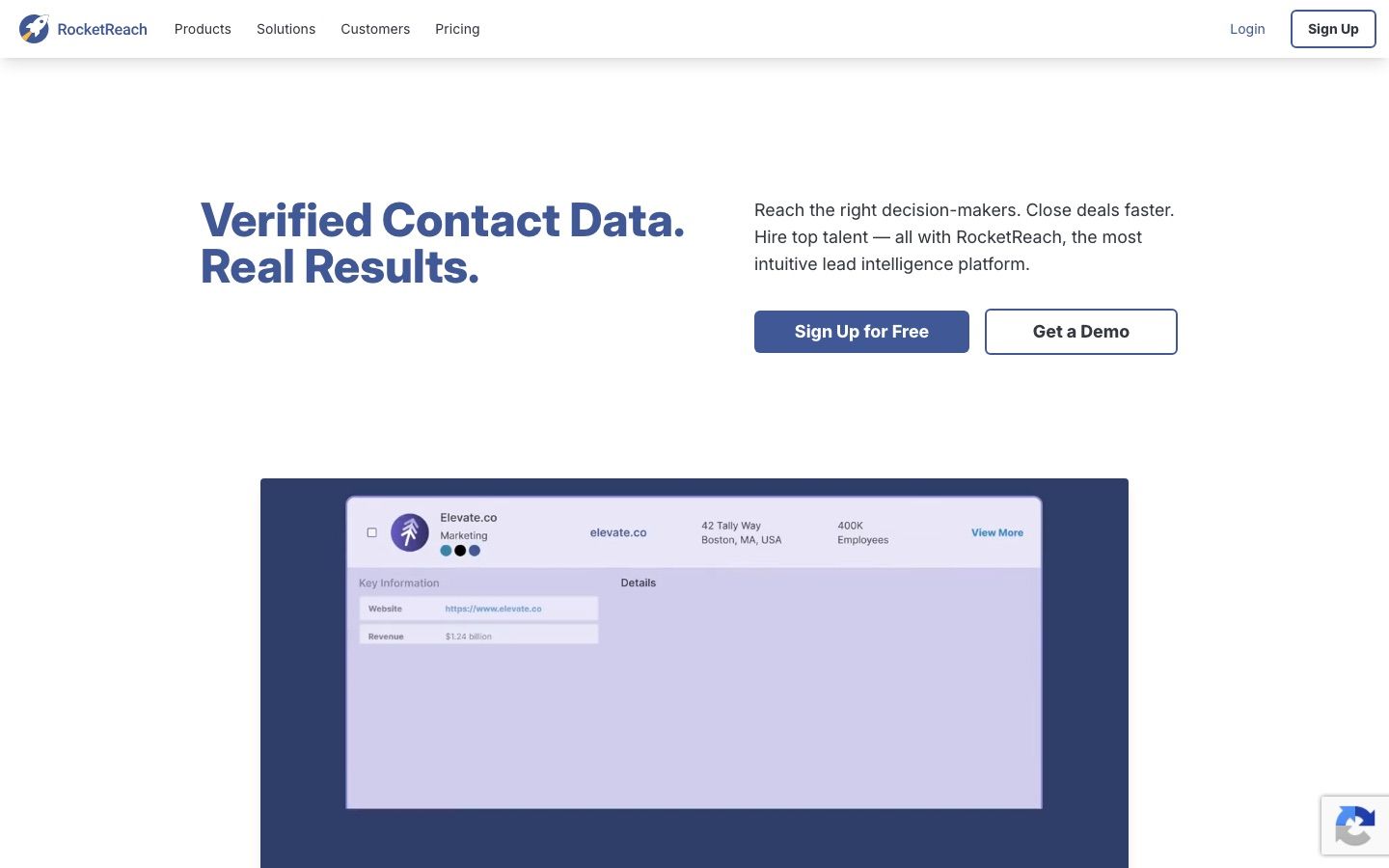
The pay-per-result option. Essentials is $33 a month on annual billing ($399 a year), or $69 monthly, for 100 lookups; Pro adds phone numbers at $75 annual ($119 monthly); Ultimate is $142 annual ($209 monthly). Annual plans do not meter lookups and cap exports instead, at 1,200 a year on Essentials and 20,000 on Ultimate. The rule that makes it distinctive: a lookup is only used if RocketReach finds and verifies an email or phone, otherwise it is refunded. It claims 700 million professionals and 35 million companies. Free accounts get five lookups with no card. If your volume is low and unpredictable, paying only for hits beats buying credits you might not spend.
7. UpLead
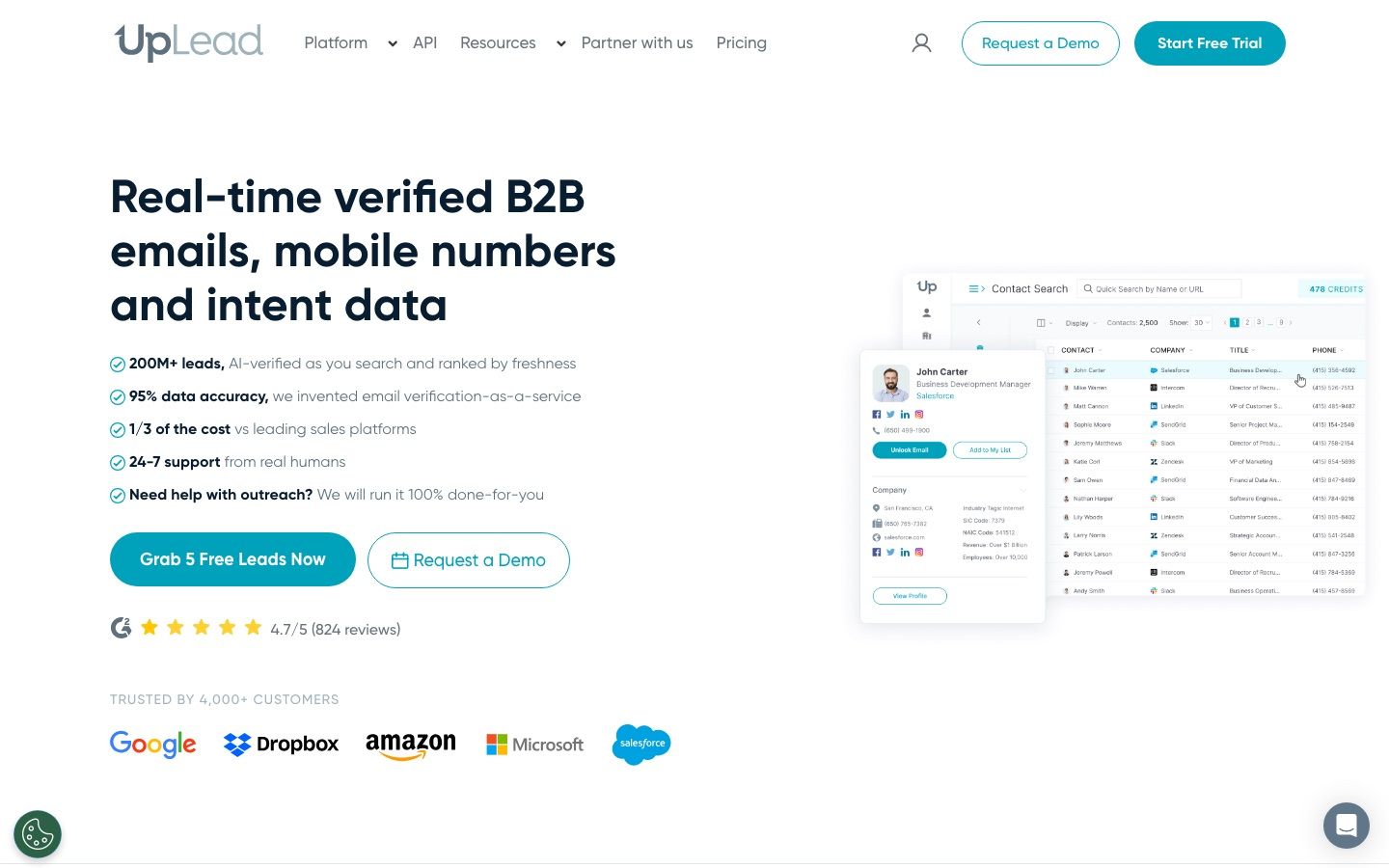
The accuracy-guarantee play. UpLead runs a 7 day, 5 credit free trial, then Essentials at $99 monthly or $74 on annual billing for 170 credits a month, and Plus at $199 or $149 annual for 400. One credit unlocks one contact including email and mobile direct dial, with extra credits at $0.50 to $0.60 each. It states a 95 percent data accuracy rate and backs it with a guarantee, verifying emails as you search. Both enrichment and prospecting APIs ship on paid tiers. Smaller database than Apollo, cleaner records.
8. Kaspr
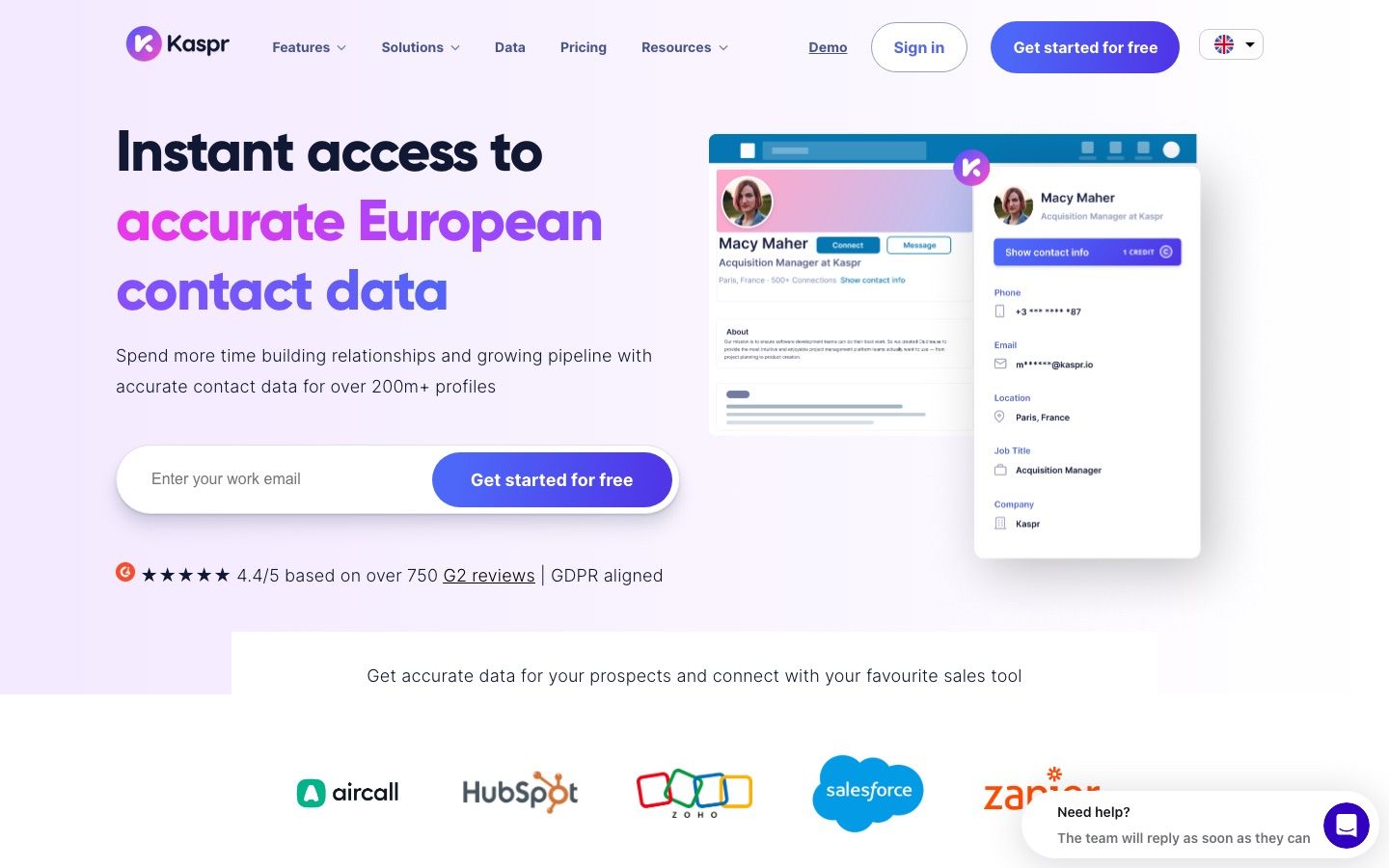
The LinkedIn-native reveal tool, and the cheapest credible entry here. A free tier gives 15 B2B email credits, 5 phone credits and 5 direct email credits a month. Starter is 59 EUR per user per month, or 45 EUR on annual billing with 1,200 phone credits a year; Business is 99 EUR or 79 EUR annual with 2,400 phone and 2,400 direct email credits. Paid tiers carry unlimited B2B email credits, so phone credits are the real constraint. It works inside Sales Navigator and Recruiter Lite, claims 500 million verified phone numbers and email addresses, and describes itself as GDPR and CCPA aligned.
9. People Data Labs
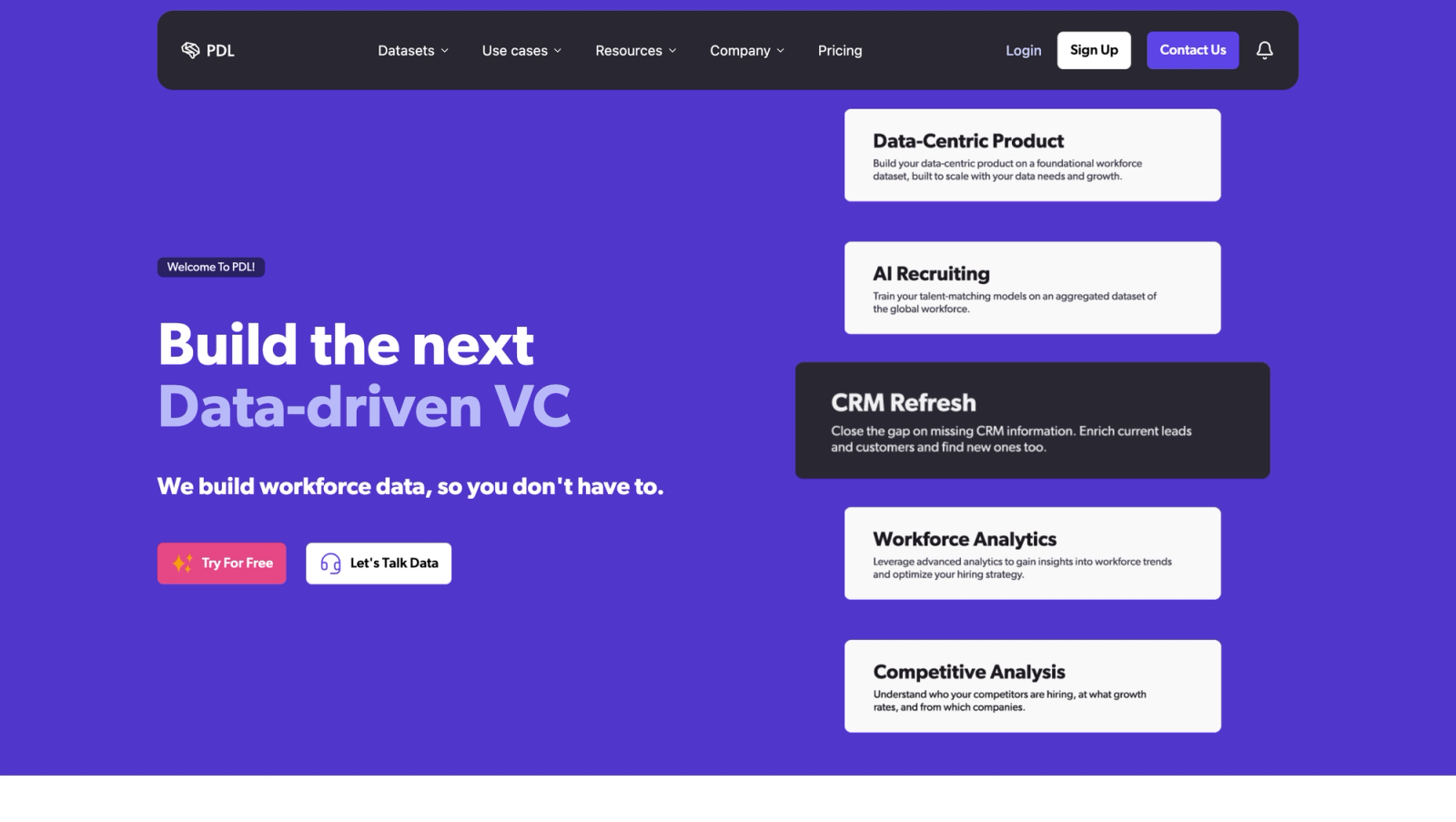
Not a prospecting tool at all, which is exactly why developers pick it. PDL sells data by the record through an API: a free tier at 100 monthly records with contact fields obfuscated, Pro at $98 per month starting at 350 monthly records, or $940 a year, and an enterprise tier with data licensing and flat-file delivery. Company data is priced separately from $100 a month. Its own documentation reports 2.47 billion person records, with emails on 658 million and phone numbers on 899 million, which is unusually precise disclosure in a market fond of round numbers. It states ISO 27001 and SOC 2 Type 2 compliance.
Choose it when you are building a product or an internal system and want the data layer without a seat-based tool wrapped around it. Coresignal occupies similar ground, from $49 a month for 2,500 credits, with employee, company and job posting datasets. Both are covered in our scraper API guide alongside the legal ground that governs this whole category.
If Coresignal is the direction you are leaning, our Coresignal alternatives guide compares it against six other data vendors on per-record cost.
Which Apollo alternative fits which team
Nine tools is a list, not a decision. Most teams match one of the profiles below, and the profile picks the shortlist faster than any feature grid.
- You cold-call into Europe. Cognism, and it is not close. Phone-verified numbers, 30 day refresh on senior contacts, and do-not-call scrubbing across the major European registries are exactly the three things a calling motion needs and Apollo does not lead on.
- You build lists from many sources every week. Clay, provided someone on the team owns the tooling. If nobody does, a simpler single-vendor setup will produce more pipeline than an unmaintained workspace of workflows.
- You are a founder doing low, unpredictable volume. RocketReach, because paying only for verified hits beats letting a monthly credit grant expire. Kaspr's free tier is the other credible zero-commitment start.
- Your team lives inside Sales Navigator. Kaspr or Lusha. Both are reveal layers that turn a profile into a contact in one click, and both have free tiers generous enough to prove fit before a card comes out.
- You send small, clean lists and a bounce costs you. UpLead. The 95 percent accuracy guarantee and search-time verification suit a motion where a hundred right contacts beat a thousand maybes.
- You track champions who change jobs. LeadIQ. Its job-change tracking and monthly re-verification are the specific features for the play, and the per-action credit prices make the cost of it predictable.
- You are building a product on the data. People Data Labs or Coresignal, the two vendors here that license data for exactly that. Every seat-based tool above forbids it somewhere in the terms.
- Procurement is running the purchase. ZoomInfo will survive the security review and the reference calls, and the price will reflect that. Go in knowing which usage numbers would justify the renewal, because that conversation arrives in twelve months.
If two profiles fit, trial both shortlists on the same 500 contacts and let the match rates decide. An afternoon of replay beats a quarter of regret.
How the credit models actually compare
Same task, different meters. Here is what one thousand enriched contacts looks like under each pricing model, using published rates and each vendor's own definition of a unit.
| Model | Who uses it | How it meters | The trap |
|---|---|---|---|
| Seat plus credit grant | Apollo, Cognism | Bundled, if within your annual grant | Exports burn credits; grants expire |
| Credits per reveal | Lusha, LeadIQ, UpLead | 1 to 11 credits each by data type | Phones cost many times an email |
| Lookups refunded on a miss | RocketReach | 100 lookups monthly; annual caps exports instead | Low volume only; tiers cap monthly |
| Per record via API | People Data Labs, Coresignal | Priced per match or per credit | No UI, no sequencer, you build it |
| Orchestration credits | Clay | Varies by provider called | Costs scale with how many sources you retry |
Two lessons fall out of that table. Phone numbers are the expensive unit almost everywhere, so a plan sized on email volume will run dry fast if your motion is calling. And any vendor whose data leaves the platform meters that departure, which is why the export rules matter more than the sticker price when the data feeds a product.
Compliance, in each vendor's own words
Contact data is a regulated product, and the vendors differ sharply in how much they say about it. This matters beyond principle: a procurement review will ask, and the answers are not equivalent.
| Vendor | What it states publicly |
|---|---|
| Cognism | GDPR and CCPA compliant-first, with phone numbers screened against DNC lists in the US, Australia, UK, France, Germany and other European countries |
| Lusha | GDPR, CCPA, SOC 2, ISO 27701 and do-not-call rows in its plan comparison |
| LeadIQ | Every supplier passes a strict GDPR and CCPA compliance review |
| Kaspr | GDPR and CCPA aligned |
| Apollo | GDPR compliant, stated on its pricing page |
| People Data Labs | ISO 27001 and SOC 2 Type 2, with privacy request and do-not-sell routes |
| Coresignal | Certified by the Ethical Web Data Collection Initiative; publicly available business data only, nothing behind a login |
Two observations worth carrying into a vendor call. Coresignal is the only one in this set that states explicitly what it does not do, namely scrape behind login-secured areas, and that sentence is more useful than a compliance badge. And several vendors here publish no GDPR or CCPA sentence on their pricing or product pages at all, which is not evidence of a problem but is a question worth asking directly rather than assuming.
The database-size claims deserve the same scepticism. People Data Labs publishes 2,466,550,602 person records with per-field fill rates; Coresignal claims 895M+ employee profiles and 4.5B+ records overall; Apollo says 240M+ contacts and 30M+ companies; LeadIQ says 750 million profiles refreshed monthly; RocketReach says 700 million. Precise numbers with fill rates are worth more than round ones, because coverage of the field you need is the only figure that predicts your hit rate.
Replacing Apollo's sequencer, not just its database
Apollo is two products in one subscription: a database and the machine that sends against it. Every data vendor above replaces the first and none replaces the second, so a switch leaves your sequences homeless unless you plan for it.
The email half needs sending infrastructure of its own: mailboxes, warmup, rotation and deliverability monitoring, none of which a data vendor provides. The LinkedIn half is a different problem entirely, because it runs on member accounts with daily action limits rather than on SMTP, and tooling that treats LinkedIn like email gets accounts restricted. Our prospecting tools guide maps that landscape, and our safety guide covers what the limits actually are.
One Apollo-specific trap belongs in the plan: credits are consumed on export, and moving your contact history into whatever replaces Apollo is an export. Pull the CSV of everything you have already enriched while the subscription is still active and the credit balance still exists, then downgrade. Teams that cancel first discover the data they paid to reveal is priced a second time on the way out.
Switching from Apollo: what to test before you cancel
The evaluation that prevents a bad switch takes one afternoon and a spreadsheet.
- Export your enriched contacts first, cancel second. Export consumes credits, so the order matters. Take the full CSV while the balance exists.
- Replay 500 production contacts through the candidate's trial. Count usable values per field, and bounce-test a sample of the emails rather than trusting the match count. A found email that bounces is worse than a miss.
- Convert every meter to your real monthly volume. A seat with credits, a per-lookup fee and a per-record API price the same work differently, and phone numbers are the expensive unit almost everywhere. Size the plan on your calling volume, not your email volume.
- Read the product-use clause if the data feeds anything you sell. Apollo forbids it on standard plans, and most seat-based alternatives do too. The two vendors that license it are named above.
- Run one deletion request end to end. Purchased contact data carries privacy obligations you inherit, and the time a vendor takes to propagate an erasure is a number you want before procurement asks for it.
- Keep Apollo's free Starter plan as a benchmark. It costs nothing, keeps 900 credits a seat a year, and a quarterly replay of the same 500 contacts tells you whether the grass was actually greener.
Then budget the second half of the move: re-homing sequences, rebuilding integrations and re-training the team is real work that a lower sticker price does not pay for.
LinkedIn actions, not LinkedIn data
One clarification, because Swarmhit sits in a different category from every tool above and comparing them directly would mislead. The nine alternatives here sell data: they find contacts and enrich records. Swarmhit does not sell data as a product and is not a drop-in replacement for an Apollo or a People Data Labs.
What it does is execute outreach on LinkedIn through accounts its customers own and connect: connection requests, messages, InMails, profile visits, voice notes and post comments, with per-action daily caps and managed warmup on every sender. Prospect extraction happens only through those same connected accounts, capped at 2,500 profiles a day from Sales Navigator search and 1,000 a day from standard LinkedIn search. There is no cookie-less scraping, which we consider illegal, and no data resale.
That boundary is not a stylistic choice. LinkedIn's user agreement prohibits copying, using or distributing information obtained from the service, whether directly or through third parties such as search tools or data aggregators, without the consent of the content owner. Buying a dataset does not automatically place you outside the agreement you accepted when you created your account, which is why we run actions through accounts customers own rather than around them. None of this is legal advice, and your jurisdiction and use case matter.
Its built-in database of 1B+ contacts across 60M companies is sourced through third-party data providers, with free monthly credits and pay as you go beyond them, and exists so a campaign can be built without leaving the platform, not as a data product to license. Teams typically run Swarmhit alongside one of the vendors above: the data vendor answers who to contact, Swarmhit runs the conversation on LinkedIn, and an API, webhooks and an MCP server connect the two.
FAQ
What is the best Apollo.io alternative in 2026?
It depends which half of Apollo you are replacing. For contact data with verified European mobiles, Cognism. For orchestrating many data sources, Clay. For raw data behind a product, People Data Labs or Coresignal. For cheap LinkedIn-side reveals, Kaspr or Lusha. No single tool replaces Apollo's database and sequencer in one, which is why most teams end up with a data vendor plus an outreach tool.
Is there a free alternative to Apollo?
Several have real free tiers: Lusha gives 40 credits a month, Kaspr 15 email and 5 phone credits, LeadIQ 50 credits, People Data Labs 100 records a month with contact fields obfuscated, and RocketReach five lookups. Apollo's own Starter plan is free forever at 900 credits per seat per year, so the honest comparison is between free tiers, and Apollo's is competitive.
Why do teams leave Apollo.io?
Three recurring reasons. European mobile coverage, where Cognism's phone-verified data is materially better. Export credits, which are consumed whenever data leaves Apollo, including CRM sync and API enrichment into another system. And the terms, which do not allow using standard plans to power external products or resell Apollo data, which rules Apollo out as a product's data layer.
Can I use Apollo data inside my own product?
Not on standard plans. Apollo's terms state that using them to power external products or resell Apollo data is not allowed, and API access sits on custom plans. If the data is feeding a product you sell, the vendors built for that are People Data Labs and Coresignal, both of which license data explicitly and price per record rather than per seat.
Do I still need an outreach tool alongside these?
If you are replacing Apollo with a data-only vendor, yes. Apollo bundles sequencing with its database; Cognism, Lusha, LeadIQ, RocketReach, UpLead, Kaspr, People Data Labs and Coresignal do not send outreach for you. Budget for both halves, and check how the data vendor's export credits behave when contacts flow into whatever sends the messages.
How much does Apollo.io cost?
On annual billing, $49 per seat per month for Basic, $79 for Professional and $119 for Organization, which carries a three seat minimum and is annual only. Monthly billing runs $65 and $99. Credit grants scale with the tier, from 30,000 per seat per year on Basic to 72,000 on Organization, and the free Starter plan includes 900 credits per seat per year. Remember that credits are consumed when data leaves Apollo, including CRM sync and CSV export.
Is Apollo.io data accurate?
Accurate enough for most US email motions, weaker on European phones, and the recurring complaint in user forums is staleness: records that lag behind job changes. That is a property of any single-database vendor, and it is why LeadIQ advertises monthly re-verification, Cognism refreshes senior contacts every 30 days, and UpLead backs a 95 percent guarantee. The only test that predicts your results is replaying your own segment and counting usable records.
The short version
Apollo is a good default and a hard tool to beat on breadth for $49 a seat. It stops fitting when you need verified European mobiles, when export credits meter the workflow you actually run, or when the terms forbid the product you are building.
Match the alternative to the reason you are leaving: Cognism for phone verification, Clay for orchestration, People Data Labs or Coresignal for raw data, Lusha or Kaspr for cheap reveals, RocketReach for pay per hit. Then keep the outreach layer separate, because the tool that finds the contact and the tool that starts the conversation are rarely the same one. Our automation hub covers that second half, and if the outreach runs on LinkedIn, the safety rules are worth reading before the tooling is chosen.


