

The best Coresignal alternatives in 2026 are People Data Labs for a close person and company API, Crustdata for real-time data, Bright Data for bulk snapshots, Clay for enrichment waterfalls, Apollo for sales teams, Cognism for verified phone data and Hunter for email discovery. The right choice depends on whether data feeds a product, an internal workflow or a sales rep.
Coresignal is unusually transparent about its credit cost per record type. That makes cost modelling easier than it is with many enterprise vendors, but price is only one part of the decision. Freshness, licensing, data delivery and the engineering work around the API can matter more.
- Coresignal becomes dramatically cheaper per record as volume rises, so compare vendors at your expected monthly usage rather than their smallest advertised plan.
- People Data Labs is the closest cached API alternative, while Crustdata is the strongest direct option when fresh search, enrichment and monitoring are central to the product.
- Bright Data fits bulk delivery. Clay, Apollo, Cognism and Hunter solve narrower operational jobs rather than replacing the same data layer.
- Job data is no longer unique to Coresignal. People Data Labs now offers a beta Job Posting Search API, while Crustdata and Bright Data also provide job data through different delivery models.
Every price and credit rule below was checked against an official vendor source on 21 August 2026. Where a public dollar value was unavailable, this guide says so.
How much does Coresignal cost in 2026?
Coresignal publishes a credit slider for its Database APIs. A 7-day trial gives 2,000 credits. Mini is $49 per month for 2,500 credits, Starter $199 for 12,000, Pro $499 for 35,000, Growth $1,000 for 150,000, Premium $1,500 for one million, Scale $3,000 for four million and Elite $5,000 for ten million. Annual billing, offered from Starter upward, is 10 percent lower (as read on coresignal.com on 30 September 2026).
Record type determines the actual bill. Employee and company records cost 10 to 20 credits, a job posting costs 1 credit and contact enrichment costs 20. An employee record therefore costs roughly 17 to 33 cents on Starter and about 1.5 to 3 cents on Premium.
That spread is larger than many headline differences between vendors. Model the exact fields, volume and refresh frequency you need before comparing monthly prices. A test at 12,000 credits and one at a million credits can produce different winners.
Credits roll over for three months on Premium, Scale and Elite, and the pricing page lists Growth too, although the FAQ names only those three (both read on coresignal.com on 30 September 2026). Job postings are the cheapest record type, but they are not an exclusive capability, so compare the query model and freshness you need against PDL, Crustdata and bulk dataset vendors.
How do 7 Coresignal alternatives compare?
Rates checked on 21 August 2026. The last column matters most because the products below use different delivery and licensing models.
| Vendor | Entry price | How it charges | What it is really for |
|---|---|---|---|
| Coresignal | 7-day trial, then $49 per month | Credits by record type | Cached people, company and job APIs |
| People Data Labs | Free, then $98 per month | Per successful record | Person, company and beta job APIs |
| Bright Data | From $250 for 100,000 records | Licensed bulk records | Receiving and managing a dataset snapshot |
| Clay | Free, then from $167 per month annual | Actions plus data credits | Orchestrating multiple data providers |
| Apollo | Free, then $49 per seat annual | Seat plus credits | Sales prospecting and sequencing |
| Cognism | Custom quote | Credits and contract terms | Verified phone data and DaaS |
| Crustdata | Credit-based, plan price on request | Credits per endpoint and result | Real-time search, enrichment and monitoring |
| Hunter | Free, then $34 per month annual | Search and verification credits | Email discovery and verification |
Only People Data Labs and Crustdata share Coresignal's API-first product shape. The other alternatives solve adjacent problems, which is worth knowing before a migration plan gets written.
What are the 7 best Coresignal alternatives?
1. People Data Labs
People Data Labs is the closest cached API substitution. Its Person API pricing allows up to 100 free monthly records with contact fields obfuscated, then Pro starts at $98 per month for 350 records or exactly $940.80 per year for 4,200 records.
PDL also publishes field-level coverage and testing guidance instead of relying only on a headline database size. Coverage changes by field, geography and segment, so run the same representative sample through both APIs and compare the fields that your product actually uses.
The old assumption that PDL has no job data is now wrong. Its Job Posting Search API launched in beta in April 2026, is available by request and charges one credit per returned job posting. Coresignal still has the more established public pricing path for this use case. Our People Data Labs alternatives comparison covers the wider API field.
2. Bright Data
Bright Data fits teams that want a large licensed snapshot rather than a query API. Its dataset pricing starts at $250 for 100,000 records, or $2.50 per 1,000. It offers people, company and job datasets, with discounts for recurring refresh schedules.
That record price can be lower than Coresignal, but the purchase is different. Your team receives and manages the dataset, including storage, filtering, refreshes and compliance. Bright Data does not transfer unrestricted ownership, and its dataset licence limits redistribution and use in competing products.
Choose Bright Data when the dataset shape is known and bulk delivery suits the architecture. Choose Coresignal when requests are variable and paying per returned record is operationally simpler. Confirm the permitted use in the signed order before embedding either source in a customer-facing product.
3. Clay
Clay does not replace a database with another database. It orchestrates enrichment across many providers. Launch costs $185 monthly or about $167 per month on annual billing. Growth costs $495 monthly or about $446 per month when billed annually. Clay separates Actions, which measure workflow operations, from Data Credits used by enrichment providers.
Each enrichment step consumes one Action when it runs, including a no-result step or an enrichment called with your own API key. Data Credit use depends on the provider and returned data. A waterfall can therefore consume several Actions while Data Credits vary across providers. Stop the sequence as soon as the required field passes and track both balances separately.
Clay is primarily a workspace and orchestration layer, not a licensable raw data source that drops into a product. It can call HTTP APIs, but product builders still need contracts with the underlying providers. See the Clay alternatives if the buyer is a GTM team rather than an engineering team.
4. Apollo.io
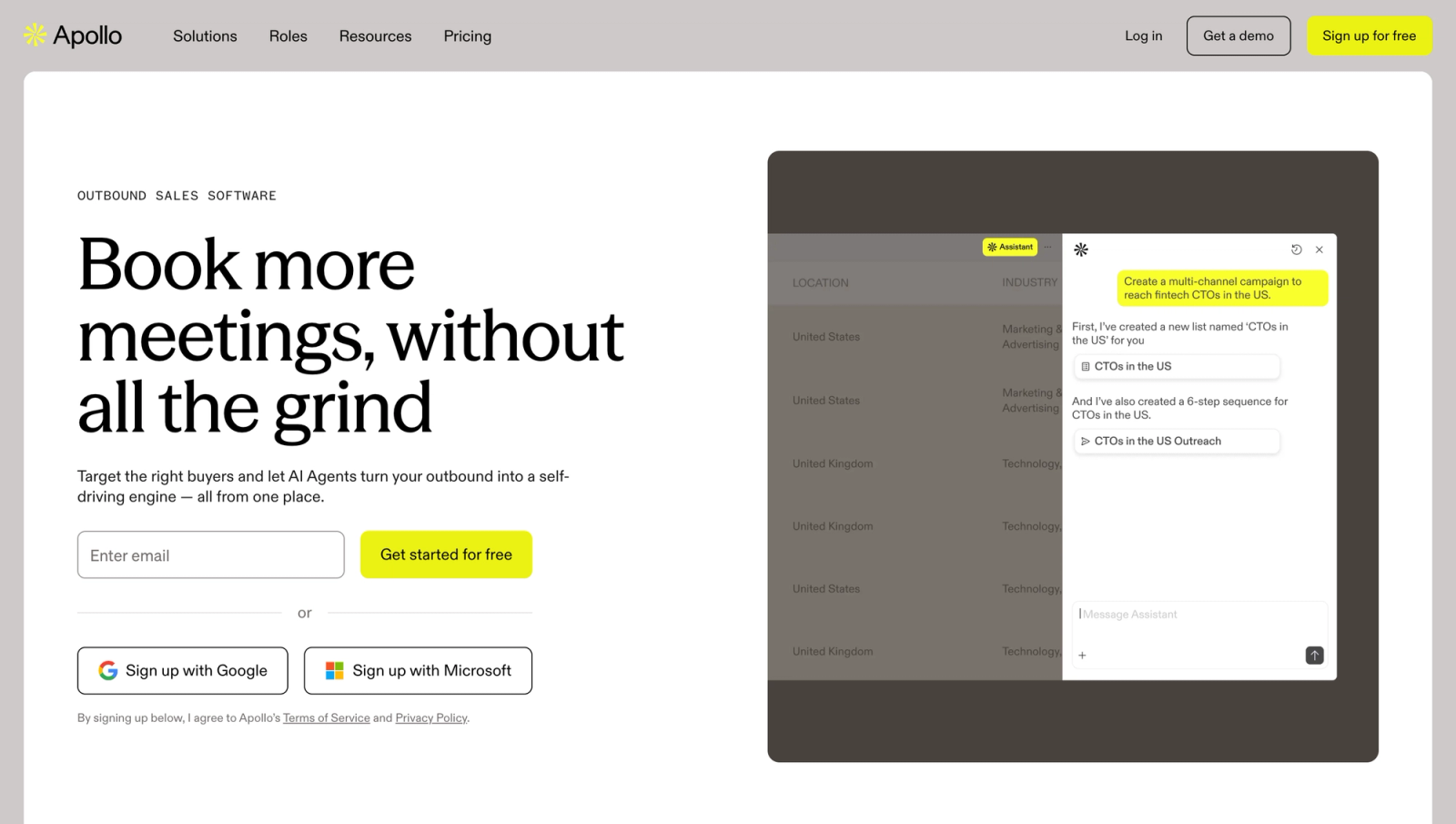
Apollo belongs in the shortlist when the real buyer is a sales team. It combines a database of more than 240 million contacts (as read on 30 September 2026) with prospecting and sequencing. Basic starts at $49 per seat per month on annual billing, and a free plan is available for testing.
Apollo lists API access on every plan, Free included, with rate limits set per plan, and its enrichment endpoints spend credits (as read on 30 September 2026). The constraint is licensing: its standard terms are for internal business use and do not let a customer power an external product, expose Apollo data to end users or resell it without a separate agreement. Compare the Apollo alternatives if sales workflow matters more than embedded data.
5. Cognism
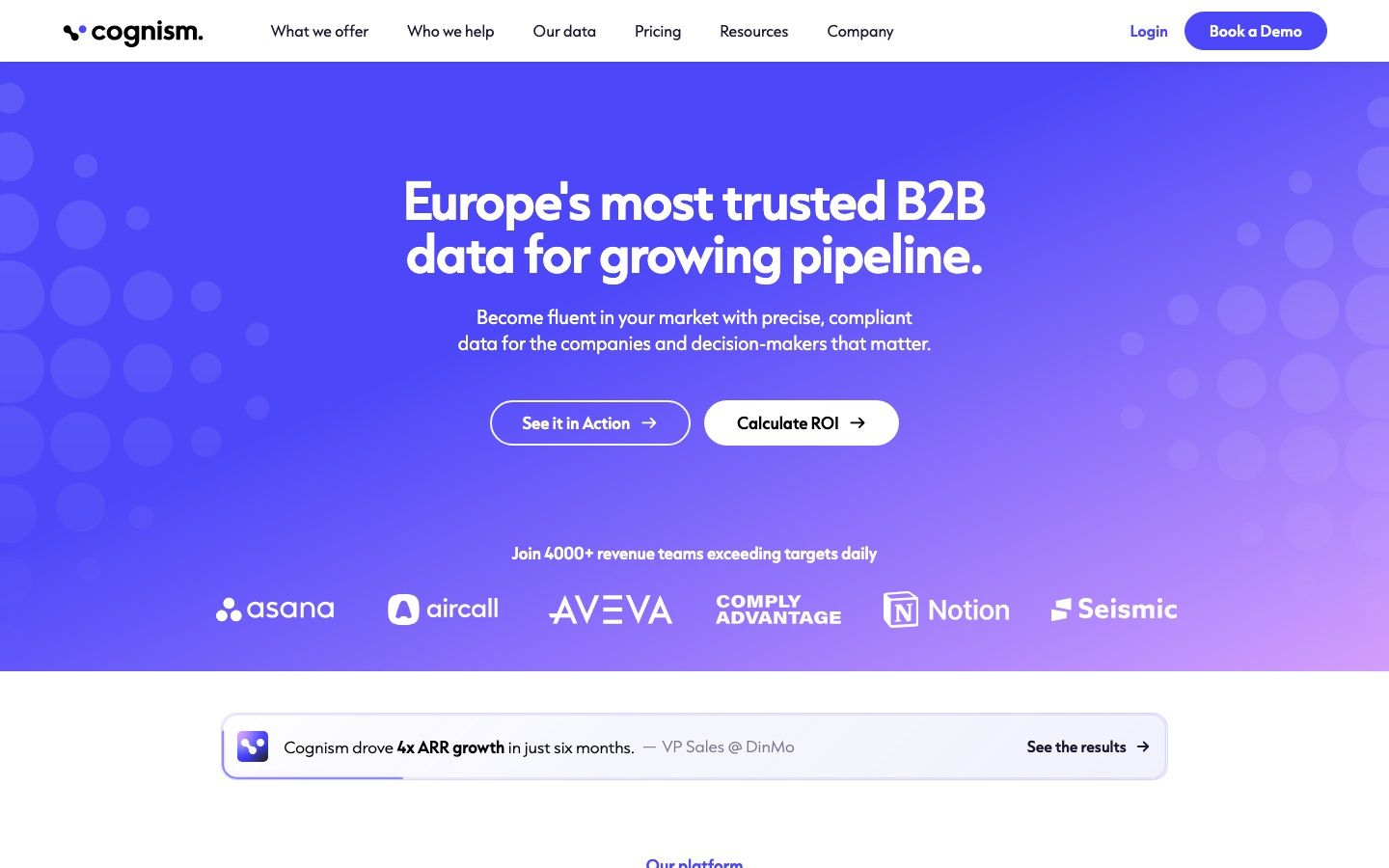
Cognism is the premium option for teams prioritising phone data. Its main pricing page does not publish a self-serve rate and requires a custom quote. Standard and Pro include five seats, while Data-as-a-Service for bulk or API delivery is scoped separately by volume and delivery method.
The reason to accept a custom contract is the documented phone verification and do-not-call screening workflow, not a broader raw dataset. If Coresignal feeds analysis or a product, Cognism is rarely the closest substitute. If the team calls European prospects and verified mobile quality determines conversion, test it on the exact market before deciding.
6. Crustdata
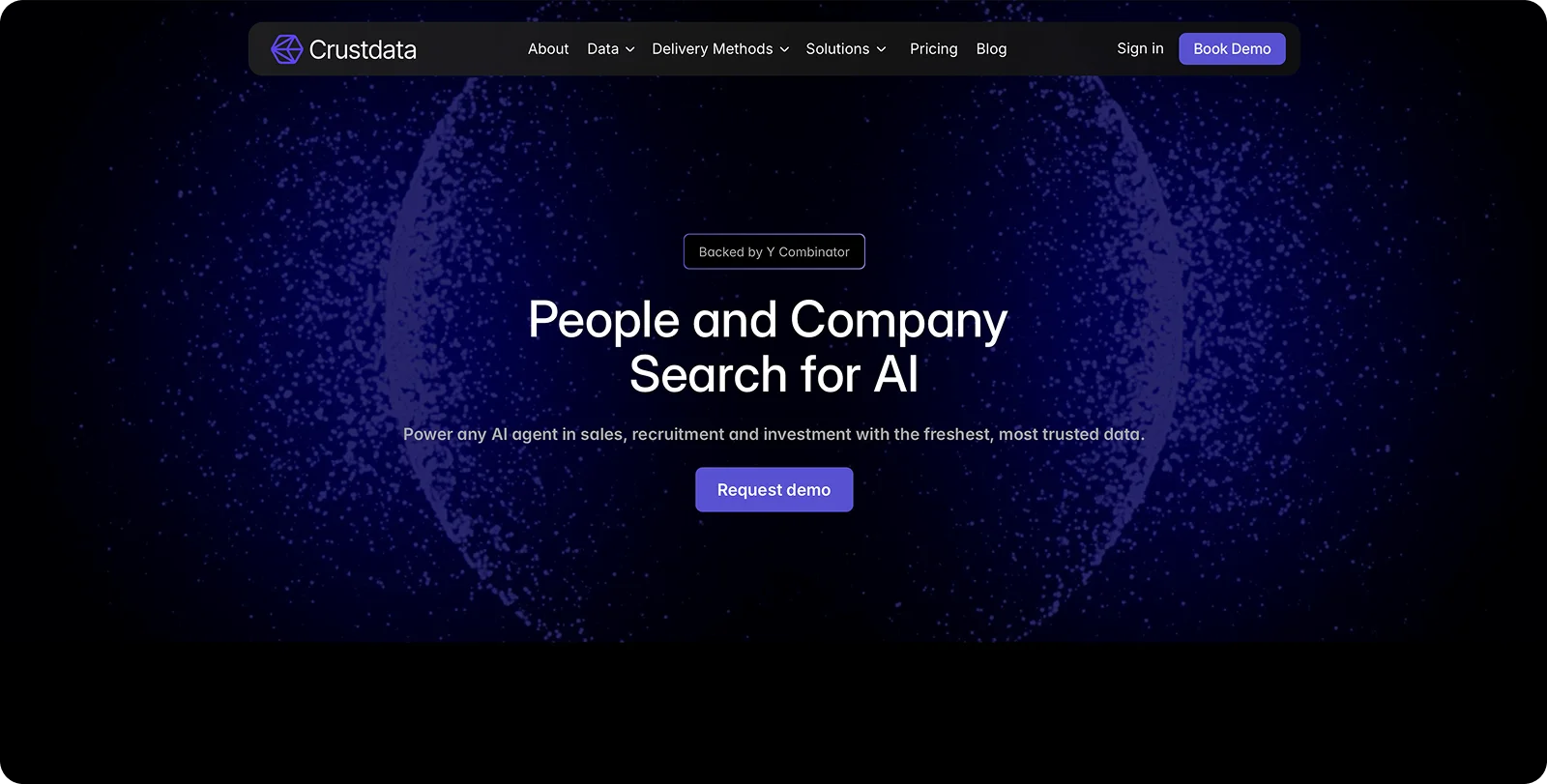
Crustdata is the most direct addition from the live search results because it competes for product builders, not only sales reps. Its official API pricing documentation uses credits by endpoint: indexed person, company and job search costs 0.03 credits per result, company enrichment costs 2 credits and person enrichment ranges from 1 to 7 credits depending on the requested fields.
Crustdata is strongest when freshness and event-driven workflows matter. It offers indexed and live search, enrichment, job and social post data, plus webhooks for monitoring changes. Public documentation exposes endpoint credit costs, while plan price, quota and some live endpoint access depend on the account. Ask for the dollar value of a credit and model each endpoint before comparing it with Coresignal.
7. Hunter
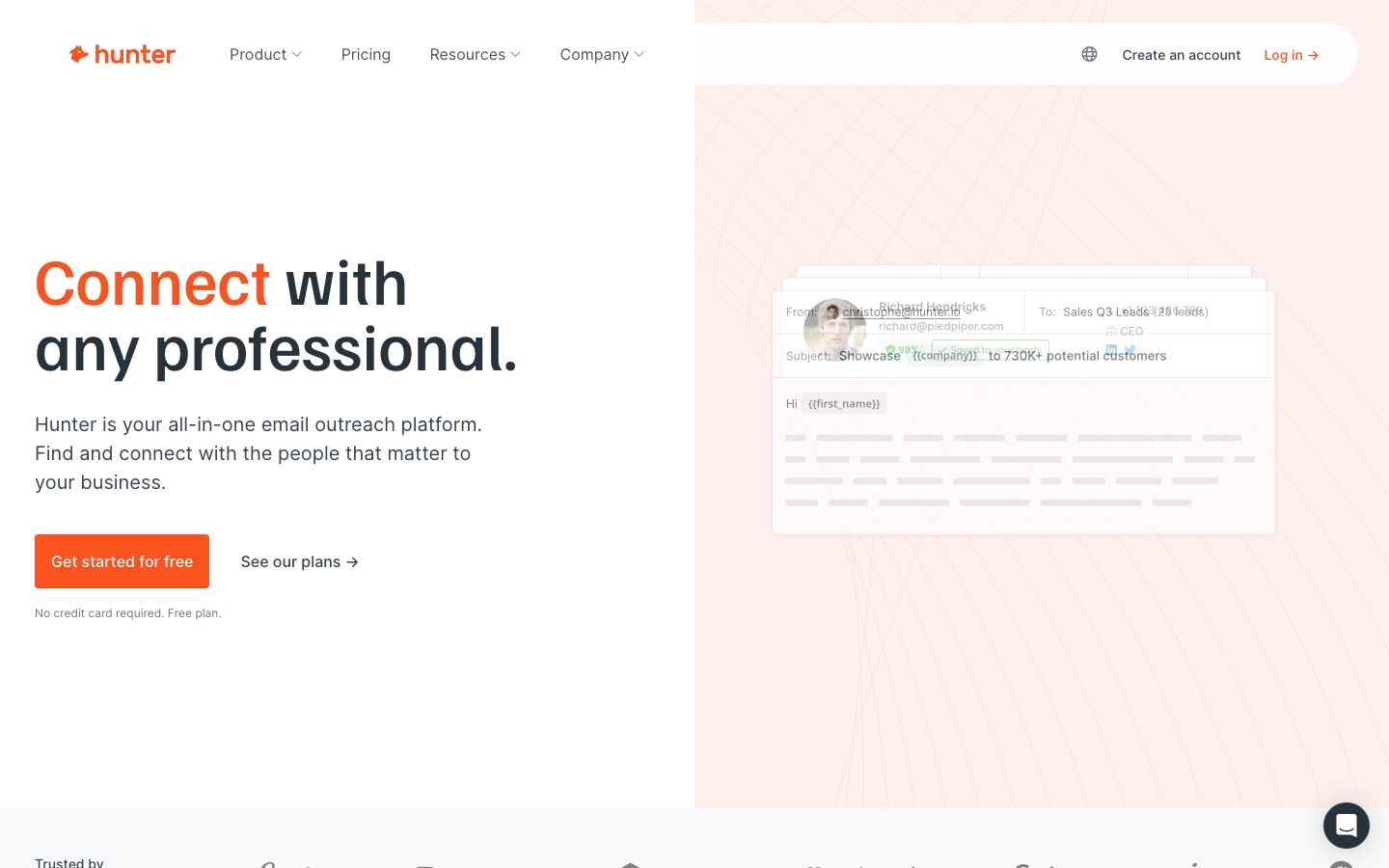
Hunter is the specialist choice when the honest requirement is email discovery and verification. Its free plan includes 50 credits per month. Starter costs $34 per month on annual billing, or $408 per year, with 24,000 credits across the year.
Hunter exposes an API and also sells Data Platform subscriptions designed for API and bulk usage. It does not provide company firmographics or a general job dataset, so it replaces one part of a Coresignal workflow rather than the data layer. Compare response coverage and verification results on your own domains before choosing it for cost alone.
Need outreach with data built in, not a data API?
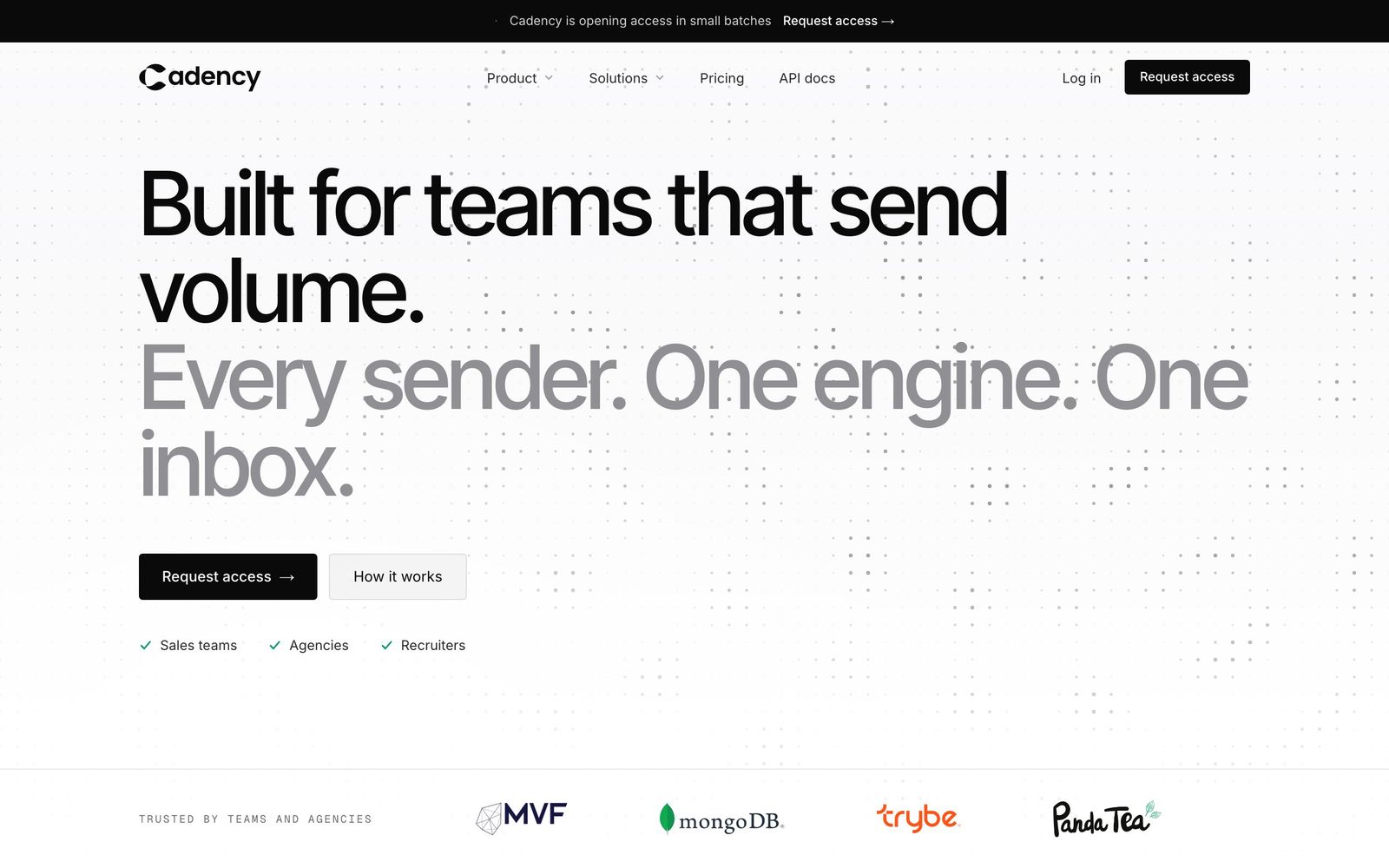
Cadency, built on Swarmhit, is not a data API, so replacing Coresignal with it would leave a data-layer gap. Coresignal, PDL and Crustdata return records. Cadency starts after that: it is outreach software for sales teams, recruiters and go-to-market agencies that send volume on LinkedIn and email, where one campaign runs across every LinkedIn sender and every mailbox, one sender per lead, with every reply in one unified inbox.
Its data is built in for outreach: a native people and company database, waterfall enrichment paid per verified hit, and CSV and Sales Navigator imports, so search, enrichment and sending sit in one place. It supports campaign creation but is not licensed as a raw data feed.
Teams that already license data from one of the vendors above can keep both layers: a data provider chosen for coverage, freshness and licensing, then Cadency as the sending layer. Records arrive by CSV import, any CRM or ATS connects through the API and webhooks on every plan, and each LinkedIn sender runs under its own ceiling and pacing on a dedicated proxy, with checkpoint handling in the cloud. Plans start at $199 a month with 5 LinkedIn senders included, and access is private, by request.
Where does B2B data come from, and why does it matter?
Several of the vendors above sell data derived from public web sources, and some say so explicitly: Bright Data lists datasets literally branded LinkedIn people profiles and LinkedIn company information. Others describe their sourcing differently, and Coresignal states it does not collect behind login-secured areas. That provenance is not a footnote for anyone building on it, because it is the variable that decides whether your supplier is still there next year.
LinkedIn's User Agreement prohibits developing, supporting or using software, scripts or browser plugins to scrape or copy the service, including profiles and other data, and LinkedIn has litigated over exactly this. The honest position is that you are buying a supply chain, not just a schema. The most useful question to ask a vendor is not how many records they have, it is where the records come from and what happens to your integration if that source closes.
This supply-chain risk is real. LinkedIn announced legal action against Proxycurl in January 2025, and Proxycurl later announced its shutdown. Products built around one provider needed an unplanned migration. Our Proxycurl alternatives guide covers replacement categories, but the durable lesson is architectural: isolate the vendor adapter before a supplier change becomes urgent.
Two practical hedges. Keep the vendor-specific parsing in one adapter rather than scattered through your codebase, and store the raw response alongside the normalised record so a re-parse does not require re-buying the data. Both cost an afternoon and save a quarter. Our overview of the LinkedIn scraper API landscape covers the legal and technical shape of this in more depth.
How should you compare Coresignal alternatives?
Monthly prices in this category are close to meaningless. Run this instead, and the decision usually makes itself:
- Count the records you need a month, honestly, including retries and refreshes. As a rule of thumb, assume your first estimate is low.
- Convert each vendor quote into the cost of the exact response you need. Coresignal and Crustdata publish record or endpoint credit costs. For seat tools, separate the user licence from exports, phone reveals and API usage.
- Multiply by the fill rate, not by the promise. A record you paid for that came back without the email you needed still cost money.
- Then check the licence and order form. Coresignal and PDL market product use cases, Cognism offers tailored Data-as-a-Service and Bright Data licenses bulk datasets, but none of those statements grants unrestricted redistribution. Customer-facing use, retention, derived data and resale rights depend on the signed contract.
| Requirement | Best first option | Why |
|---|---|---|
| Cached person or company API | People Data Labs | Close model with published testing guidance |
| Real-time product data and monitoring | Crustdata | Live search, enrichment and webhook-driven change tracking |
| A bulk dataset snapshot | Bright Data | Low record cost, with storage, refresh and licensing work on your side |
| Email finding and verification only | Hunter | Narrow API and bulk workflow focused on email |
| A sales rep needs data and outreach | Apollo | Seat-based prospecting and sequencing rather than an embedded data layer |
That last step invalidates more architectures than price ever does, and it is the one people check after signing rather than before.
FAQ
How much does Coresignal cost?
Coresignal offers a 7-day trial with 2,000 credits. Paid plans run from $49 per month for 2,500 credits on Mini to $5,000 for ten million credits on Elite. Starter is $199 for 12,000, Pro $499 for 35,000, Growth $1,000 for 150,000, Premium $1,500 for one million and Scale $3,000 for four million. Annual billing, offered from Starter upward, is 10 percent lower (as read on coresignal.com on 30 September 2026).
What is the cheapest Coresignal alternative?
Hunter is the lowest verified paid entry point in this list at $34 per month on annual billing, but it only handles email discovery and verification. PDL has a limited free tier, and Bright Data starts at $250 for 100,000 bulk records. The cheapest useful option depends on whether you need an API response, a bulk snapshot or one verified field.
Which alternative can I use inside a product I sell?
Coresignal and PDL market product use cases, Cognism offers a tailored Data-as-a-Service product and Crustdata is designed for APIs and agents. Bright Data licenses bulk datasets with redistribution and competitive-use restrictions. Apollo standard plans cannot power an external product. In every case, confirm customer-facing use, retention and redistribution rights in the signed order form.
Coresignal vs People Data Labs: which is cheaper?
At entry volume, PDL costs $98 per month for 350 person records, about 28 cents each. Coresignal Starter costs $199 for 12,000 credits, or roughly 17 to 33 cents per employee record, while Premium falls to about 1.5 to 3 cents. PDL has the smaller self-serve commitment. Coresignal becomes much cheaper per cached record at scale, subject to the fields and match quality you need.
Does anything else sell job posting data?
Yes. Coresignal charges one credit per job posting. PDL now has a beta Job Posting Search API at one credit per returned record, Crustdata offers indexed and live job search endpoints, and Bright Data sells bulk job datasets. Compare freshness and delivery shape: a query API, a live endpoint and a periodic dataset create different engineering and pricing trade-offs.
Which Coresignal alternative should you choose?
People Data Labs is the closest cached API alternative. Crustdata fits products that depend on real-time search and monitoring. Bright Data fits bulk snapshots. Clay orchestrates multiple sources, Cognism specialises in verified phone data, Apollo serves sales teams and Hunter narrows the job to email discovery and verification.
Model cost at your real volume, test the fields on a representative sample and read the licence before choosing. If records ultimately feed outreach rather than a product database, our LinkedIn prospecting tools guide covers the execution layer, while the outreach API comparison explains what a developer team needs after data acquisition.
For sales teams, recruiters and go-to-market agencies that send those records on LinkedIn and email from several senders, Cadency is our pick: one campaign across every LinkedIn sender and every mailbox, with the database and enrichment built in. Cadency began as our internal test bed for the Swarmhit engine, it was never meant to be public, and we kept it running for the teams who asked for it. Swarmhit itself is the API for developers who build their own outreach product.


