

The best People Data Labs alternatives in 2026 are Coresignal, Apollo, Clay, LeadIQ, Cognism, Lusha, RocketReach and Hunter. People Data Labs sells B2B person and company data by the record through an API, starting free at 100 monthly records and $98 a month on Pro, and the alternatives split cleanly into two camps: other data-by-the-record APIs, and seat-based tools that wrap data in a product.
Which camp you want depends on one question. Are you building something that needs a data layer, or are you a team that needs contacts to call? Every price below was read from the vendor's own pricing page on 10 August 2026.
- PDL is free for 100 monthly records with contact fields obfuscated, then $98 per month for Pro starting at 350 records, or $940 a year.
- Coresignal is the closest like-for-like: $49 a month for 2,500 credits, with employee, company and job posting datasets and credit costs published per record type.
- Apollo, Cognism, Lusha, LeadIQ and RocketReach sell seats and reveals, not licensed data, and most forbid using their data inside a product you sell.
- If you are building, read the licensing terms before the price list. That sentence decides more architectures than any coverage number.
The two camps, and the eight tools, below.
What People Data Labs actually sells
PDL is a data API, not a prospecting tool. There is no sequencer, no browser extension and no seat model: you query, you get records, you pay per match. Person Data runs free at 100 monthly records, Pro at $98 a month starting at 350 monthly records or $940 a year, and Enterprise on custom pricing. Company Data is priced separately, free at 100 records then $100 a month starting at 1,000. Volume discounts trigger as usage grows, and annual commitments save 20 percent while releasing all the data upfront.
The free tier has one important limitation: emails, phone and address data are obfuscated until you upgrade. Enterprise is the only tier with data licensing for on-premise and flat-file bulk delivery, plus SSO and SAML, which is the tier most product companies eventually land on.
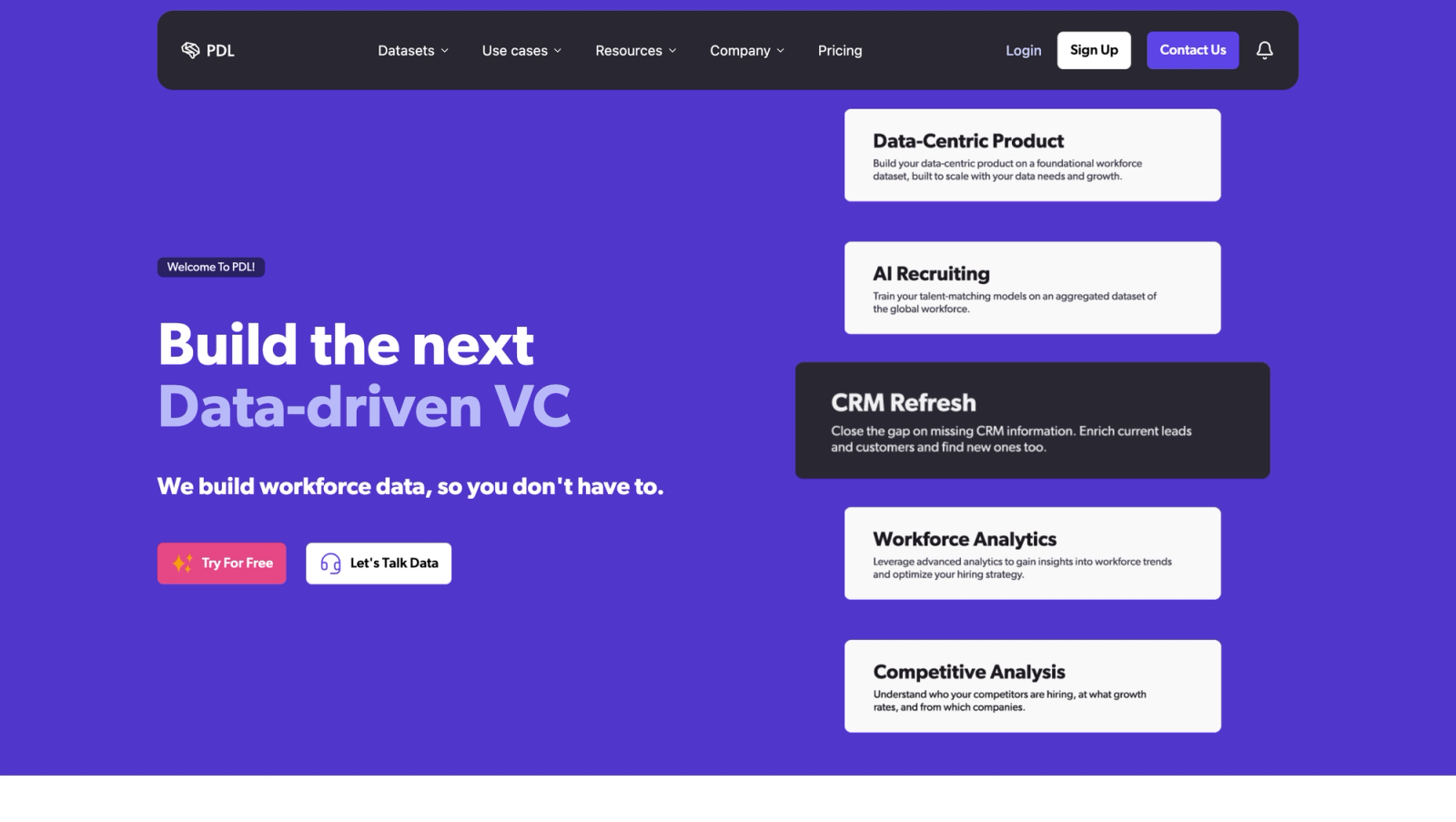
Its documentation is unusually precise about coverage, and that precision is the reason developers trust it: 2,466,550,602 person records, with emails on 658 million of them, a 26.7 percent fill rate, and phone numbers on 899 million, a 36.4 percent fill. Most vendors publish a round billion and leave you to discover the fill rate in production. PDL states ISO 27001 and SOC 2 Type 2 compliance.
Why teams outgrow People Data Labs
The reasons teams search for an alternative are consistent, and none of them is that the product is bad. They are properties of the per-record model itself, and knowing which one applies to you decides which camp below to shop in.
- Per-match economics stop scaling. At about 28 cents per record on the entry tier, enriching a million-row pipeline is a six-figure conversation, and the volume discounts that soften it arrive with an Enterprise contract. Teams doing bulk work migrate toward flat datasets like Coresignal's, or toward pay-per-result waterfalls that never bill a miss.
- Fill rates on niche segments disappoint. PDL's honesty is the tell here: 26.7 percent email fill overall means some verticals sit far below that, and a vendor betting on one database cannot fix a segment it simply does not cover. That failure mode is what routing across many providers exists to solve.
- The free tier cannot prove the case. With emails, phones and addresses obfuscated until Pro, you can test match rates but not deliverability, so the real evaluation starts at $98 a month. Several alternatives below let you validate contact quality on free credits before any commitment.
If none of these describes your situation, staying put is a defensible answer: PDL's coverage disclosure is still the best in this market. The alternatives exist for the day one of them starts to bite.
All nine options at a glance
Published rates on 10 August 2026. The model column is the one that decides architecture; gated means no price without a sales call.
| Tool | Entry price | Model | Sells data for use in your product? |
|---|---|---|---|
| People Data Labs | Free, then $98 per month | Per record matched | Yes, licensing on Enterprise |
| Coresignal | Free trial, then $49 per month | Credits per record type | Yes, datasets from $1,000 |
| Apollo | Free, then $49 per seat annual | Seat plus credits | No, not on standard plans |
| Clay | Free, then from $167 per month | Credits across many providers | Orchestration, not licensing |
| LeadIQ | Free, then $15 per month annual | Credits, slider-priced | API on all tiers, product use unstated |
| Cognism | From $14,000 a year | Credits, 5 seats included | Data as a Service, priced separately |
| Lusha | Free, then $37.45 per month annual | Credits per reveal | API from Pro tier |
| RocketReach | $33 per month annual | Lookups on monthly, exports on annual | API documented, tier unclear |
| Hunter | Free, then $34 per month annual | Search and verification credits | API on every tier including free |
Notice the last column. It is the difference between a vendor you can build on and a vendor you can only prospect with, and it is invisible on most pricing pages.
The 8 best People Data Labs alternatives
1. Coresignal
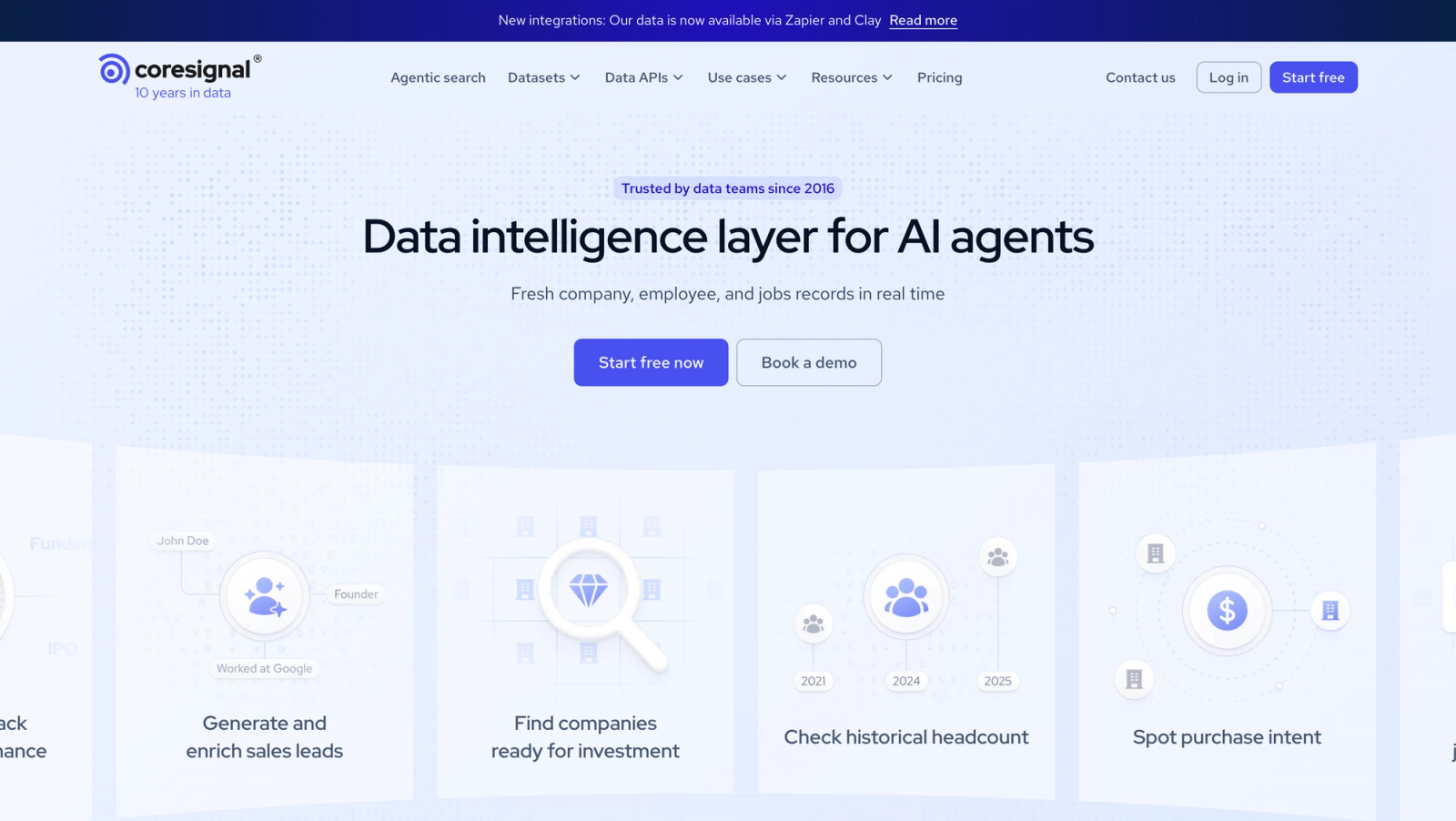
The closest direct substitute, and the one to price first. Coresignal runs a 7 day free trial with 2,000 credits, then Mini at $49 a month for 2,500 credits, Starter at $199 for 12,000, Pro at about $500 for 35,000, and upward through Growth at $1,000 for 150,000 to Elite at $5,000 for 10 million. Yearly billing takes 10 percent off and releases all credits upfront, though there is no Mini tier on annual terms.
Its credit costs are published per record type, which makes budgeting genuinely predictable: an employee record costs 10 to 20 credits, a company record the same, a job posting 1 credit, and contact enrichment 20. Agentic search costs 20 credits base plus 20 per 20 results, or 100 base on the reasoning tier. Monthly credits do not roll over below the Growth plan. Coverage claims are specific: 895M+ employee profiles, 70M+ companies, 468M+ job postings, 4.5B+ records overall.
Its compliance statement is the most concrete in this market: certified by the Ethical Web Data Collection Initiative, collecting only publicly available business data, and explicitly not scraping behind login-secured areas. For a product that will face a security review, that sentence is worth more than a coverage number.
For a deeper pass on this segment, our Coresignal alternatives guide compares the per-record economics across seven vendors.
2. Apollo
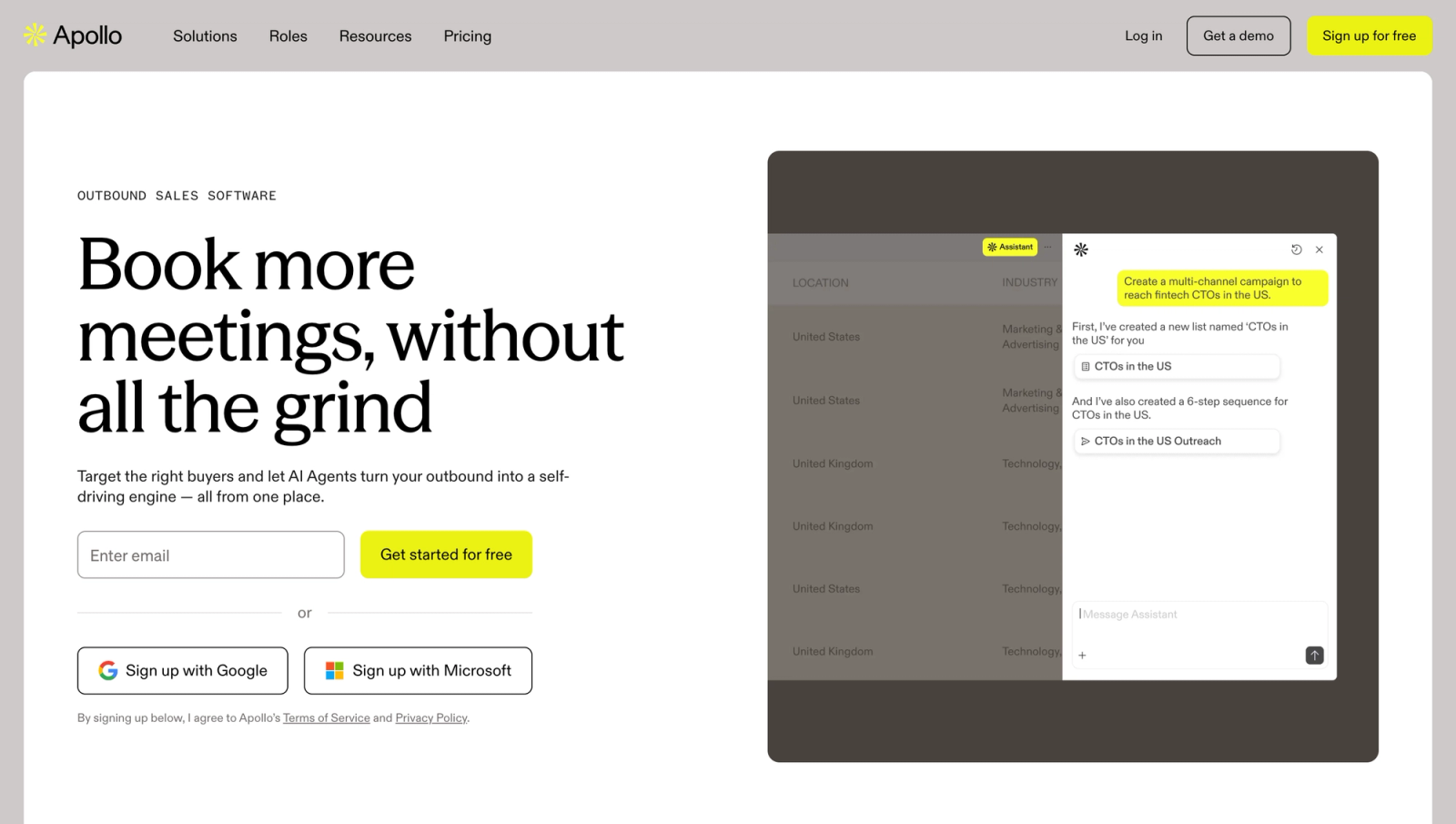
The alternative for teams who realise they wanted a product, not a data layer. Apollo bundles a 240M+ contact database with a sequencer and a free tier, at $49 per seat per month on annual billing. The critical difference from PDL is licensing: Apollo's terms do not allow using standard plans to power external products or resell its data, and API access sits on custom plans. Perfect for an SDR team, wrong for a product. Our full breakdown compares it against the field, and the Unipile comparison covers the API-layer end of the same market.
3. Clay
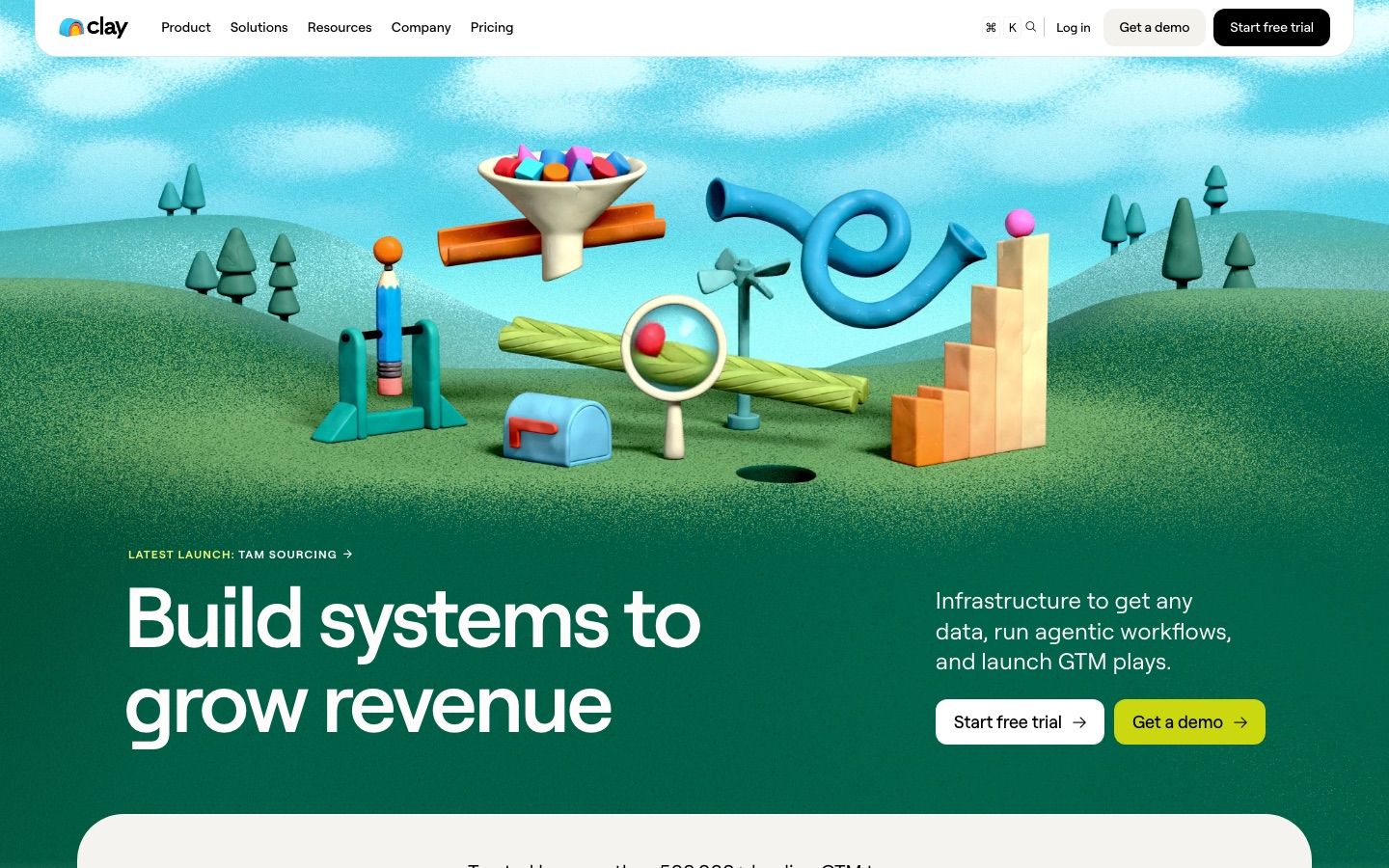
Not a data source but a router. Clay runs waterfall enrichment across dozens of providers, retrying a contact against source after source until one returns a match, which typically beats any single vendor's fill rate on hard segments. Credit-based, so cost tracks how many providers you call rather than how many seats you have. It is the pragmatic answer when PDL's coverage is good but not good enough, and you would rather pay for retries than negotiate a second contract. Our comparison covers the credit mechanics.
4. LeadIQ
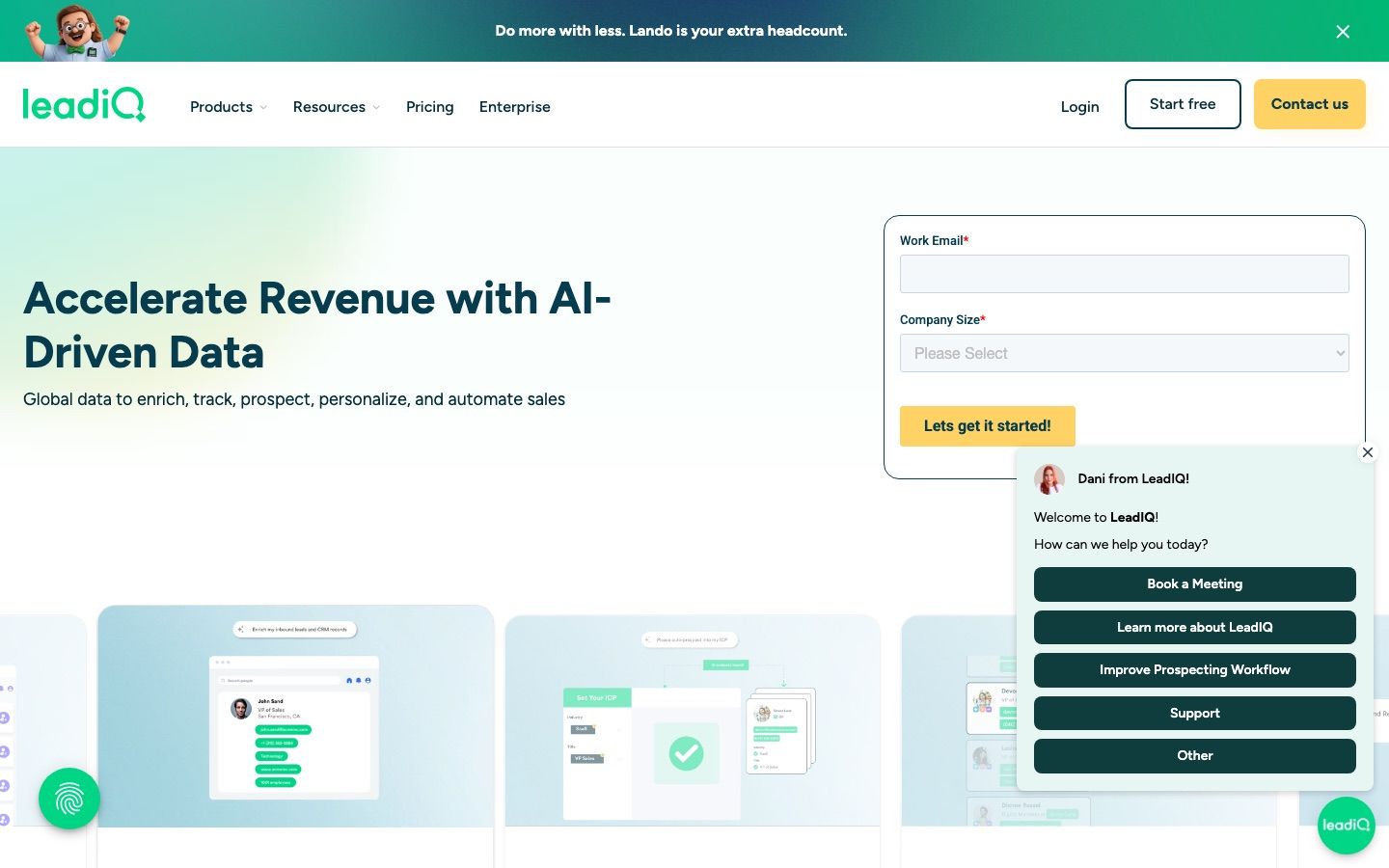
The most transparent credit economics in the seat-based camp. A free plan gives 50 credits; Pro is slider-priced from $15 per month on annual billing at minimum volume, or $20 monthly. Costs are published per action: 1 credit for an email, 10 for a phone number, 11 for both, 3 for account enrichment. It queries a live dataset of 750 million professional profiles refreshed monthly, with up to 200 million records re-verified as people change roles, and states that every supplier passes a strict GDPR and CCPA compliance review. API access is on every tier including free, which is rare and useful for prototyping.
5. Cognism
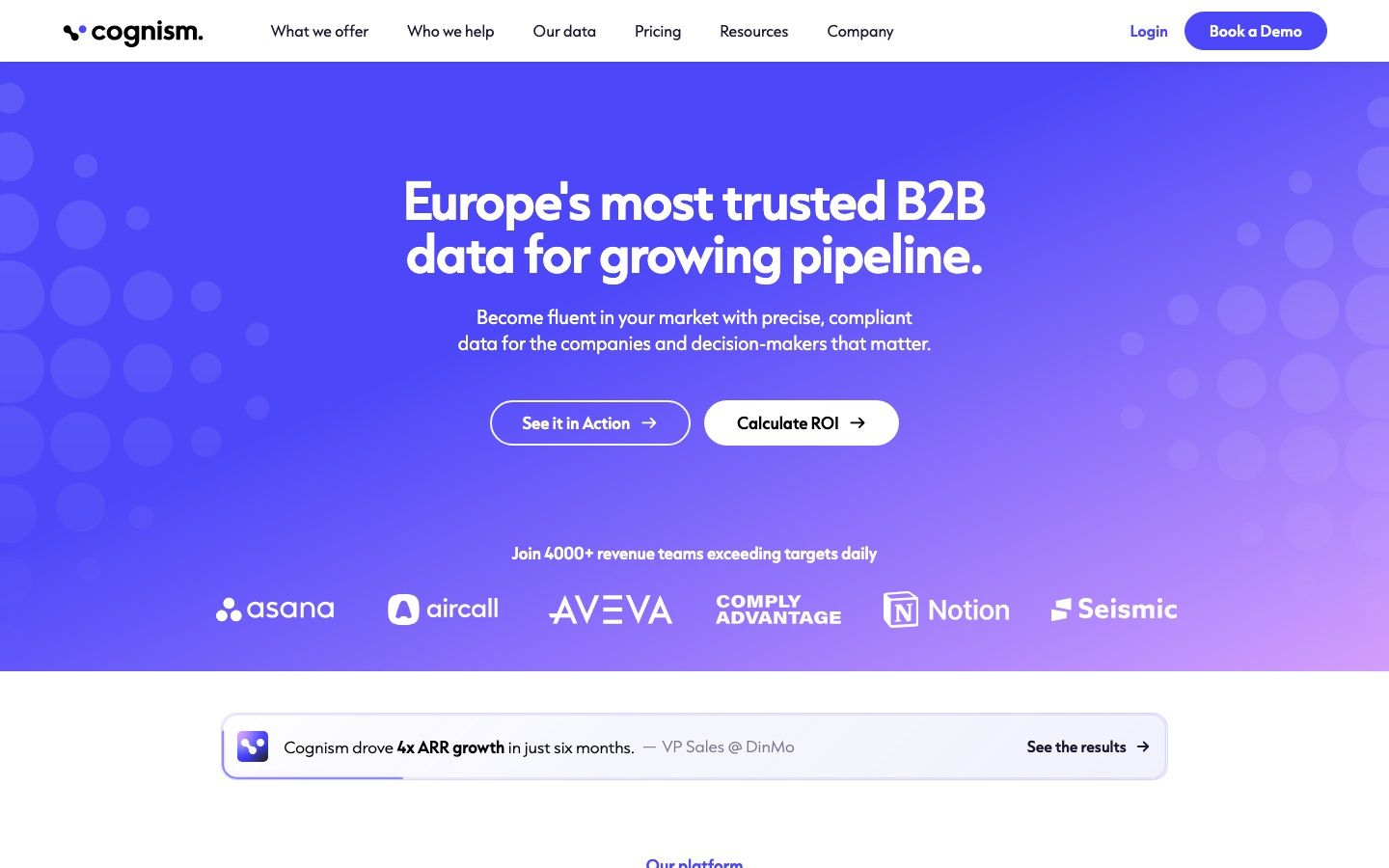
The premium option when phone verification matters more than volume. Cognism's Diamond Data is verified by humans calling the numbers, with over 10 million phone-verified contacts globally and 95 percent of director-level and above contacts refreshed every 30 days. It scrubs against do-not-call registries across the US, Australia, UK, France, Germany and other European countries. Pricing starts at $14,000 a year for Standard and $18,750 a year for Pro, each including five seats, with one credit per revealed contact. A Data as a Service option exists for bulk delivery, priced by volume and delivery method.
Teams priced out of Cognism can compare the field in our Cognism alternatives guide, which covers the cheaper phone-verified options.
6. Lusha
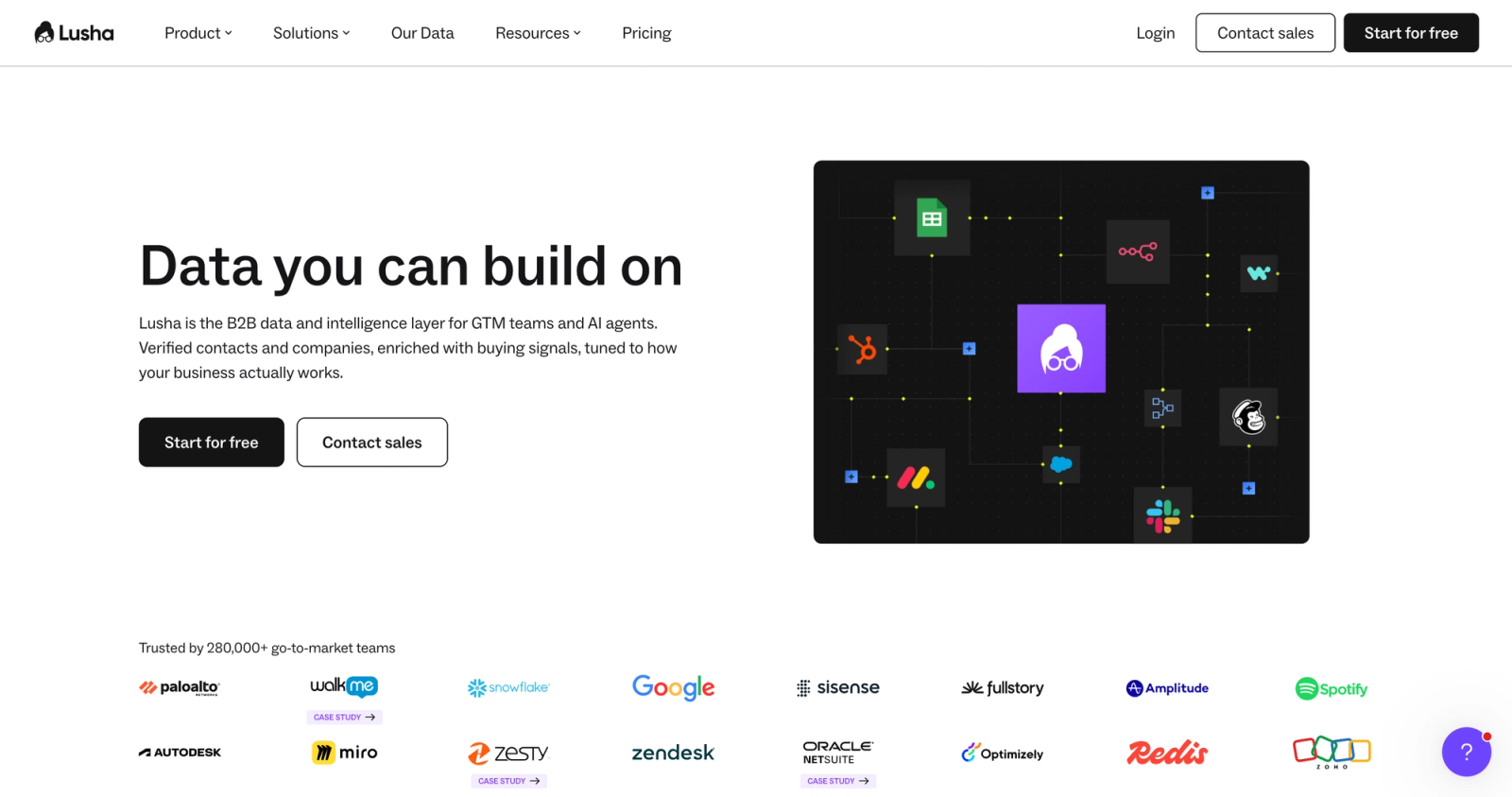
The lightweight reveal layer. Free at 40 credits a month, then $37.45 per month on annual billing for 4,800 credits a year, $48.95 for Pro with 7,200 and two free seats, and $259.95 for Premium with 40,800 and five. API access starts on the Pro tier, with an advanced tier above it. Its compliance rows list GDPR, CCPA, SOC 2, ISO 27701 and do-not-call. Note that the annual prices were promotional when we checked, against list prices of $49.90, $69.90 and $399.90. Good for browser-side lookups, thin as a data layer.
7. RocketReach
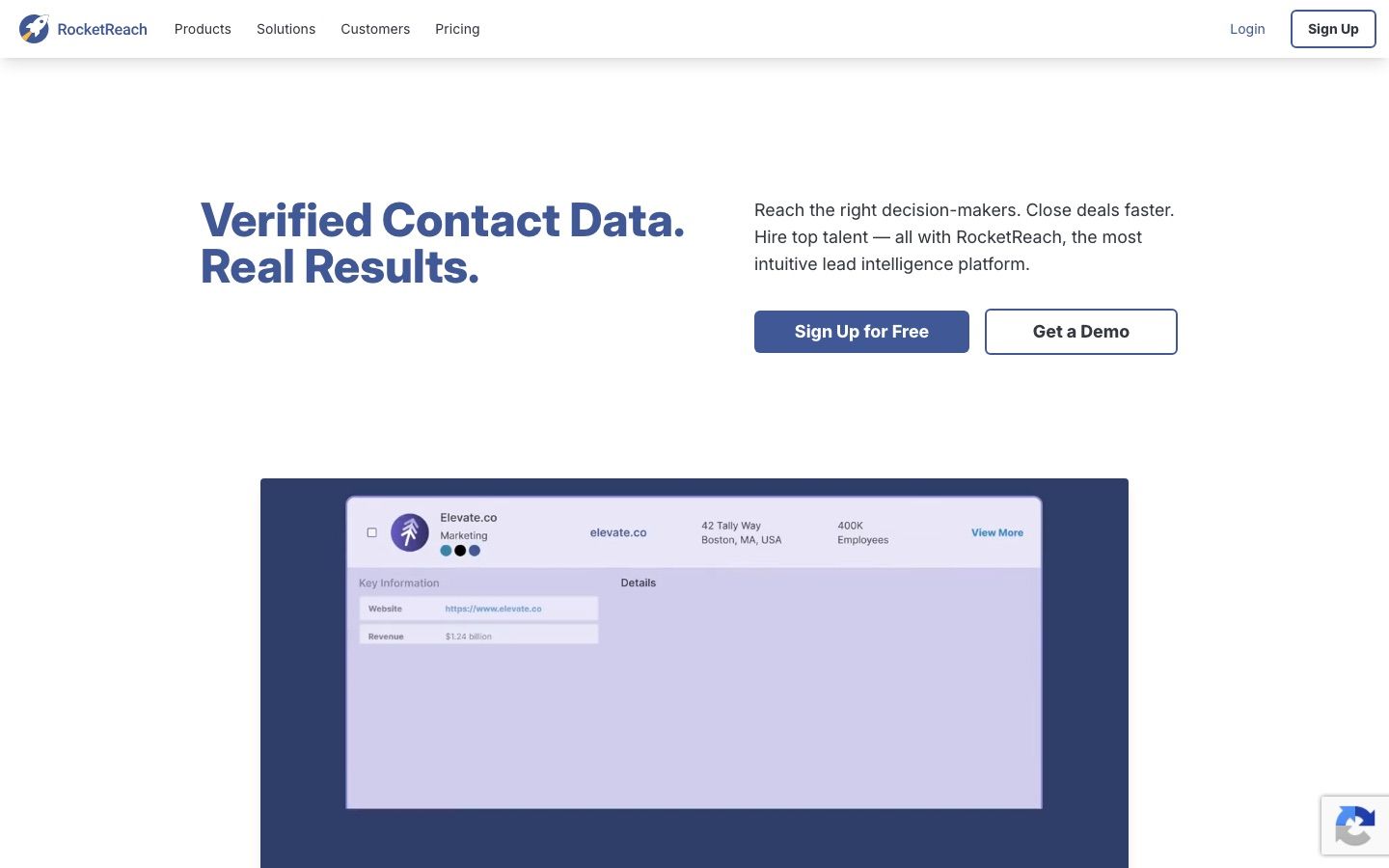
The pay-per-hit model: on free, monthly and legacy plans a lookup is consumed only if RocketReach finds and verifies an email or phone. Essentials is $33 a month on annual billing ($399 a year), or $69 monthly, for 100 lookups; Pro is $75 annual ($119 monthly) with phone numbers and Ultimate $142 annual ($209 monthly). Annual plans do not meter lookups and cap exports instead. It claims 700 million professionals and 35 million companies with 98 percent accuracy verified on demand. Team plans start around $6,000 annually. API access is documented but the per-tier mapping is not clear from the pricing grid, so confirm before designing around it.
8. Hunter
The specialist, and the cheapest way to solve one specific problem. Hunter does email only, no phone data: domain search, email finder and verification, priced in credits where one credit finds an email and half a credit verifies one. Free at 50 credits a month, then $49 monthly or $34 on annual billing for 2,000 credits a month, up to $299 or $209 annual for 25,000. The API is on every tier including free, and a separate data platform offers Hunter data via API only. If your product needs verified work emails and nothing else, this is a fraction of a full-database contract.
Cost per record, compared honestly
The models are hard to compare because the units differ. Here is each vendor's published entry tier normalised to what it delivers, which is the closest to like-for-like this market allows.
| Vendor | Entry tier | What it includes | Effective unit |
|---|---|---|---|
| People Data Labs | $98 per month | From 350 person records | About 28 cents per record |
| Coresignal | $49 per month | 2,500 credits | About 2 cents per credit, 10 to 20 credits per record |
| Hunter | $34 per month annual | 2,000 credits a month | About 1.7 cents per email found |
| LeadIQ | $15 per month annual | Slider-priced credit volume | 1 credit per email, 10 per phone |
| Lusha | $37.45 per month annual | 4,800 credits a year | About 9 cents per reveal |
| RocketReach | $33 per month annual | 100 lookups a month on monthly billing | About 33 cents per hit on annual billing, no charge on a miss |
Two warnings about that table. Cheap per unit is meaningless if the fill rate on your segment is poor, which is why PDL publishing 26.7 percent email fill is more useful than a competitor publishing a bigger total. And a credit is not a record: on Coresignal an employee record costs 10 to 20 credits, so the per-credit price needs multiplying before comparison.
The waterfall newcomers: pay per result instead of per record
A newer generation of enrichment APIs answers the same coverage question from a different angle. Where People Data Labs sells its own records per match, these tools sit on top of many providers, or on their own resolution engines, and bill only when a valid result comes back. Three are worth knowing next to the vendors above.
FullEnrich runs a waterfall across more than 15 enrichment vendors per contact, at 55 EUR a month for 1,000 credits: one credit for a verified work email, ten for a mobile. Unlimited users, an API and an MCP server ship on the paid tier, and Enterprise carries bring-your-own-key terms for teams already holding vendor contracts.
LeadMagic exposes 15+ enrichment endpoints behind one API with a single credit pool, from $41 a month on annual billing for 24,000 credits a year, and charges nothing on a failed match. It is built for pipelines rather than people: native Clay, Apollo and Smartlead integrations, plus an MCP server.
CompanyEnrich attacks the company half of what PDL sells: a company-data API with enrichment, search, semantic and lookalike search, and a published credit cost per endpoint, from $49 a month for 5,000 credits down to about a tenth of a cent per credit at its Scale tier. For firmographic pipelines that never needed person records, that is the cheapest raw data in this comparison.
The full breakdown of this pay-per-result generation, including BetterContact, Findymail, Enrow and Icypeas, lives in our Lusha alternatives guide, which ranks them on the quality commitments each one makes.
What the data layer does not solve
A pattern worth naming, because it costs teams a quarter of roadmap. Buying a data API solves discovery: who exists, where they work, how to reach them. It does not solve any of the machinery around it, and that machinery is usually what the project actually needed.
- Deduplication and identity resolution across sources, so the same person from two providers is one record in your system.
- Freshness policy: how often you re-enrich, what triggers a refresh, and what a stale phone number costs you when a rep dials it.
- Storage and retention, including the deletion path when someone exercises a privacy right against data you bought rather than collected.
- Match-rate monitoring per segment, because a vendor whose overall fill rate is 40 percent may be at 5 percent on the niche you actually sell into.
None of that is a criticism of PDL or its alternatives; it is simply the half of the build that no data contract covers. Budget for it before comparing per-record prices, because a vendor that is two cents dearer but returns cleaner identifiers is often the cheaper decision once this work is priced in.
Choosing between the two camps
The decision is architectural, not commercial, and it comes down to three questions.
- Will the data live inside a product you sell? Then you need a vendor that licenses data: People Data Labs Enterprise, Coresignal datasets, or Cognism's Data as a Service. Most seat-based tools forbid this outright.
- Do you need a UI, or an endpoint? PDL, Coresignal and Hunter give you an endpoint. Apollo, Cognism, Lusha and LeadIQ give you a product with an API attached, and you pay for the product either way.
- Is coverage or verification the constraint? Coverage favours the record-level vendors and Clay's waterfall; verification favours Cognism's human-called phones and Hunter's email checks.
Answer those three and the shortlist usually collapses to two vendors, at which point a trial on your actual segment settles it faster than any comparison table, this one included.
Switching from People Data Labs: what to test before you sign
A data-layer migration fails quietly, weeks after the contract, when a field you assumed would fill turns out not to. An afternoon of testing prevents most of it.
- Replay a real sample. Export 500 records from your production segment and run them through the candidate's trial. Count usable values per field, not matches: a hit with a stale phone number is a miss that costs a dial.
- Read the licensing clause before the price list. If the data lives inside a product you sell, confirm the new vendor allows it in writing. Most seat-based tools forbid it, and discovering that after integration is an architecture rewrite.
- Convert credits to records before comparing. A $49 tier sounds cheaper than $98 until you multiply: on Coresignal an employee record costs 10 to 20 credits, so 2,500 credits is 125 to 250 records, not 2,500.
- Test the deletion path. Run one erasure request end to end and time it. You inherit privacy obligations for purchased data, and a vendor that cannot propagate a deletion becomes your compliance problem.
- Check refresh cadence on the fields you dial. Ask when your segment was last re-verified, not how often the database updates in aggregate. People change jobs faster than most datasets change rows.
- Keep the PDL free tier alive as a benchmark. It costs nothing, the obfuscated records still show match rates, and a quarterly replay against it tells you whether the switch is still paying for itself.
Budget the migration itself as part of the price. Re-mapping schemas, re-running dedupe and re-training a team on new fill behaviour is real work, and a vendor that is marginally cheaper per record rarely covers it.
LinkedIn actions, not LinkedIn data
A clarification, because Swarmhit belongs to a different category than every vendor above and comparing them head to head would mislead. The eight alternatives here sell data. Swarmhit does not sell data as a product and is not a drop-in replacement for a data API.
Swarmhit executes outreach on LinkedIn through accounts its customers own and connect: connection requests, messages, InMails, profile visits, voice notes and post comments, with per-action daily caps, managed warmup and a dedicated proxy on every sender. Prospect extraction runs only through those same connected accounts, capped at 2,500 profiles a day from Sales Navigator search and 1,000 a day from standard LinkedIn search. There is no cookie-less scraping, which we consider illegal, and no data resale.
That boundary is not stylistic. LinkedIn's user agreement prohibits copying, using or distributing information obtained from the service, whether directly or through third parties such as search tools or data aggregators, without the consent of the content owner. Buying a dataset does not automatically place you outside the agreement you accepted when you created your account. None of this is legal advice, and your jurisdiction and use case matter.
Its built-in database of 1B+ contacts across 60M companies is sourced through third-party data providers, with free monthly credits then pay as you go, and exists so a campaign can be built without leaving the platform rather than as a licensable data product. The common pattern is both: a data vendor answers who to contact, and Swarmhit runs the conversation, connected through an API, webhooks and an MCP server.
FAQ
What is the best People Data Labs alternative?
Coresignal, for most teams evaluating PDL directly: the same data-by-the-record model, published per-record credit costs, a $49 entry tier, and job postings as a first-class dataset. Clay is the better answer if coverage rather than architecture is the problem, because its waterfall retries many providers rather than betting on one.
Is People Data Labs free?
There is a permanently free tier: 100 monthly person records and 100 company records. The catch is that emails, phone numbers and addresses are obfuscated on the free plan, so it is useful for testing schema and match rates rather than for real enrichment. Pro at $98 a month unlocks the contact fields.
Can I use this data inside my own product?
Only with the vendors that license it. People Data Labs offers data licensing on Enterprise with API or flat-file feeds, Coresignal sells datasets from $1,000, and Cognism has a Data as a Service option. Apollo explicitly does not allow standard plans to power external products or resell its data. Read that clause before the pricing page, because it invalidates architectures that otherwise look affordable.
How do I compare coverage between these vendors?
Ignore total record counts and ask for fill rates on the fields and segments you need. People Data Labs publishes both, 2.47 billion person records with 26.7 percent email fill and 36.4 percent phone fill, which is the disclosure standard to hold others to. Then run the same 500 target accounts through two trials and count usable records, because your segment is the only benchmark that predicts your results.
Do these vendors send outreach?
Apollo does. Cognism, Lusha, LeadIQ and RocketReach are data and reveal tools with integrations rather than sequencers. People Data Labs, Coresignal and Hunter's data platform are APIs with no outreach layer at all. If you are replacing PDL with a data-only vendor, budget separately for whatever sends the messages.
How much does People Data Labs cost?
Person Data is free for 100 monthly records with contact fields obfuscated, then $98 a month on Pro starting at 350 records, or $940 a year. Company Data is priced separately: free for 100 records, then $100 a month starting at 1,000. Annual commitments save 20 percent and release the data upfront. Enterprise is custom-priced and is the only tier with data licensing for on-premise and flat-file delivery.
What is the difference between People Data Labs and Coresignal?
Same model, different strengths. Both sell data by the record through an API and license it for use in your product. Coresignal enters cheaper at $49 a month, publishes credit costs per record type, and treats job postings as a first-class dataset. PDL counters with deeper person records and the most honest coverage disclosure in the market, publishing fill rates rather than only totals. Bulk and job-market work favours Coresignal; person enrichment depth favours PDL.
The short version
People Data Labs is a clean, well-documented data API with unusually honest coverage disclosure, priced per record from free to enterprise licensing. Its alternatives divide by architecture rather than by feature: Coresignal and Hunter compete on the same data-by-the-record ground, Clay solves coverage by routing across many sources, and Apollo, Cognism, Lusha, LeadIQ and RocketReach sell seats with data attached.
Decide whether you are building or prospecting, check the licensing clause before the price, and trial two vendors on your real segment. If the outreach half is still open, our automation hub covers the tools that run it, and our safety guide covers what LinkedIn tolerates when they do.


