

The best Cognism alternatives in 2026 are Apollo for an all-in-one sales workflow, Lusha or Kaspr for lower-cost contact reveals, Clay for data waterfalls, and People Data Labs for API-first data delivery. Cognism currently publishes starting prices of $12,750 for Standard and $17,000 for Pro, with five seats included in both packages.
Every price and credit model below was checked against an official vendor source on 20 August 2026, unless a later check date is given next to it. When a live rate could not be verified, this guide says so instead of turning an old screenshot or customer anecdote into a rate card.
- Cognism publishes annual starting prices of $12,750 for Standard and $17,000 for Pro in its 2026 sales intelligence guide. Its main pricing page still requires a sales call for a team-specific quote.
- No alternative in this list publicly documents Cognism's combination of phone-verified numbers and screening against 15 do-not-call lists, as read on 30 September 2026. If verified European mobile data is the reason you bought Cognism, test replacements on your own target list before cancelling.
- If you bought Cognism for broad prospecting coverage rather than verified mobiles, Apollo at $49 per seat and Lusha at $37.45 per month on annual billing, as read on 30 September 2026, offer much lower self-serve entry points.
- Kaspr is owned by Cognism. Its annual Starter rate begins at €45 per user per month, making it the least disruptive lower-cost option for LinkedIn-first prospecting.
Tool by tool, with the credit models spelled out, below.
How does Cognism pricing work in 2026?
Cognism sells two sales prospecting packages. Standard covers list building with firmographic, technographic and signal filters, AI account research and CSV export. Pro adds premium mobile filtering, on-demand mobile verification and intent data. Both include five seats. Cognism's main pricing page asks buyers to talk to sales, while its own 2026 comparison content publishes starting prices of $12,750 for Standard and $17,000 for Pro. CRM Enrichment and Data-as-a-Service are priced separately.
The credit model is one of the cleaner ones in this category. One credit reveals one contact, viewing a contact you already revealed costs nothing, and the same credit pool works across the prospecting platform, Enrich and the API without a surcharge. Compare that with vendors who charge different rates depending on where the data leaves the building.
The case against Cognism is therefore not opaque credit mechanics. It is the five-seat annual floor and the need for a sales process to get your actual quote. A small team can test Apollo, Lusha, Kaspr, LeadIQ or UpLead on a published self-serve plan before deciding whether the data covers its segment.
How do 9 Cognism alternatives compare?
Rates checked on 20 August 2026, with Lusha re-read on 30 September 2026. Annual pricing is shown where it could be verified from the vendor, because that is the rate most vendors lead with. Lusha's annual rate is a standing 25 percent off its monthly price rather than a promotion, and RocketReach is left unpriced where current public figures conflict.
| Tool | Entry price | Model | Best for |
|---|---|---|---|
| Cognism | From $12,750 per year | Credits, five seats included | Verified European mobiles |
| Apollo | Free, then $49 per seat annual | Seat plus credits | All-in-one prospecting and sequencing |
| Clay | Free, then from $167 per month annual | Actions plus data credits | Orchestrating multiple data providers |
| Lusha | Free, then $37.45 per month annual | Credits per reveal | Quick reveals inside LinkedIn |
| ZoomInfo | Not published | Quoted per package | Enterprise coverage and intent |
| Kaspr | Free, then €45 per user annual | Phone, email and export credits | LinkedIn reveals and light automation |
| LeadIQ | Free, then $15 per month annual | Credits, volume slider | Job-change tracking and capture |
| UpLead | $74 per month annual | 1 credit per contact | Accuracy guarantee |
| RocketReach | Verify current checkout | Lookups or annual export allowance | Paying for verified results |
| People Data Labs | Free, then $98 per month | Per record matched | Building on raw data |
The column that decides your bill is model, not the headline price. A quoted annual contract, a $49 seat and a per-record API charge behave nothing alike as volume grows, and only the self-serve options can be tested without a sales process.
What are the 9 best Cognism alternatives?
1. Apollo.io
The most common landing spot for teams leaving Cognism on price. Apollo bundles a contact database it lists at 240M+ (as read on 30 September 2026) with a sequencer and a usable free tier. Basic costs $49 per seat per month on annual billing, Professional $79 and Organization $119 with a three-seat minimum. Monthly billing is $65 for Basic and $99 for Professional, while Organization is annual only. Annual credit grants are 30,000 per Basic user, 48,000 per Professional user and 72,000 per Organization user.
Two rules in the small print decide the fit. Apollo charges credits for reveals, not exports: as read on 30 September 2026, an email costs 1 credit and a phone number 8, and unused credits expire each cycle. Apollo's standard plans are for internal business use and cannot power an external product or expose data to customers without a separate agreement. If embedding data is the plan, that restriction matters more than the seat price. Compare the Apollo alternatives before choosing the all-in-one route.
Where it loses to Cognism: European mobile coverage, and phone numbers screened against do-not-call registries. Where it wins: everything else costs a fraction as much to find out.
2. Clay
Clay is the answer when the real problem was never one vendor's coverage. It runs waterfalls across many data providers, so a contact that one source misses can be tried against the next. Launch starts at $167 per month on annual billing with 180,000 actions and 30,000 data credits per year. Growth starts at $446 with 480,000 actions and 72,000 data credits per year. A free tier is available for testing the workflow.
Clay charges Data Credits and Actions only when an enrichment step returns new information. A waterfall can still consume credits across several providers when an early result is returned but fails validation, because the validation and later successful steps may each be billable. A complete no-result waterfall consumes neither.
Worth reading before you commit: our breakdown of the Clay alternatives covers where the orchestration model stops being worth the credits.
3. Lusha
The cheapest credible replacement if you use Cognism mostly as a reveal tool inside LinkedIn. Lusha runs a free tier at 40 credits per month, then charges, on annual billing as read on 30 September 2026, $37.45 per month for Starter with 4,800 yearly credits, $52.45 for Pro with 7,200 credits and two included seats, and $299.95 for Premium with 40,800 credits and five seats. Scale is quoted.
As read on 30 September 2026, Lusha's FAQ lists API access on Premium and Scale only, so confirm which tier carries the API, webhooks and CSV enrichment before budgeting. Those annual rates are a standing 25 percent off monthly billing; on 20 August 2026 Pro and Premium were advertised lower, at $48.95 and $259.95, under a promotion that no longer showed on 30 September. Lusha reveals contacts rather than phone-verifying priority mobile numbers. Our detailed Lusha alternatives comparison breaks down its credit economics against other data vendors.
4. ZoomInfo
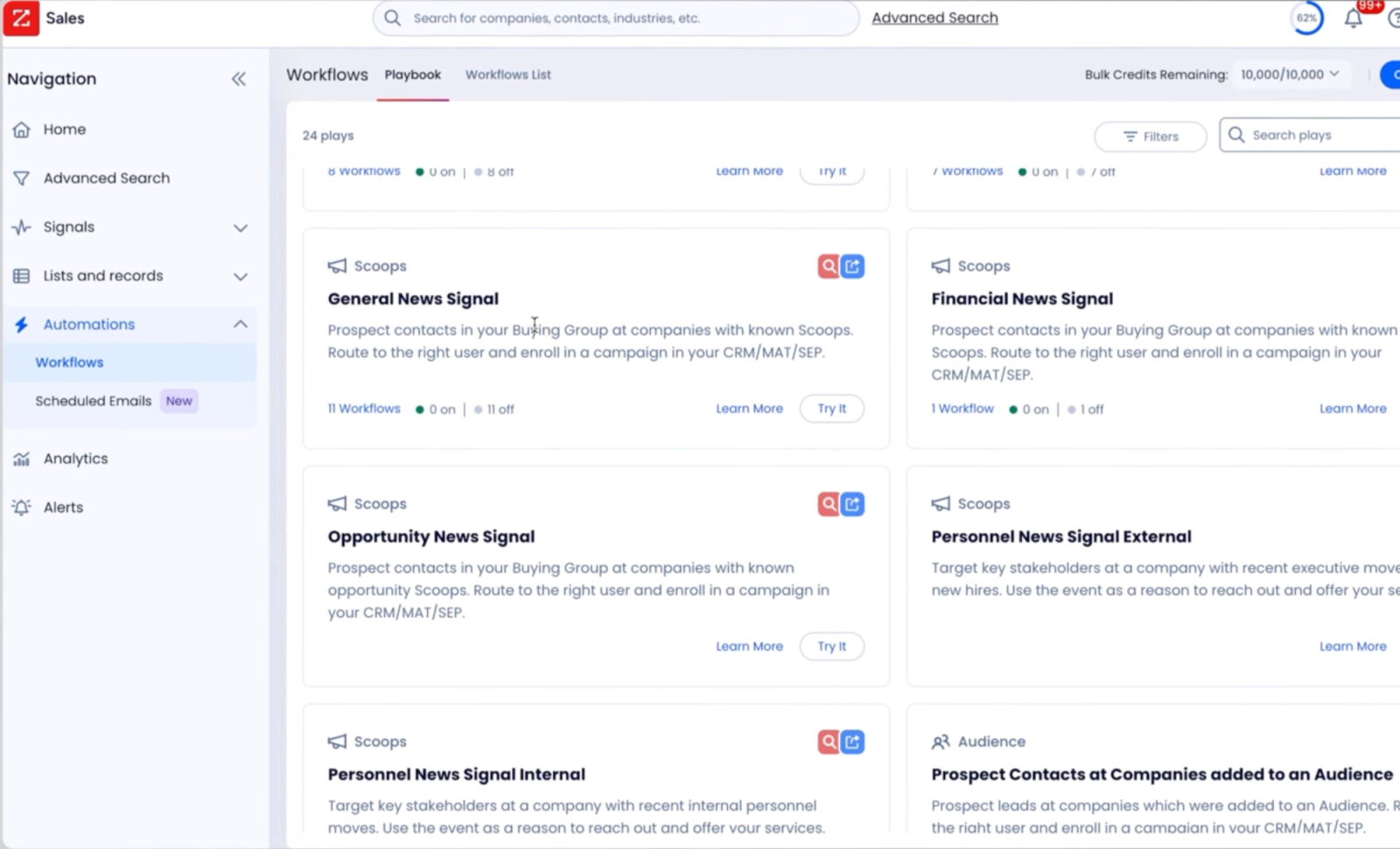
The enterprise incumbent, and the alternative many Cognism buyers shortlisted the first time around. ZoomInfo does not publish a self-serve rate. Get the quote in writing with the exact package, seats, export credits, intent topics, enrichment allowance, add-ons and renewal terms. Treat customer anecdotes as negotiation context, not as a price you can budget against.
On substance, the trade is coverage and intent breadth against price and contract length. Cognism's own marketing leans on the comparison, which tells you where it thinks the fight is. We covered the two-way version of this in our Apollo versus ZoomInfo breakdown.
5. Kaspr
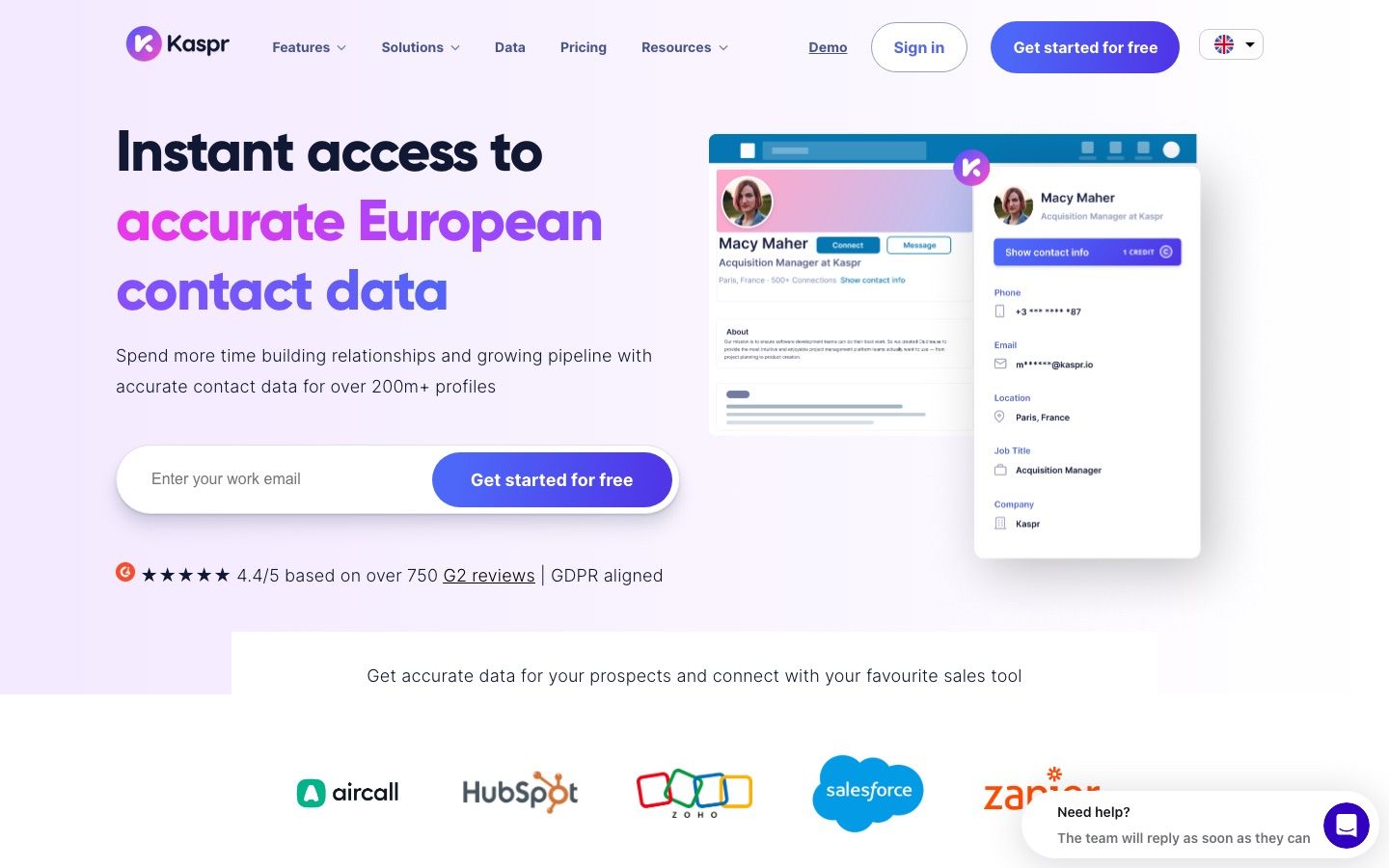
Kaspr is owned by Cognism, making it the least disruptive way to reduce cost without leaving the same vendor family. The free plan includes 5 phone credits, 5 direct-email credits and 10 export credits per month. Starter is €59 per user monthly or €45 on annual billing, with 1,200 phone credits and 12,000 export credits per year. Business is €99 monthly or €79 annual, with 2,400 phone credits, 2,400 direct-email credits and 30,000 export credits per year.
Paid tiers include unlimited B2B email credits, so phone credits are the constraint to size first. Kaspr also includes LinkedIn outreach automations and unlimited LinkedIn sequences on paid plans. What you give up against Cognism is the broader list-building, intent and on-demand mobile verification workflow, not every form of outreach.
Kaspr is also the cheapest credible option in our Sales Navigator alternatives guide, where it sits alongside Apollo and Lusha.
6. LeadIQ
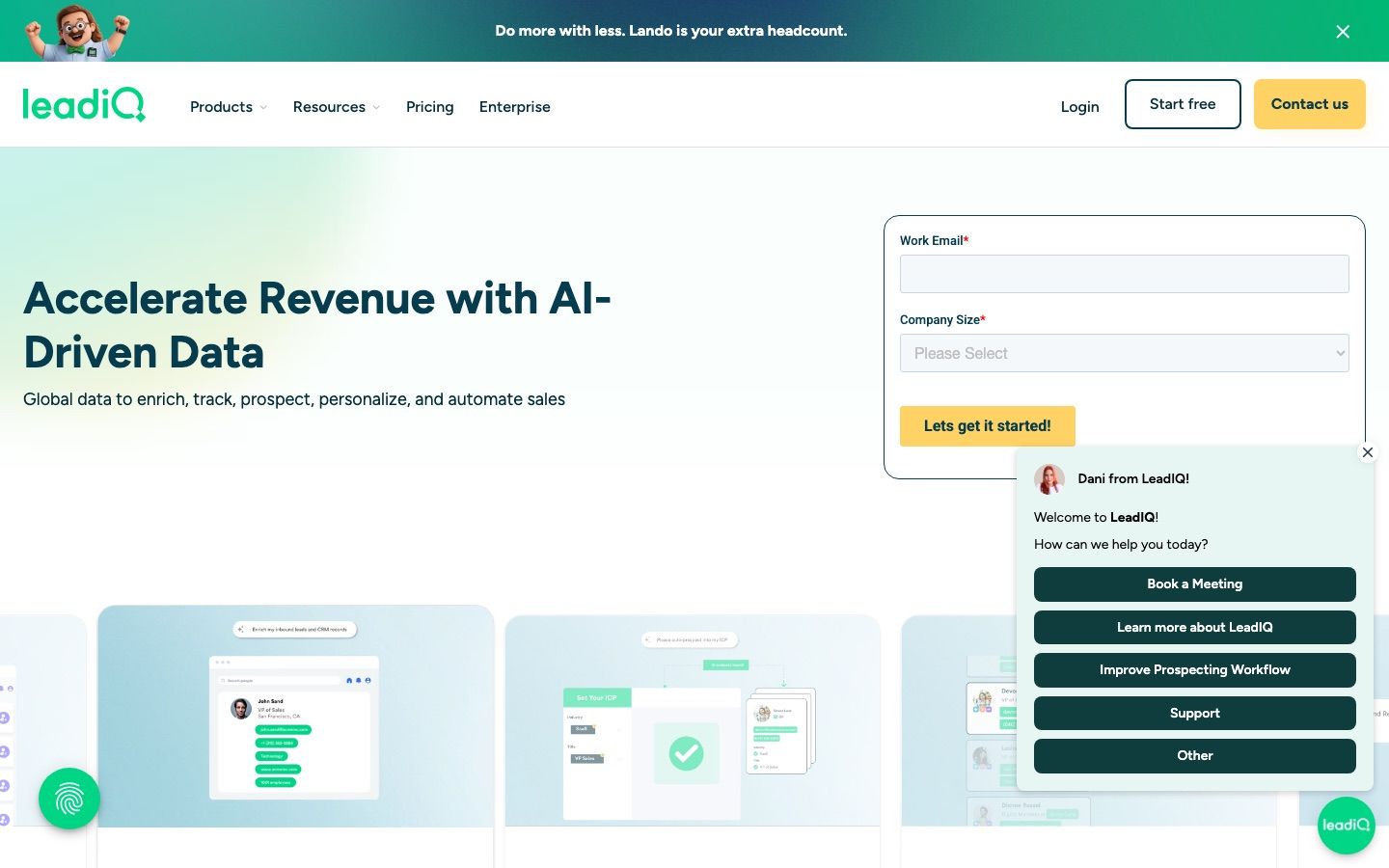
LeadIQ prices by a volume slider rather than forcing buyers into a broad enterprise package. A free plan gives one user 50 credits. Pro starts at $15 per month on annual billing for 2,400 credits per year and supports up to five users, then scales with the selected credit volume. An email costs one credit, a phone number ten, and both together eleven.
Its distinctive feature is job-change tracking, which flags when a known contact moves. For teams whose pipeline runs on relationships rather than cold volume, that single signal often justifies the tool.
7. UpLead
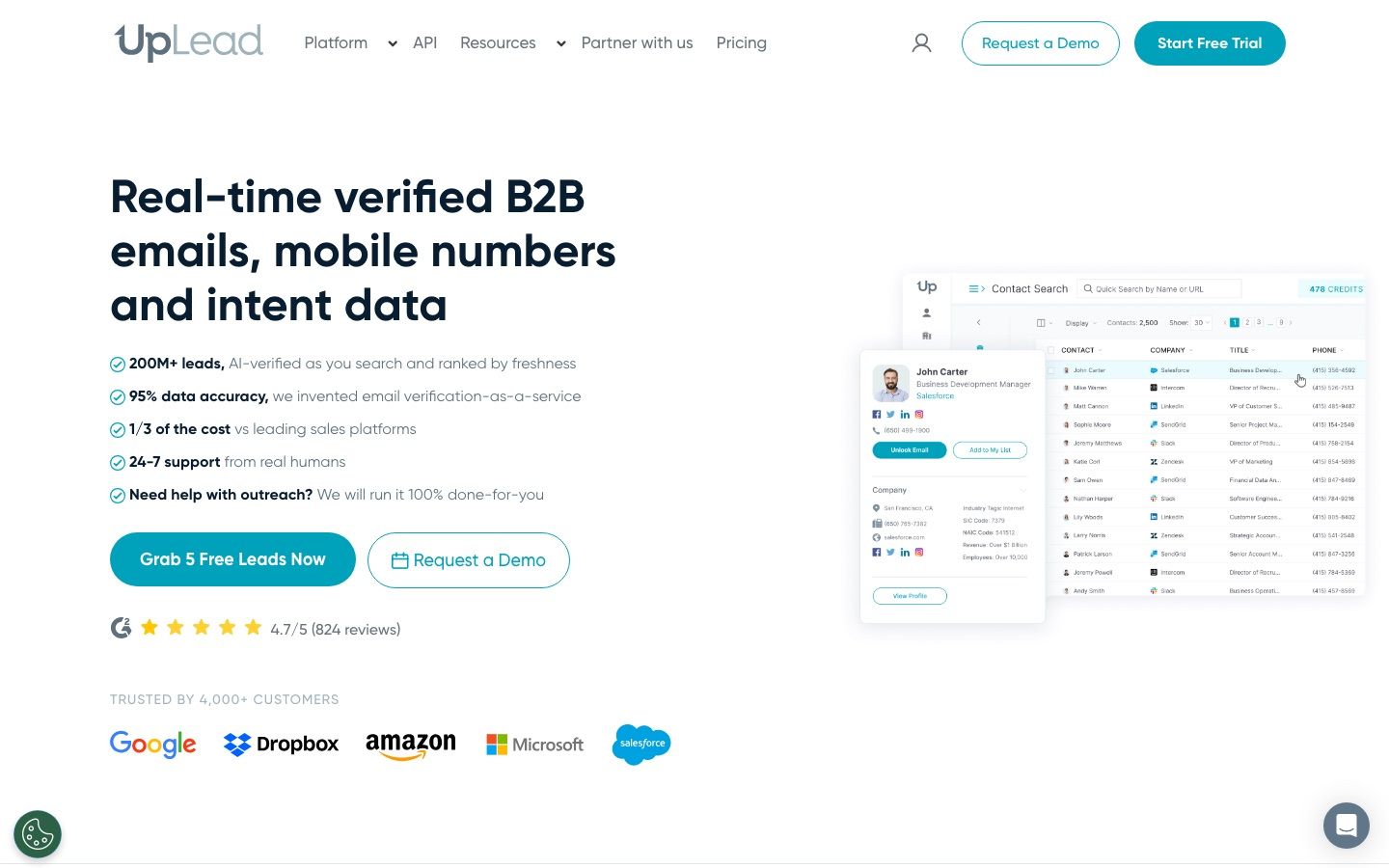
UpLead sells on verification rather than volume: contacts are checked in real time and it states a 95 percent accuracy rate and verifies records in real time. A 7 day trial gives 5 credits, then Essentials is $99 a month or $74 on annual billing for 170 credits, and Plus is $199 or $149 annual for 400 credits. Professional is annual-only and quoted, and it is the tier that carries full API access and bi-directional CRM sync.
The model suits teams doing low-volume, high-value outbound where a wrong number costs more than a credit. It suits nobody who needs tens of thousands of records a month, because at that volume the per-credit arithmetic stops working.
8. RocketReach
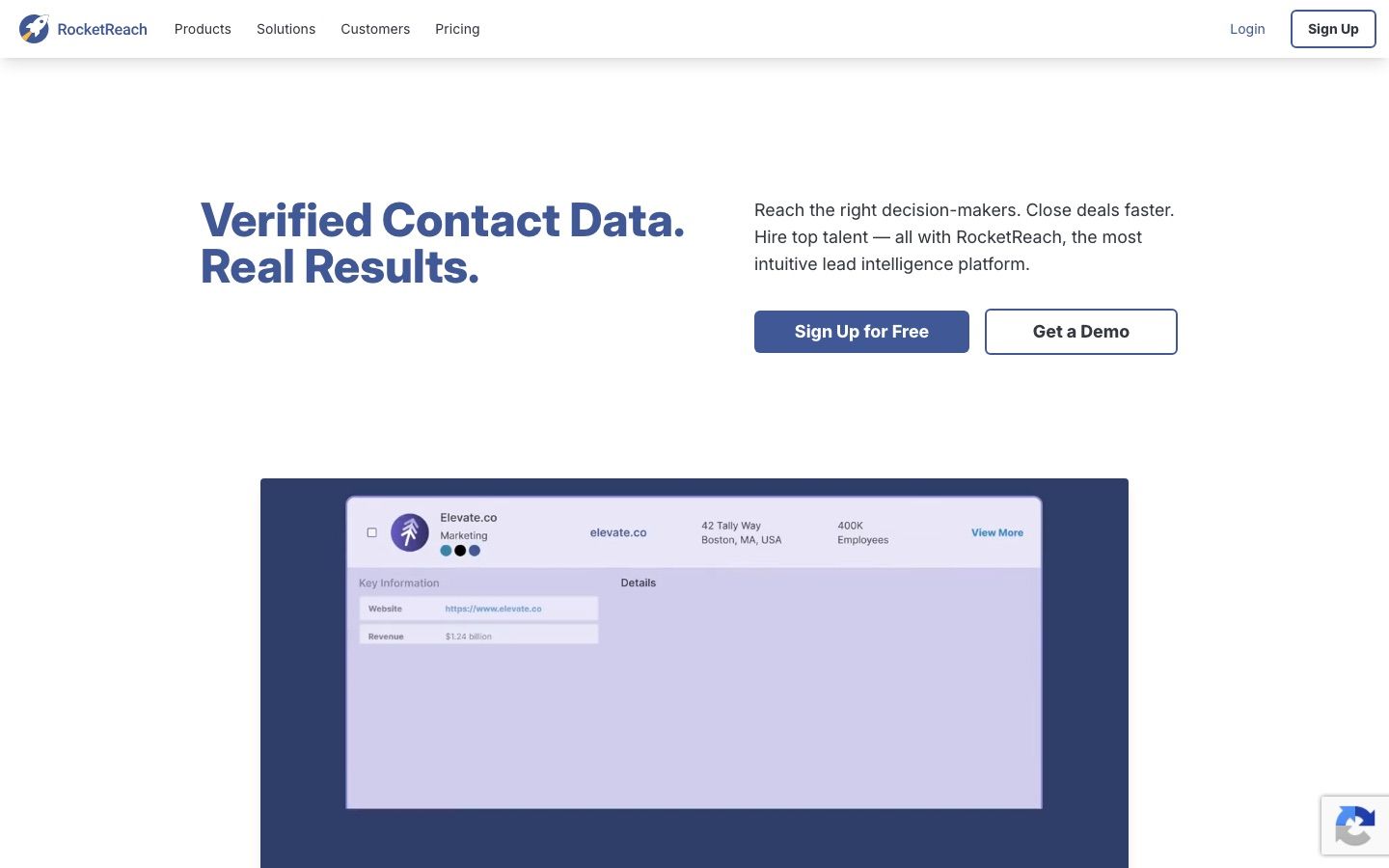
RocketReach is the pay-per-result option. On applicable plans it charges a lookup only when it returns a verified result, so failed searches do not consume a lookup. Its annual billing model can use export allowances instead of the same monthly lookup cap. Current public captures disagree on the annual entry price, so this refresh deliberately omits a number. Verify the live checkout, annual export allowance and phone access before budgeting.
That refund rule matters more than it sounds. On a hard segment, the difference between paying for attempts and paying for hits is the difference between a predictable bill and a surprise. The trade is a thinner platform: this is a lookup tool, not a prospecting workspace.
9. People Data Labs
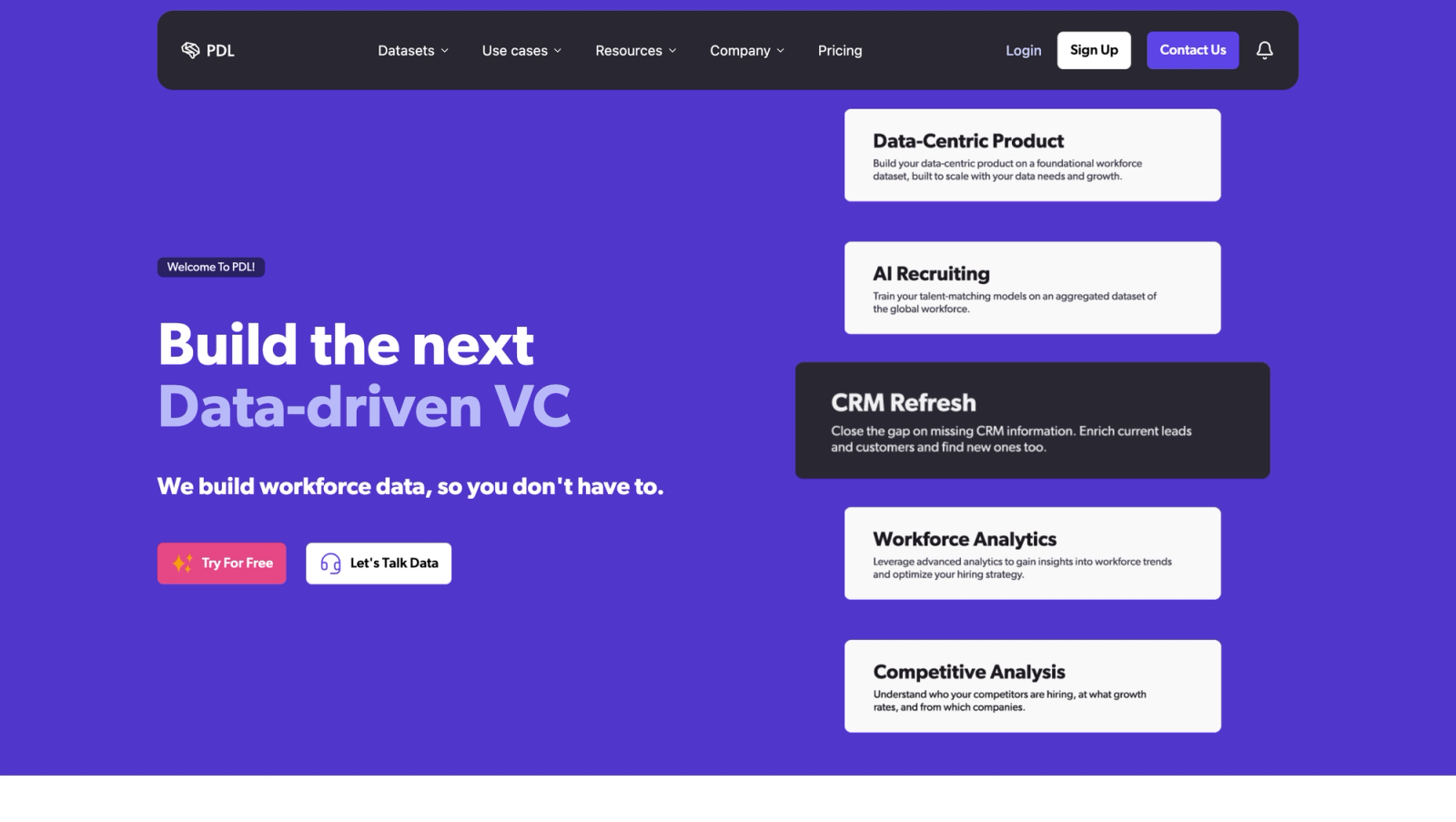
If you were using Cognism's Data-as-a-Service add-on rather than its platform, this is the closest like-for-like comparison. People Data Labs sells person and company records through an API and charges per successful match: the free Person plan allows up to 100 monthly records with contact fields obfuscated, while Pro starts at $98 per month for 350 records or $940.80 per year for 4,200. For the wider API market, compare the People Data Labs alternatives.
There is no seat, browser extension or sequencer, which is the point. Person and company products have separate prices, and credits are consumed on successful API matches rather than access to a prospecting workspace. PDL makes the most sense when engineering owns ingestion and the data feeds a product, model or internal workflow.
Does Cadency replace Cognism? No: outreach with data built in, not a data API
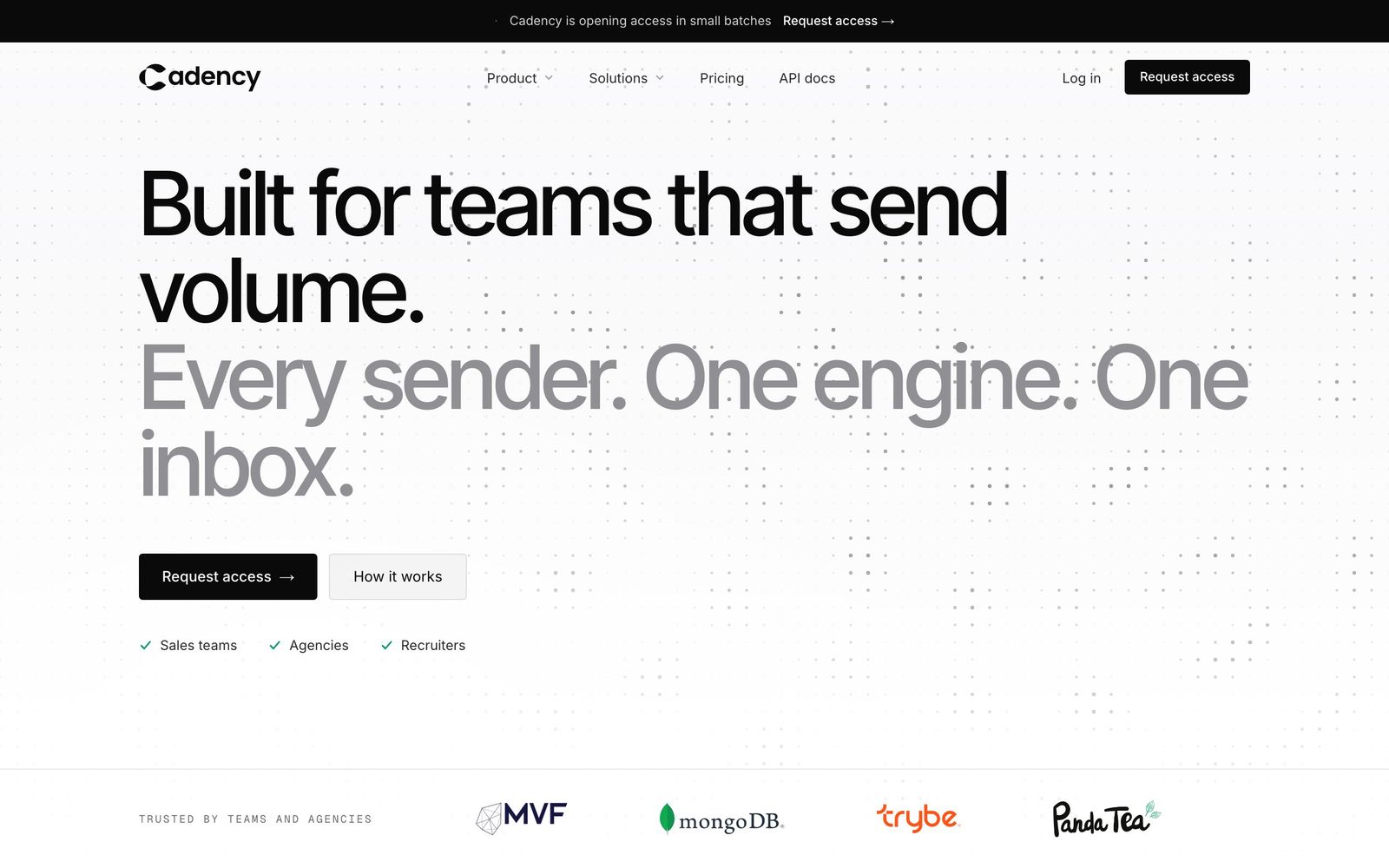
Disclosure first: Cadency is our product, built on Swarmhit, and it is not a data vendor, so swapping Cognism for it would leave a hole. Cognism's job is to find and verify a contact. Cadency's job starts after that: turning the contact into a conversation, with one campaign across every LinkedIn sender and every mailbox, one sender per lead, and every reply in one unified inbox.
It is outreach with data built in, not a data API. A native people and company database and waterfall enrichment paid per verified hit let a campaign be built without leaving the tool, and CSV and Sales Navigator imports mean a contact file from any vendor above can start one. It is not a replacement for a phone-verification vendor. Small Team is $199 a month with 5 LinkedIn senders included, or $139 a month on annual billing: more than a single Apollo seat, because it buys sending capacity for a team rather than a database login.
The practical shape for most teams leaving Cognism is two line items instead of one: a cheaper data vendor from the list above, plus an outreach tool that the contacts flow into. Check how the data vendor's export credits behave at that boundary, because that is where the bill quietly grows.
One thing worth knowing before you standardise on any of the extension based tools here. Lusha, Kaspr and LeadIQ all work by sitting on the LinkedIn page you are looking at, and LinkedIn's User Agreement forbids software that scrapes or copies profile data outside what it permits. These tools generally describe themselves as matching a profile against their own database rather than harvesting the page, but it is worth understanding what your extension is doing on your account. Our guide to LinkedIn Chrome extensions covers the risk side of that in detail.
How do Cognism alternatives charge?
The prices above are not comparable until you know what each vendor charges for. These are the five models in the list, and the question each one turns into at renewal:
| Model | Who uses it | What a contact costs | Where it surprises you |
|---|---|---|---|
| Annual commitment plus credits | Cognism, ZoomInfo | Bundled inside the contract | The floor, and the seats you did not want |
| Seat plus credit grant | Apollo | Bundled if within the grant | Reveals, not exports, burn credits (checked 30 September 2026); grants expire |
| Credits per reveal | Lusha, Kaspr, UpLead, LeadIQ | 1 to 11 credits by data type | Phones cost many times an email |
| Pay per verified hit | RocketReach | One lookup, no charge on a failed one | Annual plans swap the lookup cap for an export cap |
| Per record matched | People Data Labs, Coresignal | A published rate per record type | Volume, not access, drives the bill |
Two of these scale with your headcount and three scale with your usage. That is the real fork in the road, and it matters more than any single monthly figure: a team that doubles its reps and a team that doubles its list get very different invoices from the same vendor.
How should you choose a Cognism alternative?
Start with the reason you bought Cognism, not the reason you want to leave. Three patterns cover most of the decisions:
- You bought it for verified European mobile numbers. No vendor in this list publicly documents the combination Cognism advertised on 30 September 2026: phone-verified numbers screened against 15 do-not-call lists. Keep Cognism for that segment, or run a controlled sample before accepting a likely trade-off.
- You bought it for coverage and the price crept. Apollo or Lusha, tested on a sample of your actual ICP before the annual commitment.
- You bought it to feed a system rather than a rep. People Data Labs or Coresignal, priced per record, with no seat to justify.
Whichever way it goes, test on your own list rather than the vendor's demo. Every tool in this category looks excellent on the segment its sales engineer chose. The only number that matters is the fill rate on the 200 accounts you actually sell to.
FAQ
How much does Cognism cost?
Cognism publishes annual starting prices of $12,750 for Standard and $17,000 for Pro, with five seats included in both packages. Its main pricing page still requires a sales call for the actual quote. One credit reveals one contact, previously revealed contacts can be viewed again without charge, and the same pool works across the platform, Enrich and API.
What is the cheapest Cognism alternative?
Among the verified paid entry points in this comparison, LeadIQ starts at $15 per month on annual billing, while Lusha starts at $37.45 a month, a standing annual rate re-read on 30 September 2026, and Kaspr at €45 per user annually. These products cover different jobs, so the cheapest useful option depends on whether you need capture, mobile numbers, list building or API delivery.
Is there a free Cognism alternative?
Several have usable free tiers: Lusha gives up to 40 credits per month, Kaspr includes 5 phone, 5 direct-email and 10 export credits, LeadIQ includes 50 credits, Apollo includes an annual credit grant, and People Data Labs allows up to 100 monthly records with contact fields obfuscated. Use the free tier to test your own market segment, not to compare headline database sizes.
Which Cognism alternative has the best European phone data?
No alternative in this list publicly documents an equivalent of Cognism's phone-verified numbers screened against 15 do-not-call lists, as read on 30 September 2026. Kaspr is the closest lower-cost option from the same vendor family, but it is a LinkedIn-first reveal and automation tool rather than Cognism's full verification workflow.
Do I still need an outreach tool if I switch?
It depends on the channel. Apollo bundles a full sales engagement sequencer. Kaspr includes LinkedIn outreach automations, while Lusha and RocketReach include email sequencing. You still need a dedicated execution layer when you require multi-sender LinkedIn campaigns, an embeddable outreach API, centralized monitoring or advanced safeguards.
The short version
Cognism can justify a quoted annual contract when verified European mobile data is the reason you are there. If it is not, Apollo, Lusha or Kaspr cover much of the same daily prospecting work on published self-serve plans, while People Data Labs or Coresignal charge by usage when the data feeds a system rather than a rep.
Then keep the outreach layer separate, because the tool that finds the contact and the tool that starts the conversation are rarely the same one. Our guide to LinkedIn prospecting tools covers that second half, and the LinkedIn automation safety rules are worth reading before the tooling is chosen.
Whichever data vendor you pick, the outreach still needs a home: Cadency takes the list and runs it across every LinkedIn sender and mailbox a team connects, with one inbox for the replies. It began as our internal test bed for the Swarmhit engine and was never meant to be public, but we kept it running for the sales teams, recruiters and agencies who asked for it. Swarmhit itself is the outreach API for developers who build their own outreach product.


