

OpenRouter gave developers one API key for every large language model, with routing, unified billing, and no per-provider contracts. The same pattern has now arrived in go-to-market. Instead of juggling a dozen data subscriptions, teams plug into one orchestration layer that routes each lookup to the right provider, runs waterfall enrichment, and hands clean records to whatever executes the outreach.
Clay built this category and still dominates the conversation. But its March 2026 pricing overhaul split credits into data credits and platform actions, raised the price of API access, and made monthly costs harder to predict. Agencies in particular have been trimming usage or moving workflows elsewhere. This guide covers the eleven Clay alternatives worth evaluating in 2026, what each one actually does, and where Clay itself still fits.
The 11 alternatives at a glance
Eleven tools is a lot to hold in your head, so here is the short version. The sections below go deeper on each one.
| Tool | Category | Best for | Starting price |
|---|---|---|---|
| ColdIQ | GTM API gateway | Most teams; agents and engineers | Free, 300 credits; paid from $99/mo |
| Deepline | Agent-native orchestration | Agent-native teams; 3,400+ GTM tools behind one API (checked 30 September 2026) | Free with your own keys (BYOK); pay as you go at 10 credits per $1 |
| Monid | Tool registry for agents | General-purpose agent stacks | Pay per call at $0.0013; $1 free credit |
| Cockpit | Spreadsheet + outreach | The closest one-for-one Clay swap | From $29/mo for 3,000 credits (under a cent per credit, checked 30 September 2026) |
| Databar | Data aggregation platform | Operators and engineers alike | 100 trial credits; from $99/mo for 5,000 credits |
| Pipe0 | Programmatic enrichment | High-volume and embedded use cases | 20 free credits; from $49/mo for 1,600 credits |
| Freckle | No-code enrichment | Non-technical teams | Free plan, 250 credits; paid from $99/mo |
| Floqer | Signals and CRM hygiene | Revenue teams fighting data decay | Free, 100 credits; from $49/mo for 2,000 credits |
| Cargo | GTM infrastructure | Engineers who want Git-versioned RevOps | Free trial, 100 credits; from $165/mo |
| Airscale | Budget lead sourcing | Smaller teams, contact data first | From $49/mo for 4,000 credits; rollover |
| Unify | AI outbound platform | Data plus execution from one vendor | Free up to 3 seats; from $20/seat/mo |
What is a GTM orchestration layer?
A GTM orchestration layer sits between your workflows and the data providers they consume. You send it a prospect or a company, and it decides which source to query, in what order, and what to do when a provider returns nothing. The best ones handle waterfall enrichment across providers, dedupe and validation, scoring, and pushing results into the rest of your stack.
Think of it as an API gateway for GTM. One integration, one bill, many providers behind it. The newest generation goes further and speaks MCP, so AI agents in Claude Code or Cursor can run prospecting and enrichment directly instead of a human clicking through a table UI.
Why are teams looking for Clay alternatives?
Clay changed its pricing in March 2026. Credits were split in two: data credits pay for enrichment lookups, and actions meter the platform work around them, including enrichment steps, AI calls, API requests, CRM pushes, and exports. The old Starter, Explorer, and Pro plans gave way to Launch at $167 per month and Growth at $446 per month on annual billing ($185 and $495 on monthly billing, as read on clay.com on 30 September 2026), with Enterprise custom.
Per-lookup data prices actually dropped, in many cases by half or more. The friction is everywhere else. The plan that includes HTTP API integrations moved from $349 to $495 per month on monthly billing ($446 billed annually), with full Clay API access sitting on Enterprise, unused actions expire at the end of each billing cycle, and teams now have to forecast action consumption before they can forecast cost. Independent reviews of Clay repeatedly cite credit burn as the top complaint, including users spending hundreds of dollars in days while learning the workflow editor. For agencies pricing retainers against tool costs, that unpredictability lands directly on margin, and it is the main reason so much agency volume has been moving off the platform.
How do you compare credit models?
Every tool on this list meters usage differently, and the differences matter more than the sticker price. Four questions expose the real cost. What does one credit buy: a lookup attempt, or a delivered result? Does a waterfall that tries four providers consume one credit or four? Do unused credits roll over, or expire at the end of each billing cycle the way Clay's actions do? And is platform work such as AI calls, CRM pushes, and exports metered separately from the data itself?
Answering those four questions for your actual volume tells you more than any pricing page. A tool that looks expensive per credit but charges only for delivered results can come out cheaper than one that bills every attempt.
The market has settled on three pricing models, and knowing which one you are looking at makes every comparison faster. Most tools here sell credit subscriptions: a monthly allotment whose per-credit price falls as you climb tiers, the pattern at Cockpit, Pipe0, Freckle, Floqer, Cargo, Airscale, and Databar. The second model is pay as you go: Deepline's managed mode and Monid bill a prepaid balance per call with no subscription at all, and Databar and Pipe0 each charge only when a lookup actually returns data. The third is BYOK, bring your own keys: you connect your own provider contracts and pay those vendors directly. Deepline makes BYOK free with zero markup, Freckle, Floqer, and Airscale support it on paid plans, and Databar supports it on its Scale plan (checked 30 September 2026).
One more trap: a credit is not a unit, it is an exchange rate that varies by provider and by data type. On Deepline's published rates, an email verification costs $0.002 while a phone number costs $0.17, an 85x spread inside the same tool. Price out the data mix you actually pull, not the headline credit count.
When does Clay still make sense?

Clay still belongs on this list, because it invented the category and remains the most complete spreadsheet-style orchestration platform: a large provider marketplace behind unified credits, AI research agents, and a workflow builder that a whole generation of GTM engineers learned on.
The problem is cost. The 2026 pricing model charges for data and for actions separately, actions do not roll over, and HTTP API integrations now start at $446 per month billed annually ($495 on monthly billing, as read on clay.com on 30 September 2026). Power users who know exactly what they are doing can still run efficient workflows on it. Teams that are learning, or agencies whose usage fluctuates by client, are the ones who feel the model most, and they are the ones leaving.
Evaluate Clay if you need the deepest workflow editor and the biggest ecosystem, and you can predict your monthly volume with confidence. Otherwise, the tools above deliver most of the value at a fraction of the spend.
Your data layer finds them. Cadency starts the conversation.
Import enriched lists into Cadency by CSV or through the API and webhooks, then run one campaign across every LinkedIn sender and every mailbox, one sender per lead, with every reply in one inbox.
From $89 a month with 2 LinkedIn senders included.
1. ColdIQ
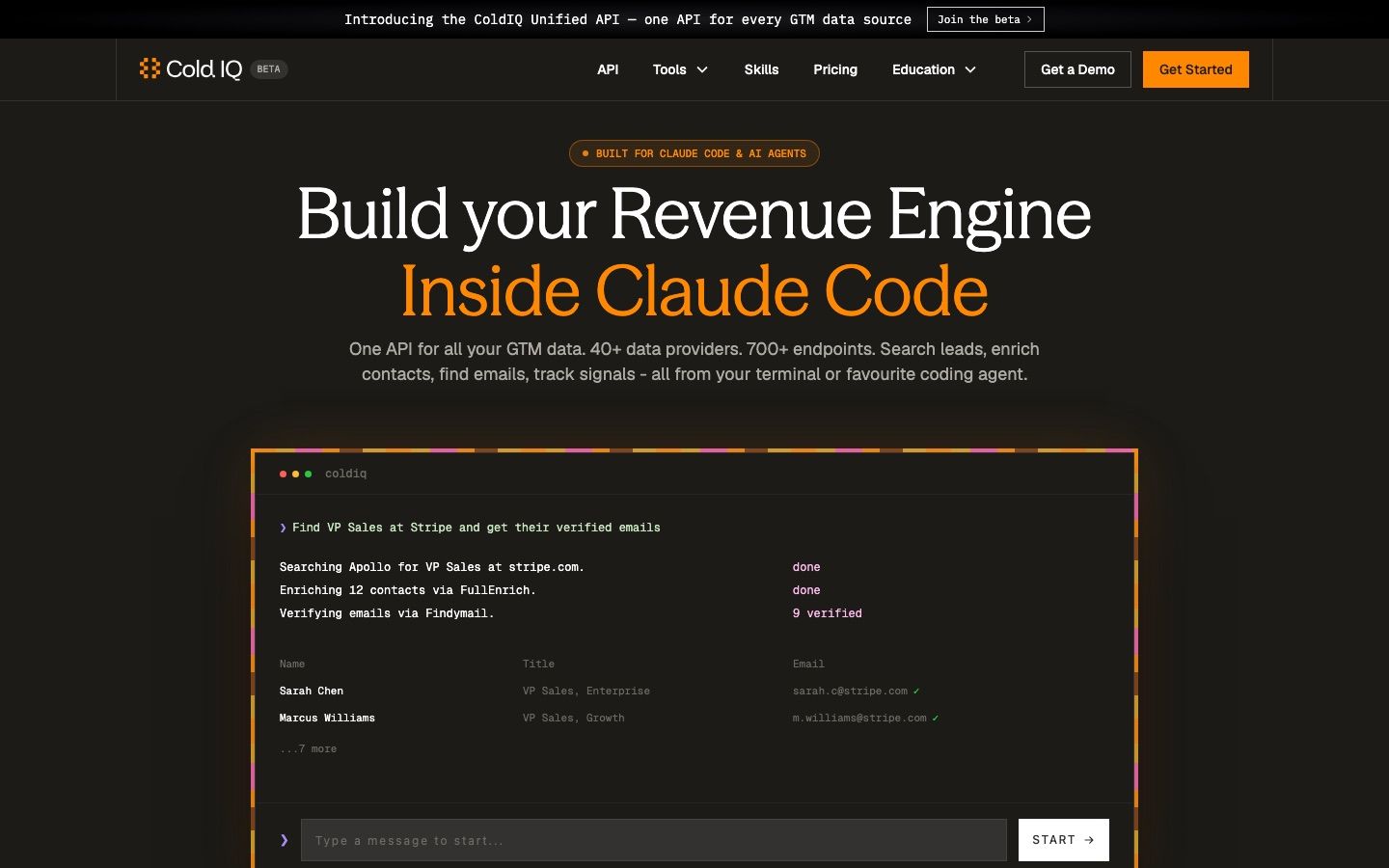
ColdIQ is the closest thing GTM has to OpenRouter. One API over 40+ data providers and 700+ endpoints, covering lead search, contact enrichment, email and phone finding, intent signals, and technographics. Instead of you picking a provider per call, ColdIQ routes each request based on fit, cost, and accuracy.
It is built for the terminal rather than the dashboard: a REST API, an MCP server for Claude Code and other agents, and more than 100 pre-built skills that encode full GTM workflows like prospecting, enrichment, and sequencing. The team behind it says it has served 275+ clients (as read on 30 September 2026) and reviewed hundreds of GTM tools, which shows in how the routing decisions are made.
Pricing starts free with 300 credits and no card, then $99 per month for 7,000 credits, $199 for 15,000, and $499 for 40,000. Paid-plan credits roll over for three months, and the free ones never expire. For a team consolidating several data subscriptions into one gateway, the math is usually favorable from the first month.
2. Deepline
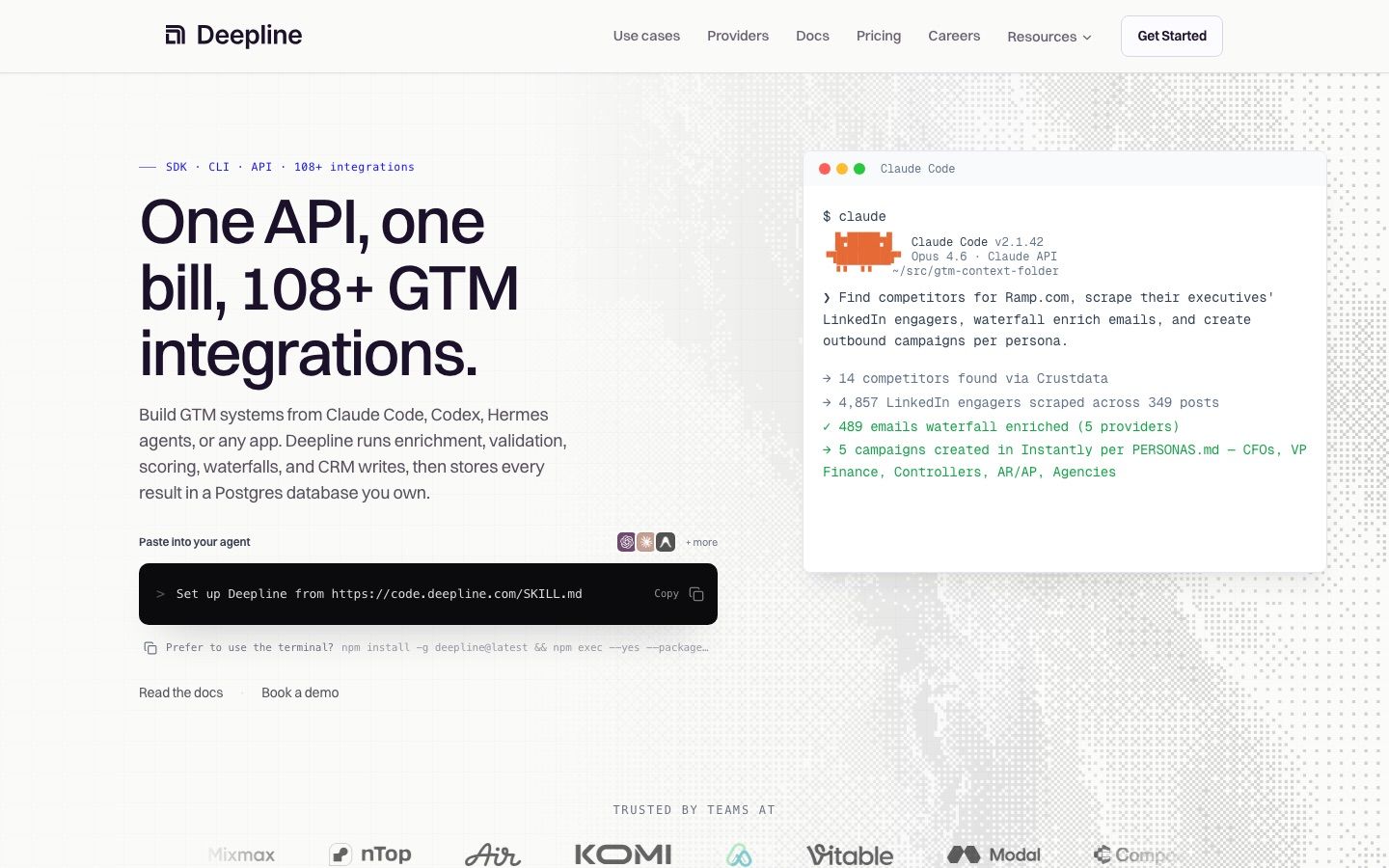
Deepline takes the same one-API idea and optimizes it for agent-native teams. Its pitch is one API, one bill: 109 provider integrations exposing more than 3,400 callable data operations (as read on deepline.com on 30 September 2026), consolidated under a single bill, and it handles enrichment, validation, scoring, waterfalls, and CRM writes, then stores every result in a Postgres database you own.
That last part matters more than it sounds. Your enriched data does not live inside someone else's table UI; it lands in infrastructure you control and can query, back up, or build on. Deepline ships a CLI, integrates with Claude Code and Codex, and is designed so an agent can run the whole pipeline without a human in a browser.
Pricing is the purest pay-as-you-go setup on this list, in two modes. Bring your own provider keys and Deepline charges nothing: zero markup, a $0 platform fee, you pay your providers directly. Or run managed mode, where one bill covers all 3,400+ tools at 10 credits per dollar, you see the cost before a run, and its pricing page says you pay only when a monitor returns the result you defined (as read on deepline.com on 30 September 2026). A $395 per month Growth plan adds hosted Postgres, workflows, and a 10% credit discount. If your GTM motion is moving toward agents and code rather than spreadsheets, Deepline is the alternative built for exactly that trajectory.
3. Monid
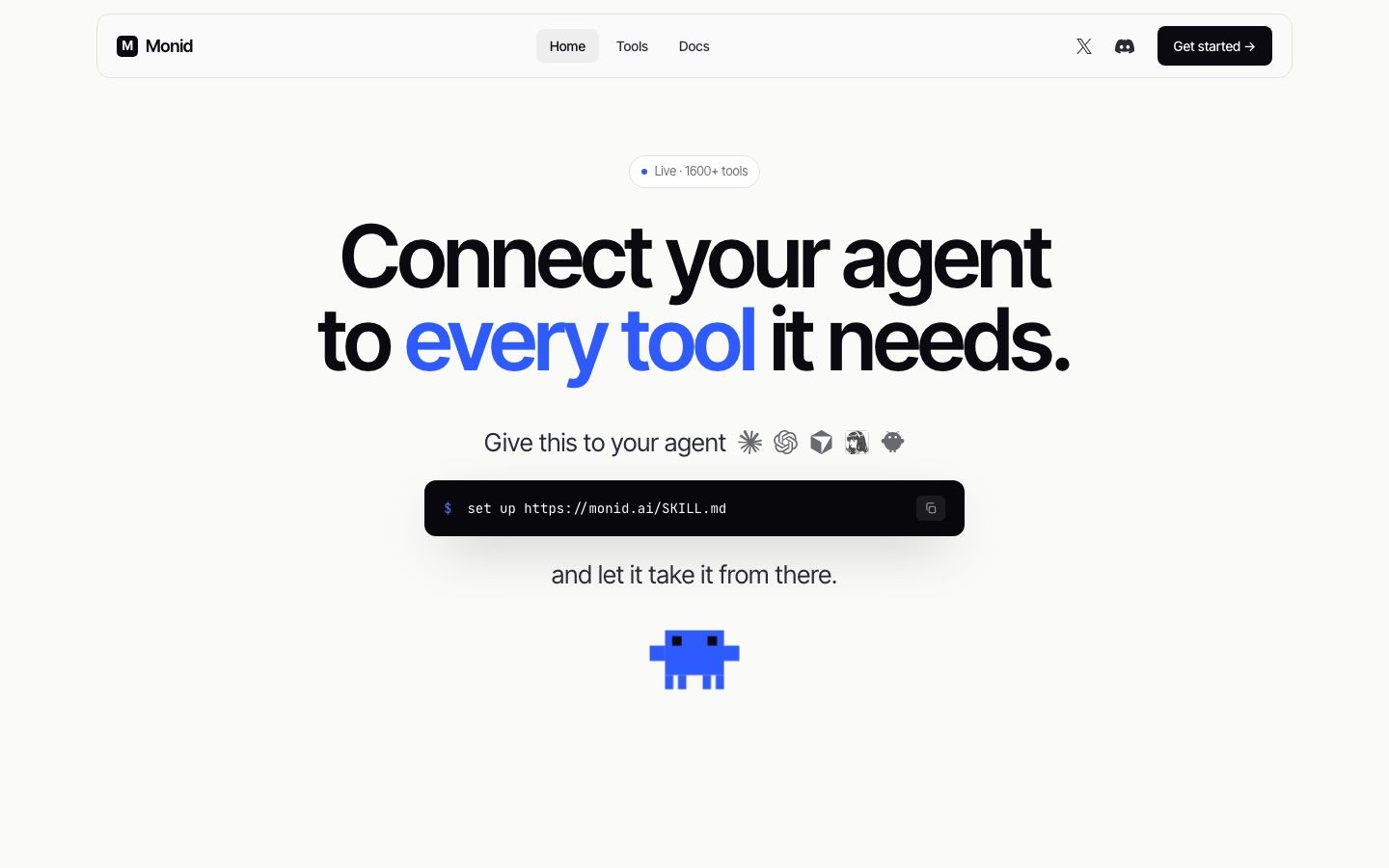
Monid was not built as a GTM tool at first. It is a tool registry for AI agents: 1,700+ APIs and tools (as read on monid.ai on 30 September 2026) that an agent can discover, compare, and execute through a single integration, with one balance billed per call instead of per-tool subscriptions.
It turns out that model handles GTM easily. The registry includes sales intelligence like Apollo, LinkedIn, X, TikTok, and Instagram scraping, and search tools like Exa and Semrush, so an agent can prospect, enrich, and research through Monid the same way it would call any other tool. Connection happens through a skill, MCP, or CLI, and you are not charged when a provider fails.
There is no subscription at all: calls are priced at $0.0013 each from a single prepaid balance, and new users start with $1 in free credit. For teams already running agents, Monid is the most general-purpose gateway on this list.
4. Cockpit

Cockpit is the closest thing on this list to a one-for-one Clay swap. You bring in any lead list, enrich it with contact data and AI research in a spreadsheet interface, and then turn the best rows into personalized outbound sequences from the same screen. Where most tools here stop at clean data, Cockpit carries you through to sending.
The case against Clay is price. Cockpit's published plans work out at under a cent per credit (as read on runcockpit.co on 30 September 2026), it says it charges only for successful outcomes, and waterfall fallback is built in: when the first provider returns nothing, the lookup rolls to the next source. AI personalization and the familiar spreadsheet UI are both included, and pricing is published upfront rather than gated behind a sales call: plans start at $29 per month for 3,000 credits, with a 14-day trial.
For teams that liked Clay's table workflow but not the invoice, and that want enrichment and outbound launch in one tool instead of two, Cockpit is the simplest switch here.
5. Databar
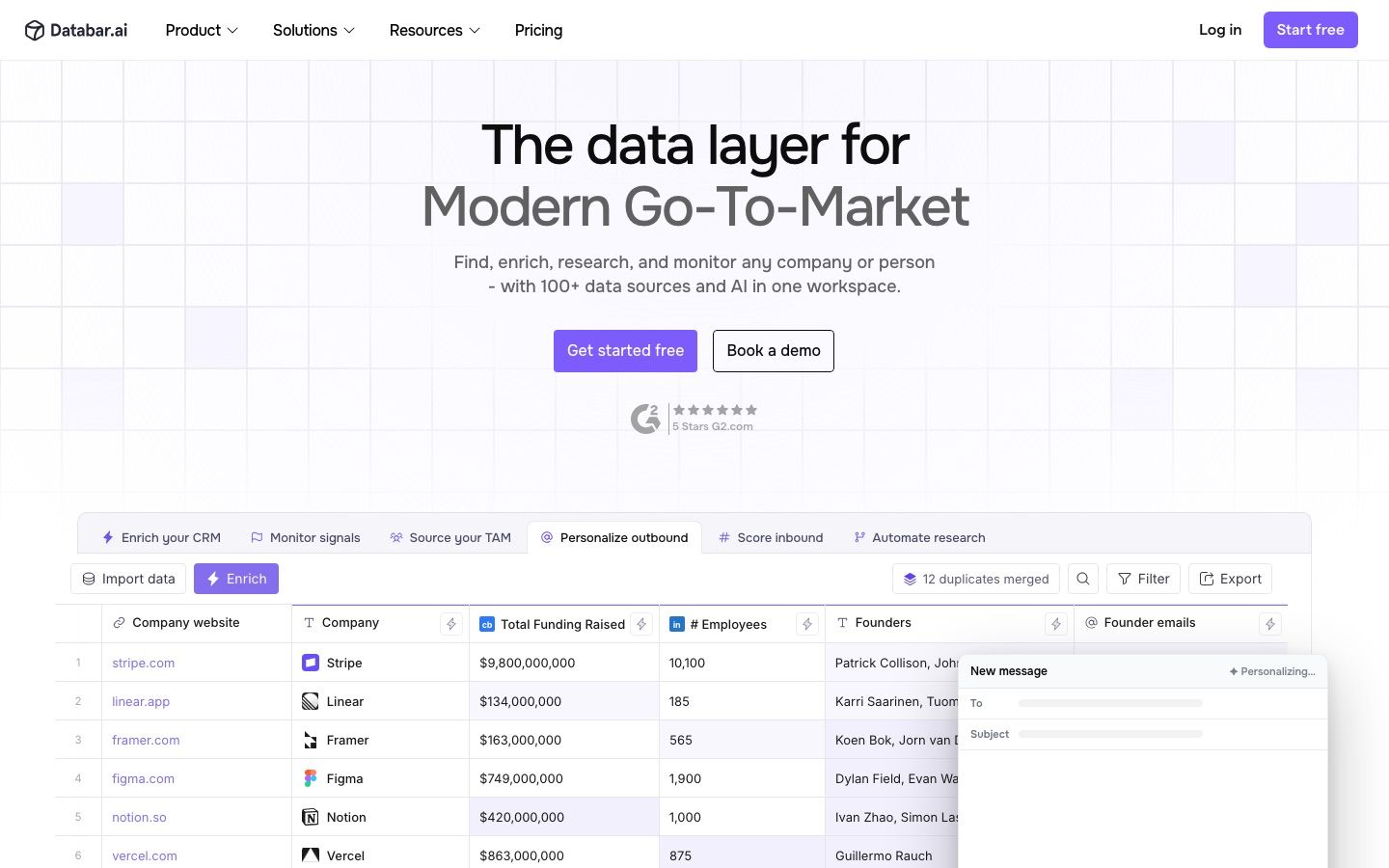
Databar is one of the most mature aggregation platforms in the space: 160+ live data providers behind one workspace, with waterfall enrichment that keeps trying sources until a verified result comes back, and an AI research agent that answers web lookups with citations.
It meets teams wherever they work. There is a spreadsheet interface for operators, plus a REST API, a Python SDK, an MCP server, and a CLI for engineers and agents. Two-way CRM sync covers HubSpot, Pipedrive, and Attio, and the platform bundles more than $12,000 per year worth of data subscriptions into its plans. Every workspace starts with 100 free trial credits, plans run from $99 per month for 5,000 credits, you only pay for successful requests, and unused monthly credits roll over for a month.
6. Pipe0
Pipe0 is the alternative for power users who found Clay's ceilings. Its homepage cites tables of up to 2 million records, though its pricing page caps a sheet at 40k, 100k or 200k rows on the 1,600, 5,000 and 12,000 credit plans (as read on 30 September 2026). The full enrichment engine is exposed through an API, and an MCP server gives Cursor and Claude Code direct access to the same pipelines.
Its composable model chains 50+ providers, actions, and conditions into pipes, and you can ship that enrichment inside your own product rather than keeping it trapped in an internal tool. The first 20 credits are free with no card required, paid tiers run from $49 per month for 1,600 credits, the per-credit rate drops toward three cents at volume, and you are only charged when a pipe successfully executes. Its positioning is aimed squarely at teams doing high-volume work with programmatic control.
7. Freckle
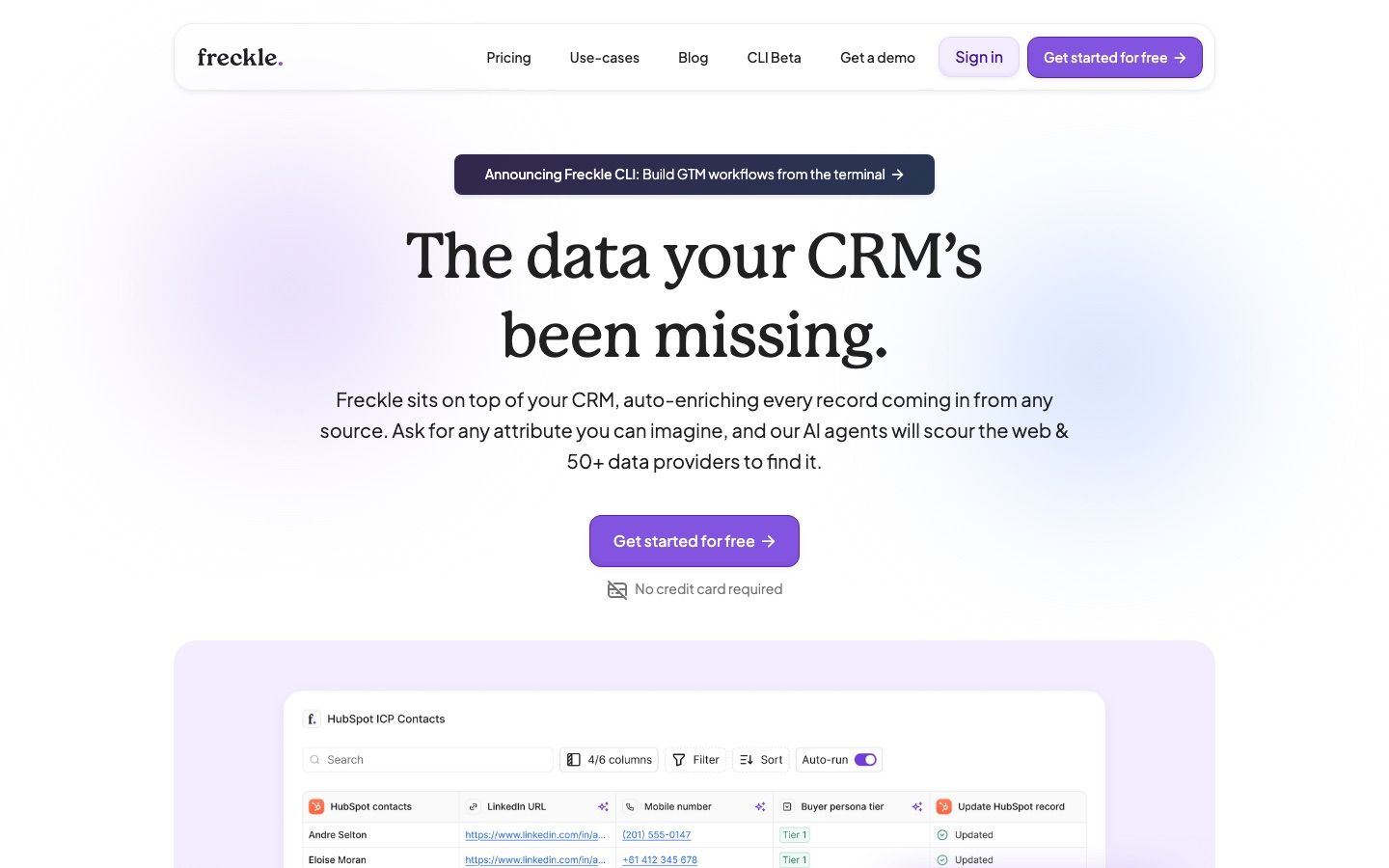
Freckle chases the opposite end of the market: the best parts of Clay without the learning curve. Setup happens in natural language, waterfalls across its 40+ data providers come pre-built, and AI research agents fill in the attributes your CRM is missing.
It integrates natively with HubSpot and Salesforce, works from CSVs and webhooks too, and prices simply: a free plan with 250 credits and unlimited seats and tables, paid plans from $99 per month with rollover credits, and the option to bring your own provider API keys. For non-technical teams that found Clay overwhelming, Freckle is the fastest path to the same outcome.
8. Floqer
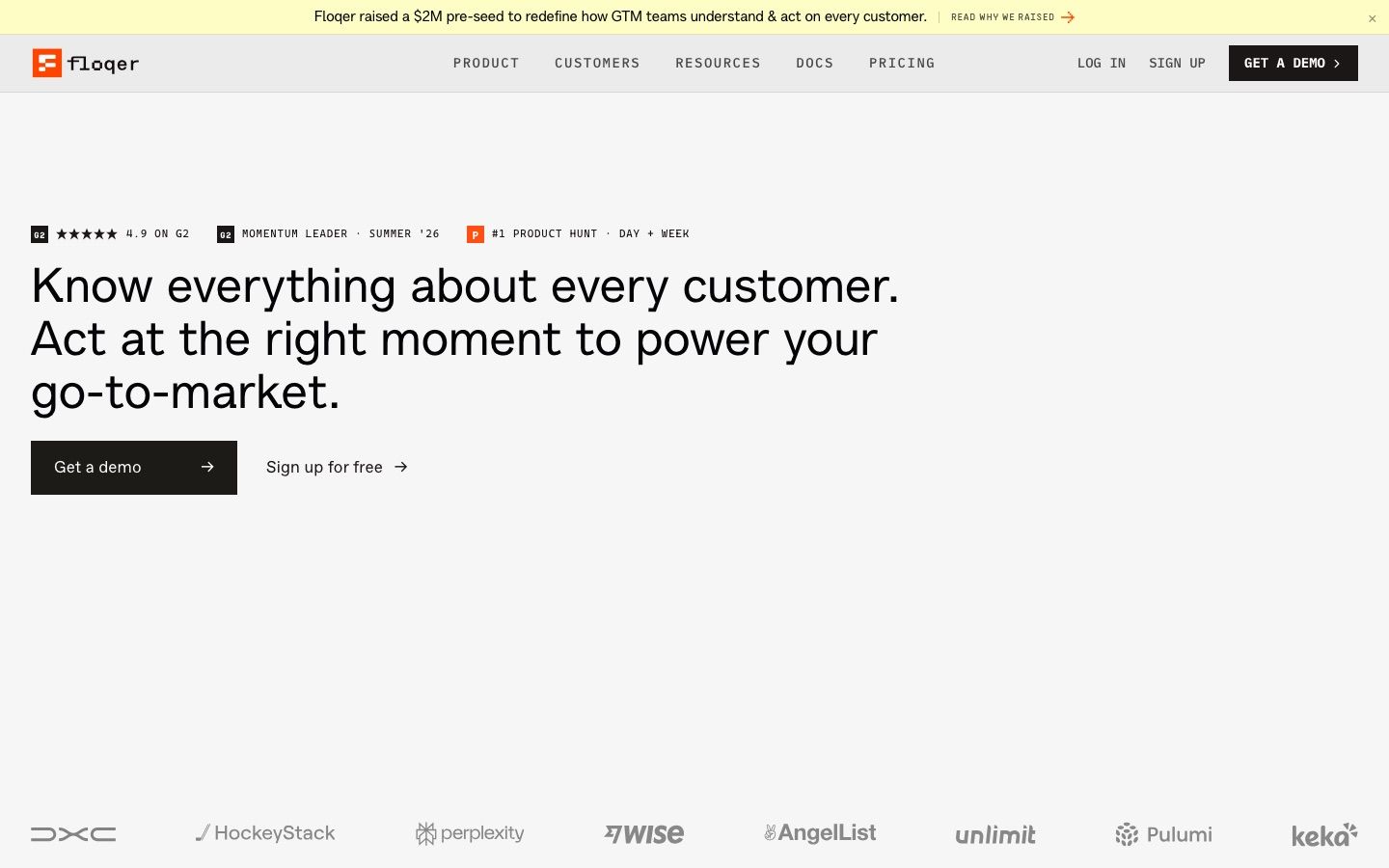
Floqer frames the job around signals rather than spreadsheets. Its AI agents enrich CRM records through waterfalls across 100+ sources, track 80+ buying signals like funding rounds, hiring, and website visits, and keep records self-healing so job changes and data decay get caught automatically.
Everything is designed to end in action: one-click workflows for reps, context-aware notifications in Slack or the CRM, and fully automated flows for inbound leads and signups. It is SOC 2 Type 2 certified and used by revenue teams at companies like Perplexity, Wise, and AngelList. The free plan includes 100 credits with no card required, self-serve pricing runs from $49 per month for 2,000 credits up to $999 for 80,000, credits roll over and stay valid for 12 months even after a subscription ends, and every plan includes unlimited seats and bring-your-own-keys support.
9. Cargo
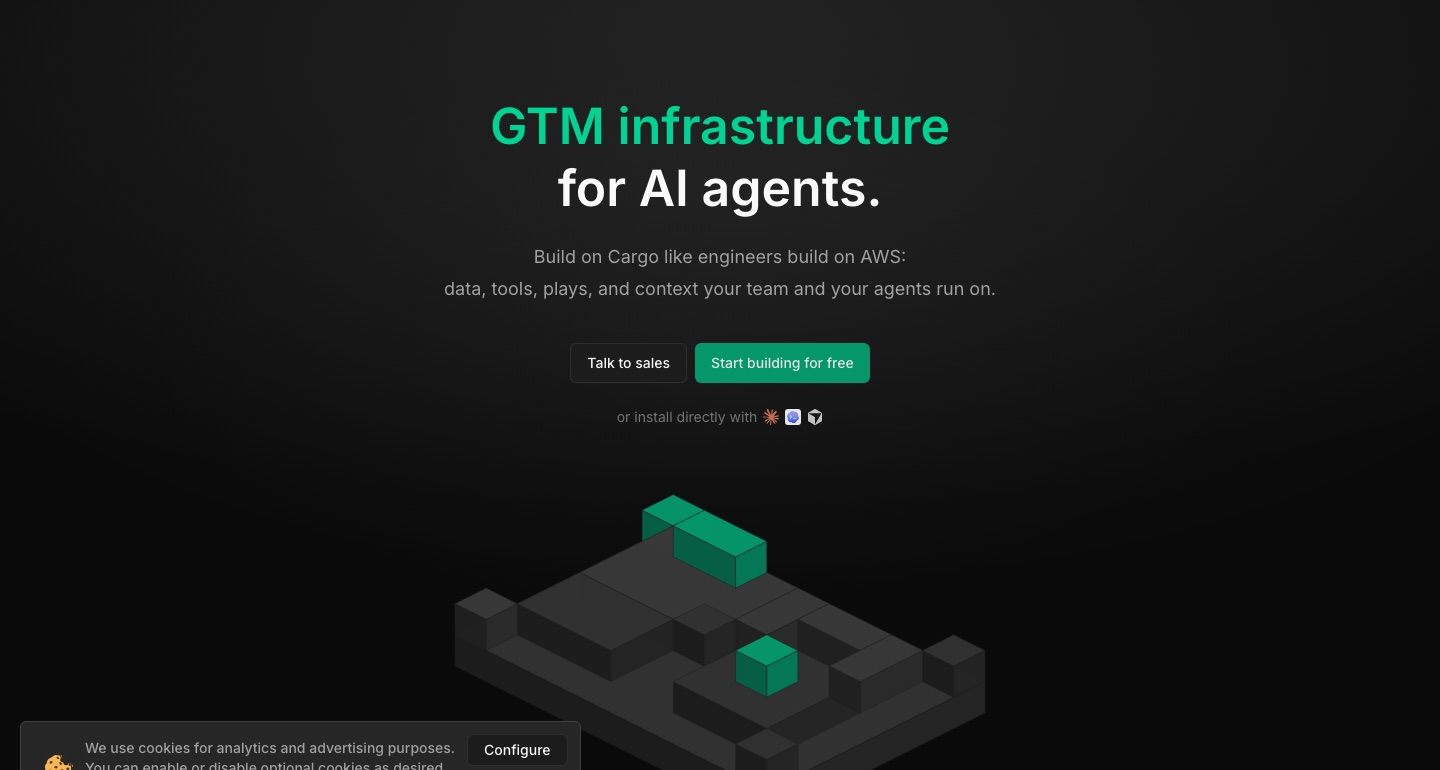
Cargo treats go-to-market as infrastructure. You define data models, triggered plays, reusable tools, and autonomous agents, and you can build them in TypeScript, from the CLI, or in a visual builder. Workflows are versioned in Git, reviewed through pull requests, and rolled back like any other deployment.
With 100+ integrations across CRMs, outreach tools, and Slack, SOC 2 Type II certification, and Y Combinator backing, Cargo is the pick for GTM engineers who want revenue operations to work the way software does. Pricing is public and credit-based: a free trial with 100 credits and no card, then plans from $165 per month. It is heavier to adopt than a spreadsheet tool, and that is exactly the point.
10. Airscale
Airscale is the budget-conscious option: source, enrich, clean, and export leads from one place, with 30+ data providers behind it. Verified emails run as low as $0.008 and phone numbers $0.15 at its best custom-tier rates, across 450+ data points including firmographics, hiring signals, and tech stacks.
Lists sync in one click to HubSpot and to outreach tools, an AI research agent handles web research, and pricing starts at $49 per month for 4,000 credits that do not expire while you stay subscribed and roll to the next month when unused (as read on 30 September 2026). Every plan has unlimited users, you can plug in your own API keys, and there is a 14-day free trial. For smaller teams that mostly need reliable contact data without an orchestration learning curve, Airscale covers the essentials.
11. Unify
Unify comes at orchestration from the seller's side. It is an AI-native outbound platform: chat-based agents with 50+ native skills for prospecting, research, and engagement, a B2B dataset of 1.1 billion people and 65 million companies with email and phone waterfall validation, and intent signals from 40+ sources covering job changes, funding, hiring, tech stack, and web visits.
Trigger-based plays prospect and sequence automatically, and the platform manages email deliverability itself, including mailbox creation, warmup, and rotation. Pricing is self-serve: a free-forever plan covers up to 3 seats, Base runs $20 per seat per month with 800 credits per seat, Pro $60 with 2,400, and unused credits carry over for up to 12 months. Customers include Perplexity and Pylon. Where most other tools on this list stop at clean data, Unify keeps going into execution, which makes it the pick when you want one vendor for both.
How do you choose?
Start from who operates the system. If it is an AI agent or an engineer, shortlist ColdIQ, Deepline, Monid, Pipe0, and Cargo, in that order of GTM specialization. If it is an operator in a spreadsheet, look at Cockpit, Databar, Freckle, and Airscale. If your problem is signals and CRM hygiene rather than list building, Floqer fits. And if you need the deepest workflow editor in the category and can forecast volume precisely, Clay is still Clay.
Whichever layer you pick, remember it only prepares the data. Booked meetings come from what happens next: the outreach itself.
What does switching off Clay actually involve?
Less than most teams fear. Your lead lists export as CSVs, and every alternative here imports them. What does not transfer is the workflow logic: waterfalls, prompts, formulas, and conditional columns all need rebuilding in the new tool, and that is where the real switching cost lives.
The low-risk path is a parallel run. Take your 100 most recent leads, push them through both platforms, and compare fill rate, accuracy, and cost per delivered field. That takes an afternoon on the free tiers most of these tools offer, and it turns the decision from a bet into a measurement.
Keep Clay running until the replacement has processed a full month of real volume. Cancelling first and migrating second is how teams end up rebuilding workflows under pressure.
FAQ
What is the best Clay alternative in 2026?
ColdIQ, for most teams. It routes across 40+ data providers and 700+ endpoints through one API, ships an MCP server and 100+ pre-built GTM skills, and starts free with 300 credits. Deepline is the strongest choice for agent-native teams that want results in a Postgres database they own.
Why did Clay get more expensive?
In March 2026 Clay split its credits into data credits and actions. Data lookups got cheaper, but platform work like enrichment steps, AI calls, API requests, CRM pushes, and exports is now metered separately, actions expire at the end of each billing cycle, and the plan with HTTP API integrations moved from $349 to $495 per month on monthly billing ($446 billed annually, as read on clay.com on 30 September 2026). Costs became harder to predict, which hits agencies hardest. The current plan grid is in our Clay pricing breakdown.
What does an orchestration layer actually do?
It sits between your workflows and dozens of data providers: routing each lookup to the best source, running waterfall enrichment when a provider comes back empty, validating and scoring results, and pushing clean records into the rest of your stack through APIs, webhooks, or MCP.
Do these tools replace my outreach platform?
No. They find, enrich, and qualify prospects; Unify is the partial exception, since it also sequences and manages deliverability. Execution still needs a channel platform: your email sequencer for inboxes and a LinkedIn tool for multi-sender LinkedIn campaigns, or Cadency, which runs both in one campaign across every LinkedIn sender and every mailbox, one sender per lead, with every reply in one inbox. Cadency is outreach with data built in, not a data API, so it sits downstream of whichever layer you pick.
Is there a free Clay alternative?
Several tools here start free: ColdIQ includes 300 credits that never expire, Freckle's free plan comes with 250 credits, Floqer and Cargo each start you with 100, Pipe0 with 20, Databar with 100 trial credits, Unify has a free-forever plan for up to 3 seats, and Monid loads $1 of pay-per-call balance. Deepline goes further: BYOK mode is free outright if you connect your own provider keys. Free tiers are best used for the parallel-run test described above rather than as a permanent plan.
What is the cheapest Clay alternative?
For pure contact data, Airscale starts at $49 per month with credits that roll over. For a spreadsheet workflow closest to Clay's, Cockpit's plans start at $29 per month for 3,000 credits, under a cent per credit on its published prices (as read on 30 September 2026), and it says it charges only for successful outcomes. And if you already hold your own provider contracts, Deepline's BYOK mode is the true floor: a $0 platform fee with zero markup, so you only pay the providers themselves. Otherwise, which tool is cheaper depends on whether you need orchestration or just reliable emails and phone numbers.
Conclusion
The GTM stack is reorganizing around the same pattern that reshaped AI development: one gateway, many providers, routed intelligently. ColdIQ leads that shift, Deepline brings it to agent-native teams, and the rest of this list covers every operating style from spreadsheet to infrastructure-as-code. Clay remains the most complete editor in the category, but its 2026 pricing means you should do the math before you commit, not after.
Pick the layer that matches how your team works, connect it to your execution channels, and let the routing do what you used to do by hand.
Orchestration decides who to contact; something still has to do the contacting. For teams running several senders, our pick for that step is Cadency, outreach with data built in rather than another data API: it runs one campaign across every LinkedIn sender and every mailbox, one sender per lead, on the lists your orchestration layer produces. It began as our internal test bed for the Swarmhit engine and was never meant to be public, but we kept it running for the sales teams, recruiters and agencies who asked for it, and Swarmhit itself is the API for developers who build their own outreach product.


