

The best HeyReach alternatives for agencies in 2026 are Cadency, Skylead, Salesflow, Expandi, MeetAlfred, La Growth Machine, lemlist and Dux-Soup. HeyReach earned its agency following honestly, with multi-sender rotation, a unified inbox and whitelabel on its flat plan. The reasons agencies still shop around are specific: $79 per sender at the entry point, no built-in prospect data, and email steps that hand off to a second tool.
Every price in this comparison was read from the vendor's own pricing page on 10 August 2026 unless a later check is dated next to it, and because the reader here is an agency, the comparison that matters most is not the entry price. It is what fifty client accounts cost, and who owns the white label.
- HeyReach is the reference architecture: per-sender pricing that flattens to $999 for 25 senders, whitelabel included, API and MCP on every plan.
- Cadency, our product, runs the same one-campaign, many-senders model and costs less than HeyReach from two senders through 25; Skylead's agency plan covers 25 seats at $999 as a first-year promotion, or unlimited seats at $1,999 (read 30 September 2026); Salesflow's per-seat ladder, the most transparent here, ran down to $24.99 as read in August 2026.
- None of the eight is a drop-in clone. Each one removes a different HeyReach constraint: data, email, price per sender, or channel breadth.
- Below roughly ten senders the per-sender prices dominate; above it, the flat agency tiers decide, and the gaps between them are thousands a year.
The rest of this guide prices the whole fleet on every tool, then walks the eight alternatives one by one.
Where agencies feel HeyReach's model
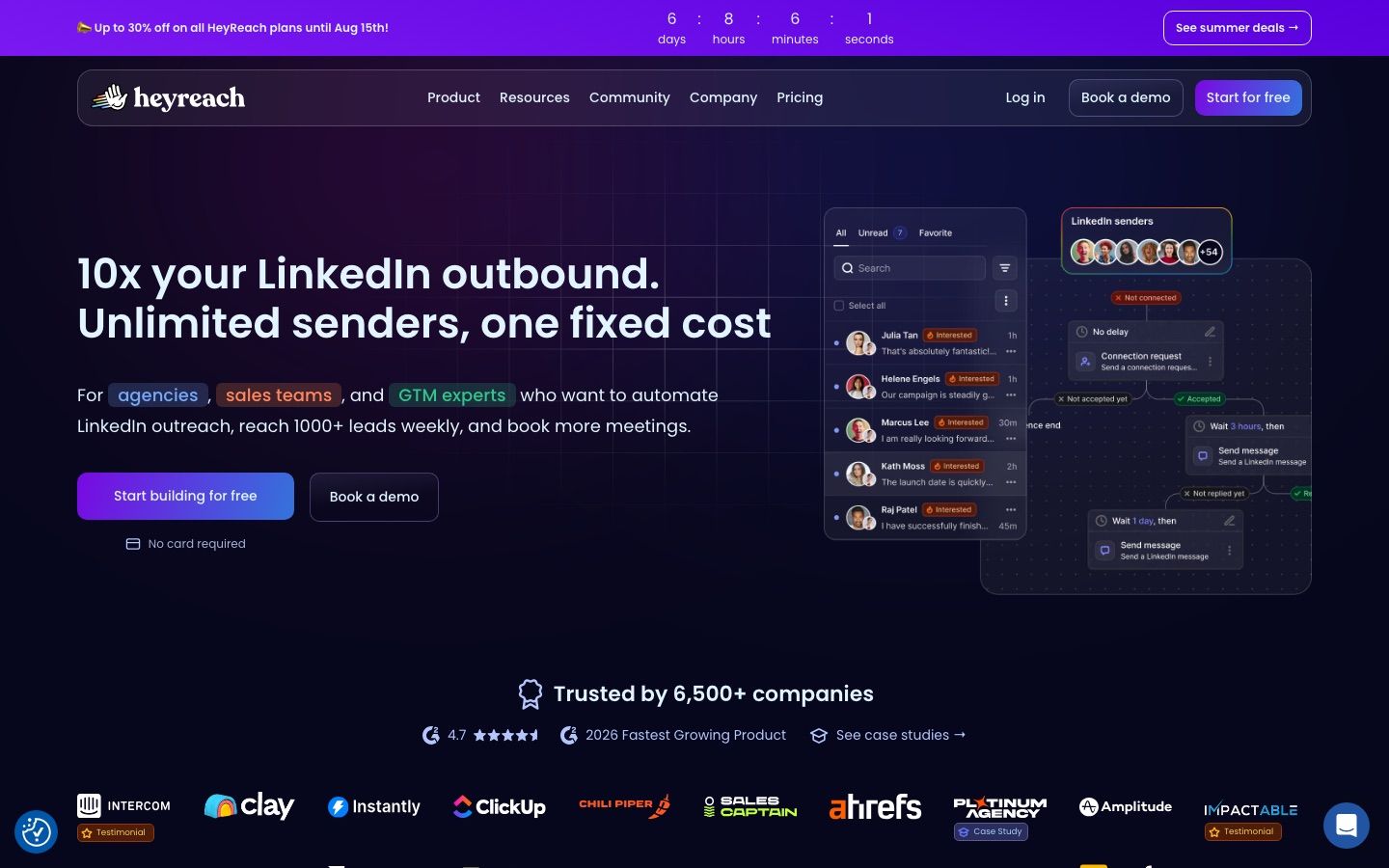
HeyReach prices per sender at $79 per month on Growth, dropping to $59 from ten senders, and flattens to one Agency plan, $999 for 25 senders or $1,399 for 50, with whitelabel and 1,000 enrichment credits included, and tops out at $2,999 for Unlimited with done-for-you migration, as read on its pricing page on 21 October 2026. Annual billing takes 20 percent off. An API, webhooks and an MCP server ship on every plan, which remains rare and genuinely good. Every plan is covered in our HeyReach review.
The friction points agencies report are structural rather than bugs. There is no built-in prospect database, so every campaign starts in Sales Navigator or a data vendor and moves through a CSV. Email steps are handed off to Instantly or Smartlead rather than sent natively, which means a second subscription and a second inbox to reconcile. And below ten senders it is $79 each, so five senders cost nearly twice Cadency's $199 for five, with the $59 volume rate only starting at ten. Our head to head covers the full detail.
All nine tools at a glance
Prices are each vendor's published rates on 10 August 2026 unless a later date is shown, monthly billing unless marked.
| Tool | Entry price / month | Flat or agency tier | White label |
|---|---|---|---|
| HeyReach | $79 per sender | Agency plan: $999 for 25 senders or $1,399 for 50, read 21 October 2026 | From the $999 Agency plan |
| Cadency | $89 a month with 2 LinkedIn senders | $699 with 20 senders, $25 per added sender | Scoped on a sales call; unlimited workspaces and teammates |
| Skylead | $100 per account | $999 for 25 seats (first-year promotion), $1,999 unlimited, read 30 September 2026 | Yes, on the agency plans |
| Salesflow | $99 per seat, ladder to $24.99 | About $1,500 at 50 seats | Branded UI all plans, URL from Pro |
| Expandi | $99 per account, ~$79 annual | Custom Agency from 10 seats | Yes, on Agency |
| MeetAlfred | $59 to $99 per user | Teams tier $79 per user, from 3 seats | On Teams |
| La Growth Machine | About $70 (60 EUR) per identity | Agency offer, 6 identity minimum | Not advertised |
| lemlist | $109 per user for LinkedIn | Enterprise, custom | Not advertised |
| Dux-Soup | $55 per seat, $41.25 annual (STACKED local) | No flat tier: 10 percent off per 10 seats, up to 50 percent, read 30 September 2026 | Not advertised |
Two of the nine, HeyReach and Skylead, publish a real flat agency plan; Cadency publishes a plan base with a per-sender add-on, and the rest scale per seat or per account all the way up, which is the single most expensive difference in this table once client counts grow.
The 8 best HeyReach alternatives, compared honestly
1. Cadency
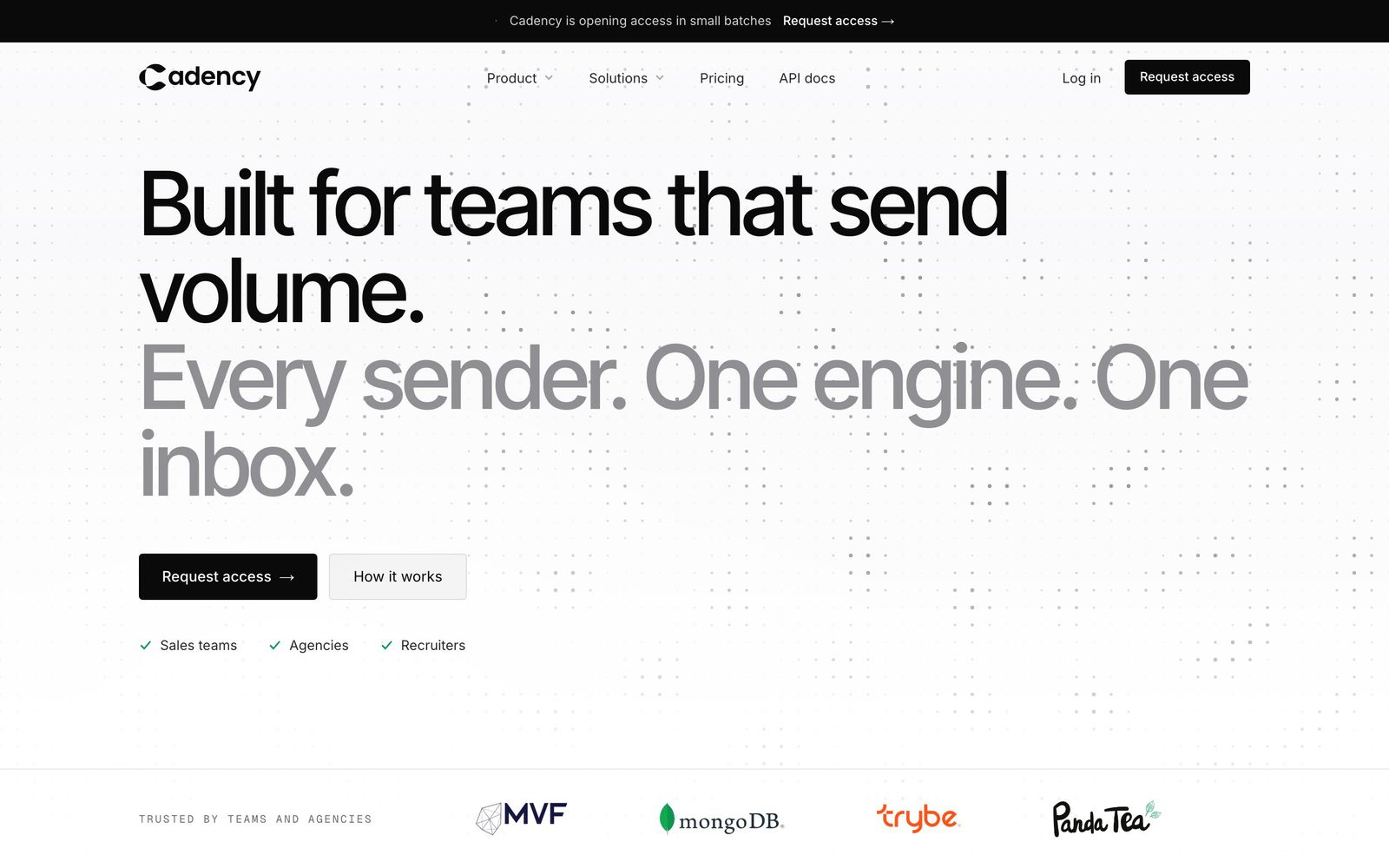
Disclosure: Cadency is our product, and it is the closest architectural match on this list, because both tools run one campaign across a pool of senders with a shared inbox. The differences an agency will feel: email is native, with unlimited Google and Microsoft mailboxes warmed up and rotated in the same campaign as the LinkedIn senders, and so is data, with a people and company database, waterfall enrichment paid per verified hit, and CSV and Sales Navigator imports. LinkedIn coverage runs to eight steps, including InMail, voice notes and a comment on the lead's last post that is AI drafted and approved by you, and every sender runs in the cloud with its own ceilings and pacing, a dedicated proxy and checkpoint handling.
Pricing is monthly, with 30 percent off on annual billing: Essential is $89 a month with 2 LinkedIn senders and 100,000 emails a month included, Small Team is $199 a month with 5 LinkedIn senders and 100,000 emails a month, and Scale is $699 with 20 senders, $25 per additional sender and 500,000 emails a month, with 1M emails for +$200 and 2M for +$500. On annual billing the three plans drop to $62, $139 and $489 a month. At HeyReach's 25 sender threshold that is $824 a month on Scale against the $999 Agency plan; on monthly billing HeyReach stays cheaper at one sender and at exactly 50, where its $1,399 Agency tier edges Cadency's $1,449. Mailboxes, teammates and workspaces are unlimited on every plan, so a workspace per client costs nothing extra, and the API and webhooks on every plan connect any CRM or ATS. White label is scoped on a sales call, and Essential starts with a free trial; for Small Team and Scale, agencies talk to sales.
Where HeyReach wins instead: reputation depth, done-for-you onboarding with a dedicated Slack channel on its higher tiers, and bring-your-own proxies for agencies that specifically want that control.
2. Skylead
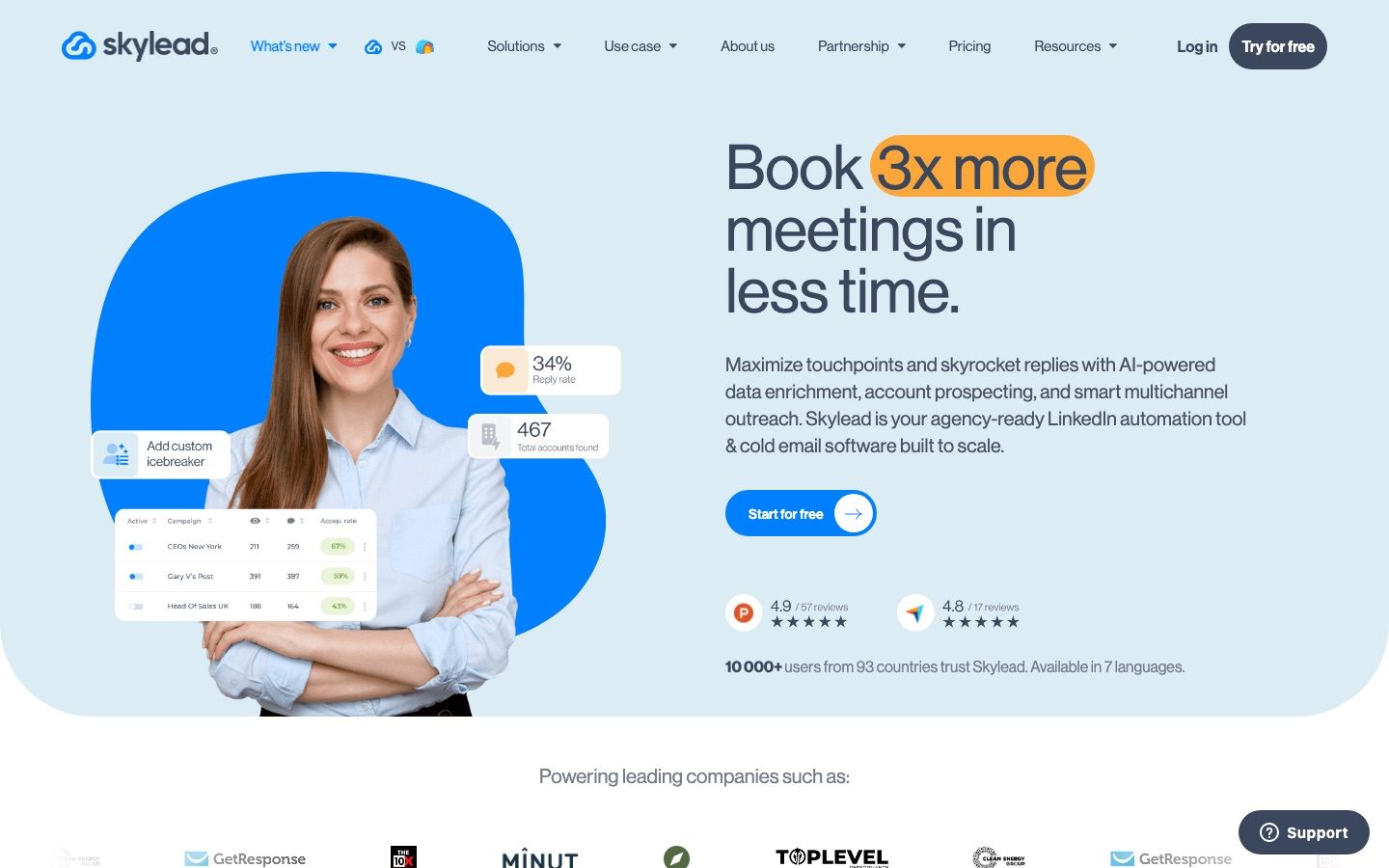
The bundle play. Skylead charges $100 per account per month and packs an unusual amount into it: unlimited connected email accounts with warm-up, an email finder and verifier, image and GIF personalization, and smart sequences with if and else conditions that branch on a lead's behavior. It runs cloud-based, offers a 7 day trial, and rates 4.5 on G2 across 127 reviews. The agency economics are the headline: as read on skylead.io on 30 September 2026, white-label plans run $999 a month for 25 seats as a first-year promotion or $1,999 for unlimited seats, which matches HeyReach's 25-sender Agency price rather than beating it. Against HeyReach, Skylead bundles email sending natively where HeyReach hands it off; the trade is a smaller ecosystem and no MCP story.
3. Salesflow
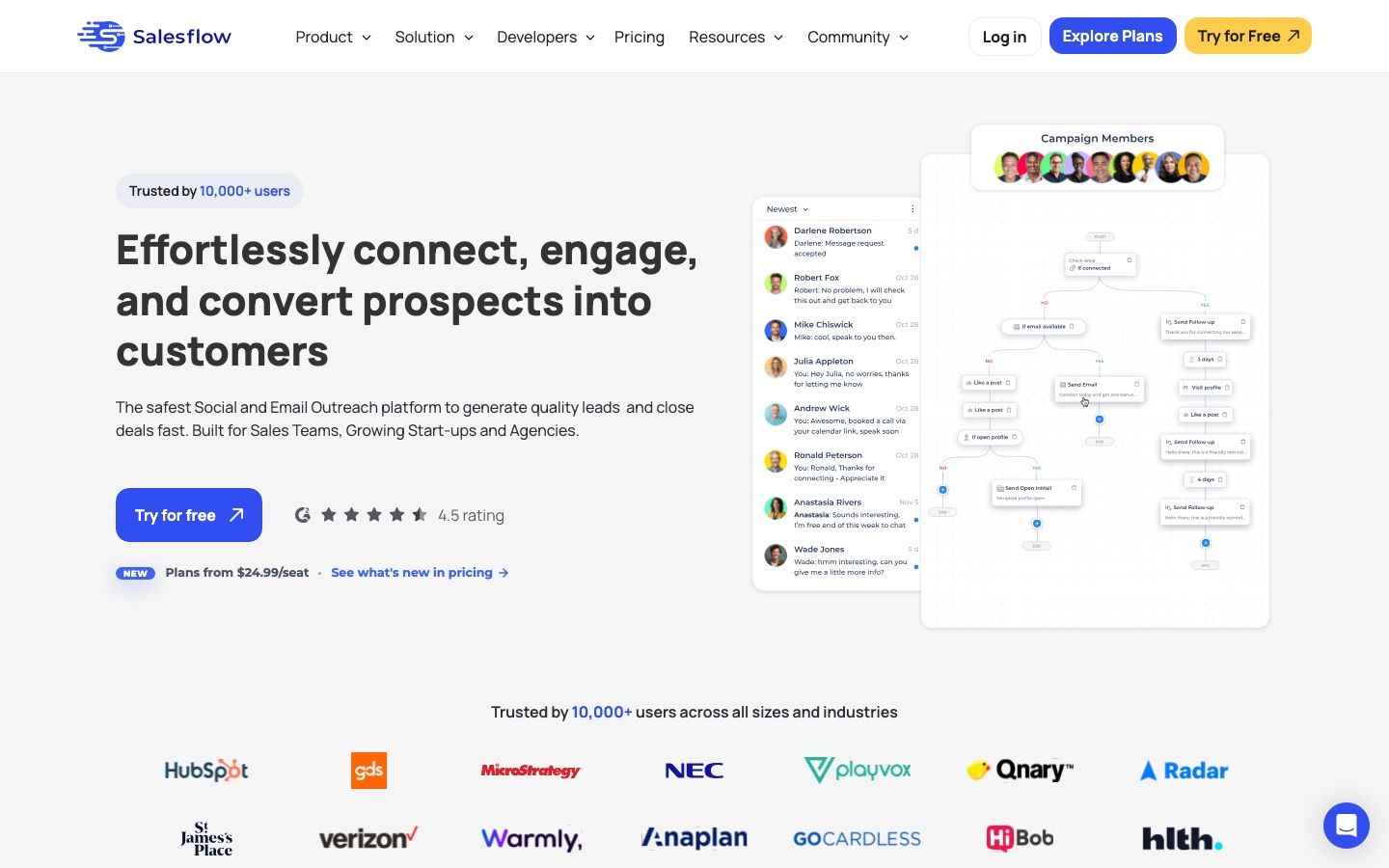
The transparent ladder. Salesflow publishes per-seat pricing most vendors hide behind a demo, and as read in August 2026 it ran $99 for a single seat, $70 per seat at 5 plus, $39.95 at 20 plus, $29.98 at 50 plus, and $24.99 at 100 plus, the larger tiers on annual commitments billed monthly. White-label dashboard and URL customisation arrive from the Pro tier, API access is on every plan, and a unified inbox covers LinkedIn and Sales Navigator conversations. It rates 4.3 on G2 across 141 reviews. The catch worth knowing before a call: only the single-seat Basic tier is self-serve with its 7 day trial; everything at agency scale goes through a demo. A branded UI ships on every plan, with the white-label login URL arriving from the Pro tier. At 50 seats the ladder lands around $1,500 a month, above HeyReach's $1,399 Agency tier and below Skylead's $1,999 unlimited-seat plan, since Skylead lists no 50-seat tier as read on 30 September 2026.
4. Expandi
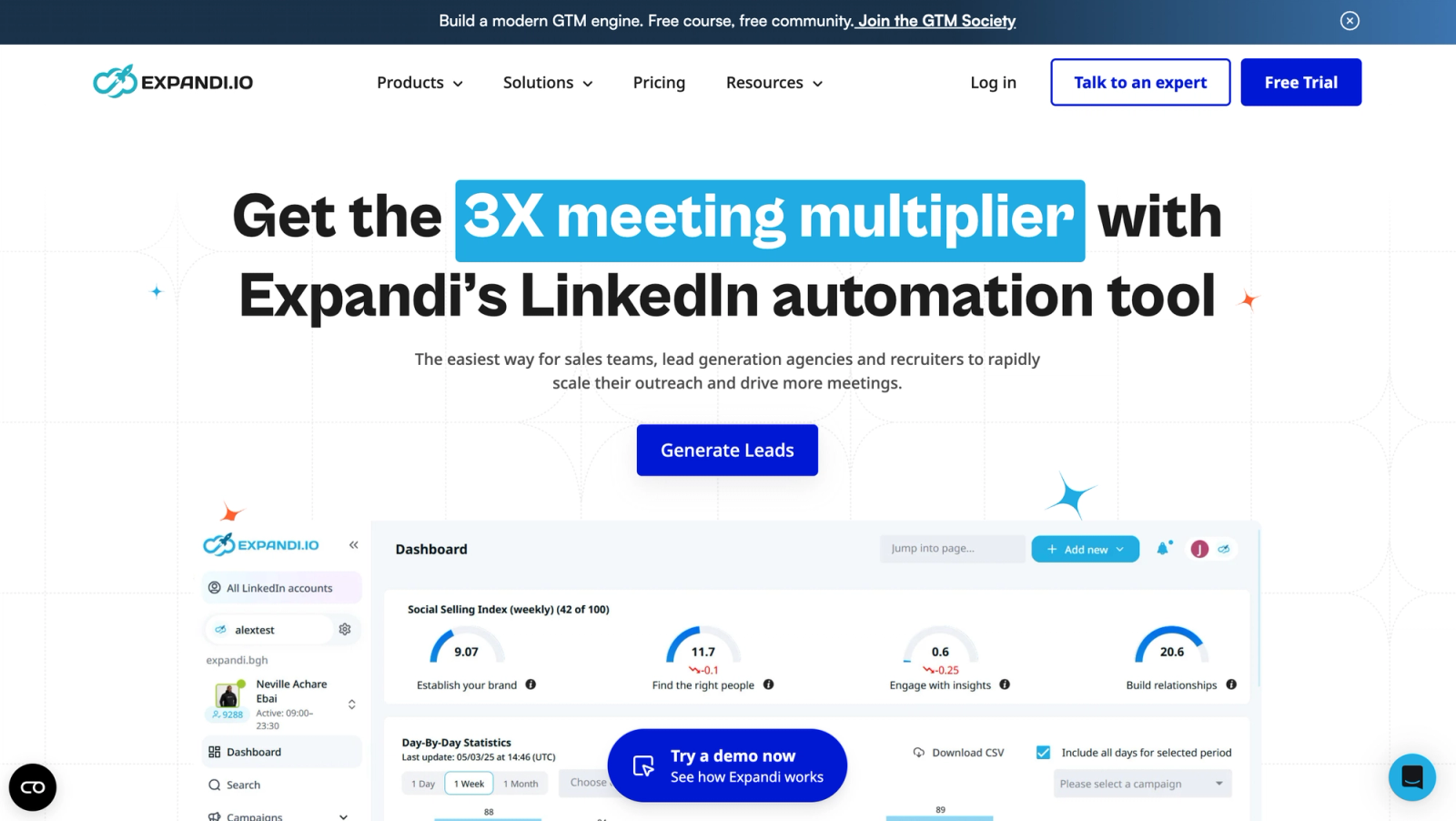
The mature one. Expandi lists $99 per month per LinkedIn account, about $79 on annual terms, with a 7 day trial and a custom Agency tier from 10 seats that includes white label, centralized campaign management and transparent client reports. Warmup and a dedicated country-based IP per account are automatic, daily limit ranges are yours to tune, and its personalized images and GIFs, a paid add-on, remain the feature agencies borrow for campaigns that need to stand out. Against HeyReach it prices per account with no published flat tier, so the agency math depends entirely on the quote. Years of edge-case handling are the reason it stays on shortlists.
5. MeetAlfred
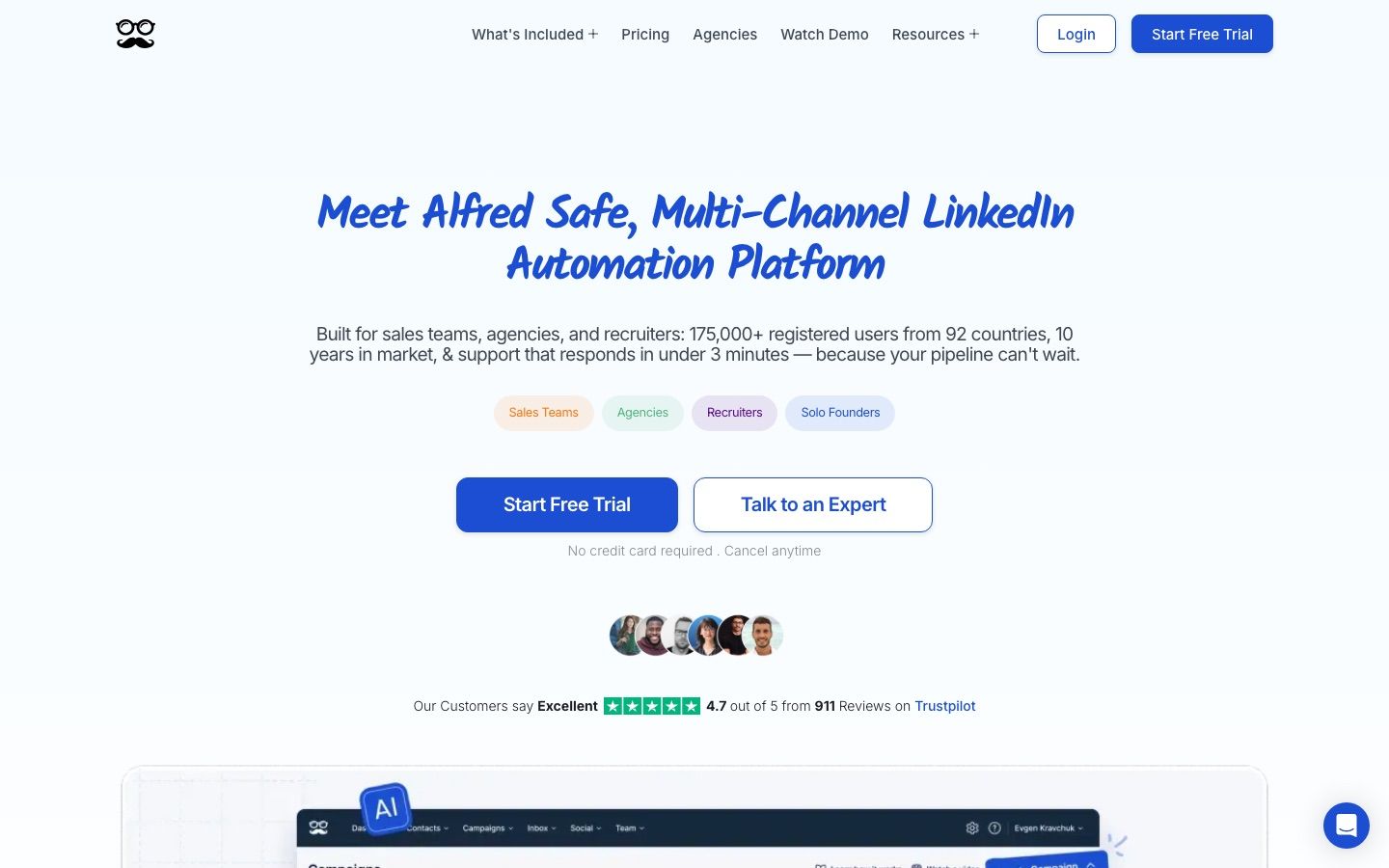
The multichannel veteran. MeetAlfred is priced per user: Individual at $59, Business at $99 and the Teams tier at $79 per user per month, sold from 3 seats, or $35, $59 and $47 on annual billing. Business and Teams run LinkedIn, email and X from one sequence, while Individual is LinkedIn only, and X campaigns were still marked under maintenance when we checked on 8 October 2026. White label and a dedicated account manager come with Teams, and the custom Unlimited plan adds volume pricing and hands-on migration. The constraint to price in: imports cap at 1,000 profiles per standard LinkedIn search URL and 2,500 per Sales Navigator search, and per-user pricing means fifty client accounts is fifty seats. For an agency whose clients want LinkedIn and email in one flow it earns its place; for LinkedIn-first work the tools above go deeper. Our full breakdown compares it entry by entry.
6. La Growth Machine
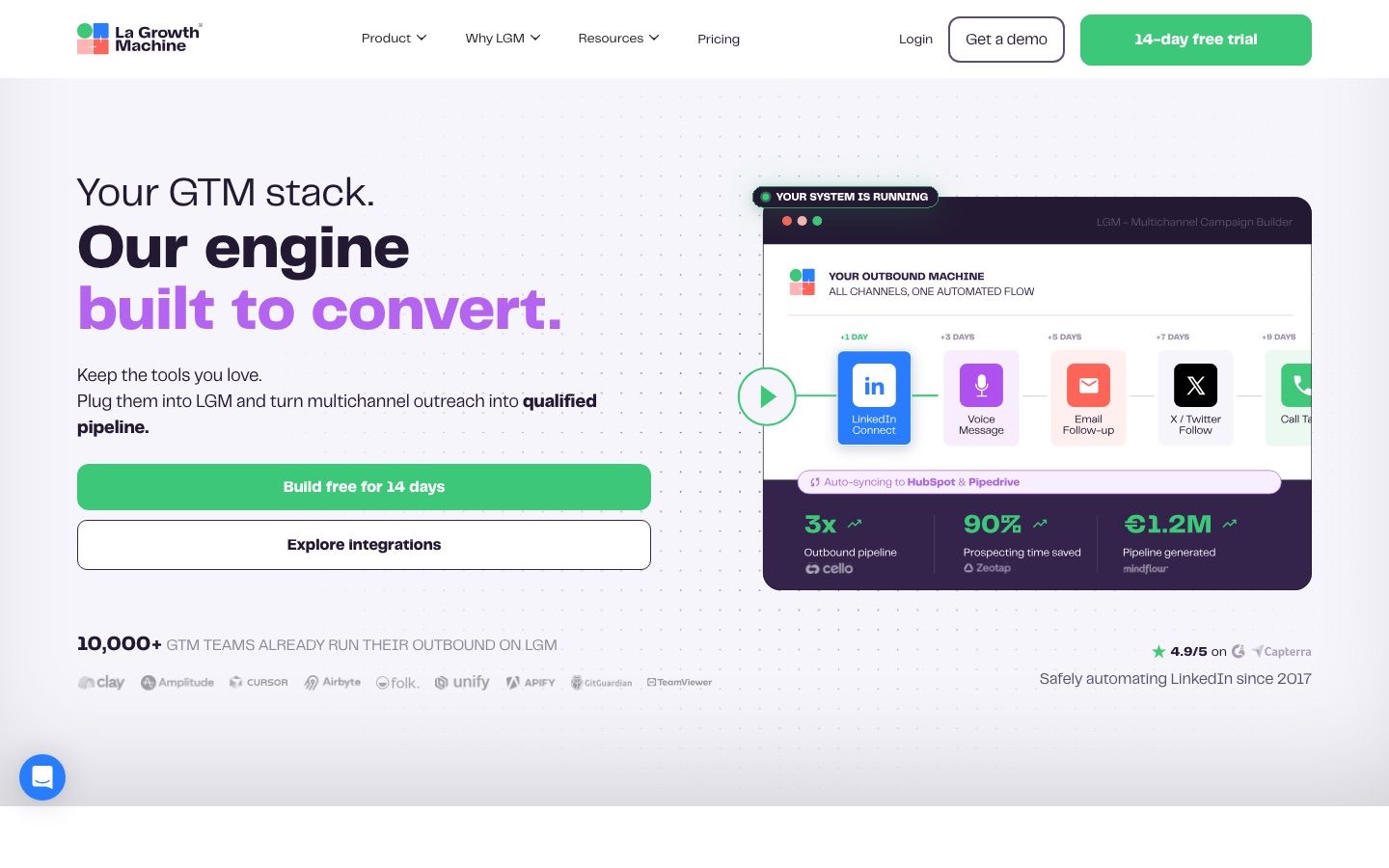
The multichannel boutique. La Growth Machine prices per identity, from 60 EUR per month on Basic (about $70) through 120 EUR on Pro with calls to 180 EUR on Ultimate, the only LGM plan with a native X channel in the sequence. LinkedIn voice messages ship on every plan, sequences run on real if and else conditions, and each tier bundles lead enrichment from 250 to 1,000 leads a month. The agency offer starts at a 6 identity minimum, and a separate custom plan starts from 150 EUR. It rates 4.6 on G2 across 56 reviews, the highest verified score on this list. What it lacks against HeyReach is the flat tier and the whitelabel story, which is why it fits boutique agencies more than volume ones.
7. lemlist
The email-first suite. lemlist's deliverability tooling, warm-up and unified inbox are genuinely strong, and its Email plan at $69 carries unlimited users. The catch for a LinkedIn-led agency: LinkedIn automation starts on the Multichannel tier at $109 per user per month, and coverage stops at profile visits, invitations, messages and voice notes, with no post comments or InMail. Pick it when clients buy email campaigns with LinkedIn as the warm-up touch, not the reverse.
8. Dux-Soup
The per-seat agency dashboard. Dux-Soup is now sold as STACKED, and the flat $371 Cloud Agency plan is no longer on its pricing page: as read on 30 September 2026, the local desktop app costs $55 per seat a month ($41.25 on annual terms) and the cloud edition $99 ($74.17 annual), with 10 percent off per 10 seats up to 50 percent, and its agency page lists a shared inbox and one dashboard for client accounts. The product has run since 2015 with a claimed 300,000 users. It rates 4.4 on G2 across 90 reviews. The honest framing: this is single-account automation multiplied, not multi-sender orchestration. There is no campaign rotation across a sender pool, so the operational overhead of running each account on its own stays with you.
What 50 client accounts actually cost
Agency shortlists usually compare entry prices, then sign at a scale where the entry price is irrelevant. Here is the same 50 account fleet on each vendor's published rates, using the cheapest published route to 50.
| Tool | 50 accounts, monthly | Route |
|---|---|---|
| HeyReach | $1,399 | Agency tier with 50 senders, read 26 September 2026 |
| Cadency | $1,449 | Scale at $699 with 20 senders, plus 30 senders at $25 |
| Salesflow | About $1,500 | $29.98 per seat at 50 plus, annual commitment, as read in August 2026 |
| Skylead | $1,999 | Unlimited-seat agency plan, no 50-seat tier, read 30 September 2026 |
| Dux-Soup | $2,750 at list, before a volume discount of up to 50 percent | 50 STACKED local seats at $55, read 30 September 2026 |
| MeetAlfred | $3,950 | Teams tier at $79 per user, 50 users |
| Expandi | Custom quote | Agency tier, 10 seat minimum |
| La Growth Machine | Custom, from 150 EUR terms | Agency offer, 6 identity minimum |
Annual terms move every number in that table. HeyReach and Expandi take 20 percent off, Salesflow discounts 15 percent at six months and 30 at twelve, Skylead gives two months free, and Cadency takes 30 percent off the plan base, so Scale drops to $489 a month before added senders. An agency signing a year should re-run the fleet math on annual rates before comparing, because the ranking between the per-seat ladders and the flat tiers can flip at the discounts.
Two honest caveats on that table. Dux-Soup's number is the list price of 50 seats on its local desktop app before a volume discount of up to 50 percent, and it buys a different architecture, fifty separate automations rather than one orchestrated campaign. And HeyReach's 25 and 50 sender prices are the only two options of one Agency plan, $999 and $1,399 as read on 21 October 2026, so the crossover with Cadency sits between them: at 25 senders Cadency's $824 beats the $999 option, and at exactly 50 HeyReach's $1,399 edges Cadency's $1,449. An agency growing through that range should ask which tier its contract follows and what the step between them costs mid-term.
Tools we considered and left out
Closely nearly made the list: it prices per LinkedIn account at $49 for one, $127 for three and $205 for five on monthly billing, with warmup and a dedicated residential IP per account, and drops to $29, $87 and $145 on annual terms. It stayed off because its pricing page was still showing Black Friday and Christmas promo codes in August, which is the kind of freshness signal an agency should weigh before wiring client accounts into a tool. Zopto was cut for a harder reason: it has been closed since early January 2026, and its site reads that Zopto.com is no longer active (checked 30 September 2026), so there is no price to publish.
Instantly deserves a special note because agencies keep asking about it. It is an email sending platform, and its own changelog describes LinkedIn steps as running through integrations with HeyReach, Aimfox and Valley. In other words, adding LinkedIn to Instantly can mean buying HeyReach anyway. Use it for the email leg; it does not replace anything on this list.
Five questions to ask on every demo
Every vendor demo runs on its happy path. These five questions surface the parts of the deal that only show up in month three, and any vendor worth signing answers them without a follow-up call.
- What exactly does the flat tier cover, and what is the published path from 25 to 50 accounts?
- Who owns the white label: a themed dashboard, a custom domain, or your brand end to end?
- What happens at a sending limit: does one action pause, or does the account stop?
- Where do proxies come from, who pays for them, and is warmup automatic or a setting?
- Can you export every client's leads, conversations and stats the day you leave?
A vendor that answers all five without hesitation is a vendor you can leave, which is exactly why it is safe to stay.
Which HeyReach alternative fits which agency?
Collapsing the eight into the situations agencies actually shop from:
- LinkedIn-led agency scaling client accounts: Cadency on Scale with added senders, or Skylead at $999 for 25 seats or $1,999 for unlimited seats, then compare on data, safeguards and API depth.
- Want published seat pricing to forecast against: Salesflow's ladder.
- Clients demand three channels in one flow: MeetAlfred on Business or Teams (its X campaigns were still marked under maintenance on 8 October 2026), or La Growth Machine for the boutique version with calls and X.
- Email is the anchor product: lemlist, with LinkedIn as the supporting touch.
- Per-seat pricing with a shared inbox and one dashboard for client accounts: Dux-Soup, now sold as STACKED.
Whichever way you lean, run the safety questions before the pricing call: per-action caps, warmup, what happens at the limit, and what LinkedIn's own user agreement says about automated access, because your clients' accounts carry the consequences. Our safety guide walks through all of it, and the wider market beyond agency tools lives in our tools hub.
FAQ
What is the best HeyReach alternative for agencies in 2026?
Cadency and Skylead are the two that compete with HeyReach on its own agency economics. Cadency runs the same one-campaign, many-senders model with native email and a built-in database, and 25 LinkedIn senders cost $824 a month on Scale against HeyReach's $999 Agency plan for 25 senders (read 21 October 2026), though at exactly 50, on monthly billing, HeyReach's $1,399 Agency tier edges Cadency's $1,449. Skylead's agency plan ties that $999 at 25 seats as a first-year promotion, with unlimited seats at $1,999 as read on 30 September 2026, and bundles native email sending. Salesflow is the pick if you want a published per-seat ladder instead of a flat tier.
Is there a cheaper alternative to HeyReach?
At most fleet sizes, yes, though not at one sender. HeyReach's $79 Growth seat costs less than Cadency's $89 Essential plan at one sender on monthly billing (on annual billing Cadency's $62 edges the $64 HeyReach's page displays), but from two senders Cadency is cheaper, $89 against $158, and at five senders HeyReach costs nearly twice Cadency's $199. La Growth Machine starts around $70 per identity with more channels, and Dux-Soup, now sold as STACKED, starts at $55 per seat ($41.25 annual) for a different, single-account architecture, as read on 30 September 2026. At 25 plus senders the honest comparison moves to the volume tiers: $999 buys 25 senders on HeyReach's Agency plan and 25 seats on Skylead's first-year agency promotion, and Cadency's 25 senders run $824 a month on Scale.
Does HeyReach include prospect data?
No. HeyReach includes enrichment credits on its higher tiers, 1,000 on the Agency plan and 3,000 on Unlimited, but there is no built-in searchable database, so audiences come from Sales Navigator or a data provider through CSV import. Tools with a native database remove that step; on this list Cadency has one, a people and company database with waterfall enrichment paid per verified hit, alongside CSV and Sales Navigator imports.
Can these tools send email as well as LinkedIn?
Differently. HeyReach hands email steps to Instantly or Smartlead, as read on 26 September 2026. Cadency, Skylead, La Growth Machine, lemlist, Expandi through an SMTP mailbox and MeetAlfred on Business and Teams (Expandi as read on 30 September 2026, MeetAlfred on 8 October 2026) send email natively in the same sequence. Cadency rotates unlimited Google and Microsoft mailboxes inside the same campaign as its LinkedIn senders, with 100,000 emails a month on Essential and Small Team and 500,000 on Scale. If a client contract specifies true multichannel from one tool, that narrows the list to the native senders.
How hard is it to migrate an agency off HeyReach?
The sequences rebuild in an afternoon per client, and lead lists export to CSV. The real work is operational: disconnecting each client account from one tool before connecting it to the next, resuming at reduced volume for a few days rather than full pace, and moving any inbox history your reporting depends on. Vendors court switchers here: HeyReach itself includes done-for-you migration on Unlimited.
The short version
HeyReach set the standard for agency LinkedIn outreach, and the standard now has real competition. Skylead matches its 25-seat price at $999 with email bundled, and Cadency matches its architecture while adding native email and a database, costing less from two senders through 25 and slightly more at exactly 50 on monthly billing. Salesflow publishes the ladder everyone else hides. Expandi, MeetAlfred, La Growth Machine and lemlist each remove a different constraint, data, channels or price, and Dux-Soup, now sold as STACKED, sells per-seat automation with one dashboard for agencies willing to run accounts one by one.
Price the fleet you will actually run, ask who owns the white label, and put the safety architecture questions in the first call rather than the last one. The compare pages linked above take any single matchup the rest of the way.
Agencies weighing Cadency against HeyReach should know where it comes from: Cadency began as our internal test bed for the Swarmhit engine, it was never meant to be public, and we kept it running for the sales teams, recruiters and agencies who asked for it. Swarmhit itself is the API for agencies and developers who build their own outreach product.


