

The Waalaxy competitors worth shortlisting in 2026 are Swarmhit, HeyReach, Expandi, Dripify, La Growth Machine, Linked Helper, Dux-Soup and Octopus CRM. Waalaxy's pitch is a low entry price with prebuilt templates, and its catch is the fine print: 300 invitations a month on the $19 plan, 800 on the $39 one, no custom sequence logic, and an inbox sold as a paid add-on.
This comparison prices all nine tools from their own pricing pages, read on 10 August 2026, and puts the sending limits next to the sticker price, because with LinkedIn automation the limit is the product. A cheap plan that caps you at 10 invitations a day is not cheap per conversation.
- Waalaxy has the lowest entry price of the mainstream cloud tools ($19) and is among the most constrained: monthly invite quotas by tier, template-only campaigns, and a paid inbox add-on.
- Octopus CRM ($6.99 on annual), Linked Helper ($8.25) and Dux-Soup ($11.25) undercut it on price; all three trade away cloud convenience or depth to do it.
- Swarmhit and HeyReach sit above it for teams: per-sender pricing, real sequence builders, rotation across accounts, and a shared inbox included.
- Per-month invite quotas are a billing tier, not a safety system. What protects an account is per-action daily caps and warmup, which only some of these tools enforce.
What Waalaxy costs, and what the price buys
Waalaxy runs three paid tiers, billed per user, after a 14 day trial: Pro at $19 per month with 300 invitations a month, Advanced at $39 with 800 invitations plus API access and Make, Zapier and n8n modules, and Business at $69, which adds cold email sequences and 500 email finder credits. Yearly billing takes 20 percent off. There is no permanent free plan.
Campaign creation means choosing from a library of prebuilt templates, which is genuinely the fastest first campaign in the category and a hard ceiling the moment your logic differs from the closest template. The unified inbox is a separate paid add-on with 500 free conversations to try, and its price is not displayed on the pricing page. Authentication runs through a Chrome extension. For the full head to head, see our Waalaxy comparison.

None of that makes Waalaxy a bad product. It makes it a specific one: built for a solo user sending a modest volume from one account. The eight Waalaxy competitors below are what to look at when one of those constraints starts to cost you replies.
All nine tools at a glance
| Tool | Entry price / month | Priced per | The limit behind the price |
|---|---|---|---|
| Waalaxy | $19, $69 for cold email | User | 300 to 800 invites per month by tier; templates only |
| Swarmhit | $29 on annual billing, $39 monthly | Sender | Per-action daily caps and weekly invite ceiling, enforced server-side |
| HeyReach | $79 | Sender | Per-sender daily limits; $999 flat covers 25 senders |
| Expandi | $99, ~$79 annual | LinkedIn account | Limit ranges you tune per account; warmup automatic |
| Dripify | $39 annual ($59 monthly) | User | Entry tier: 1 campaign, 20 connects and 30 messages a day |
| La Growth Machine | about $70 (60 EUR) | Identity | Enrichment credits by tier; X channel only on Ultimate |
| Linked Helper | $8.25 annual local | LinkedIn account | Standard caps advanced actions at 20 a day; runs on your machine |
| Dux-Soup | $11.25 annual | Seat | Drip campaigns only from Turbo at $41.25; browser or cloud |
| Octopus CRM | $6.99 annual | Plan tier | Invite, message, visit, endorse; no InMail; funnels not branches |
Prices are the vendor's own published rates on 10 August 2026, monthly billing unless marked annual. Three of the nine gate their real capability behind the top tier, which is why the cheapest column is the least informative one in the table.
The 8 Waalaxy competitors, compared honestly
1. Swarmhit

Disclosure first: Swarmhit is our product. It sits one category up from Waalaxy: a visual sequence builder with branching on connection status and replies instead of a template list, campaigns that rotate across a pool of senders with deduplication, and a unified inbox with assignment and interest tags included rather than sold as an add-on. AI personalization reads each prospect's profile, posts and company news, and native actions include voice notes, post comments and InMail.
On limits, the philosophy is the opposite of a monthly quota: every sender carries separate daily caps per action type, a weekly invitation ceiling, a dedicated proxy and managed warmup, with 250+ safeguards monitored around the clock. Reaching a cap pauses that action, not the account. A built-in database of 1B+ contacts across 60M companies, sourced through third-party data providers, comes with free monthly credits, then pay as you go. There is an API, webhooks and an MCP server for teams that automate around it.
Pricing is from $29 per sender per month on annual billing ($39 monthly), and the per-sender rate drops sharply with volume. Larger fleets get custom pricing based on the number of senders, scoped on a call. Agencies also get access to a white-label inbox and reports. Where Waalaxy wins instead: price at one seat, and speed to a first campaign. If you are one person sending 200 invitations a month, Waalaxy is cheaper and the templates are enough.
2. HeyReach
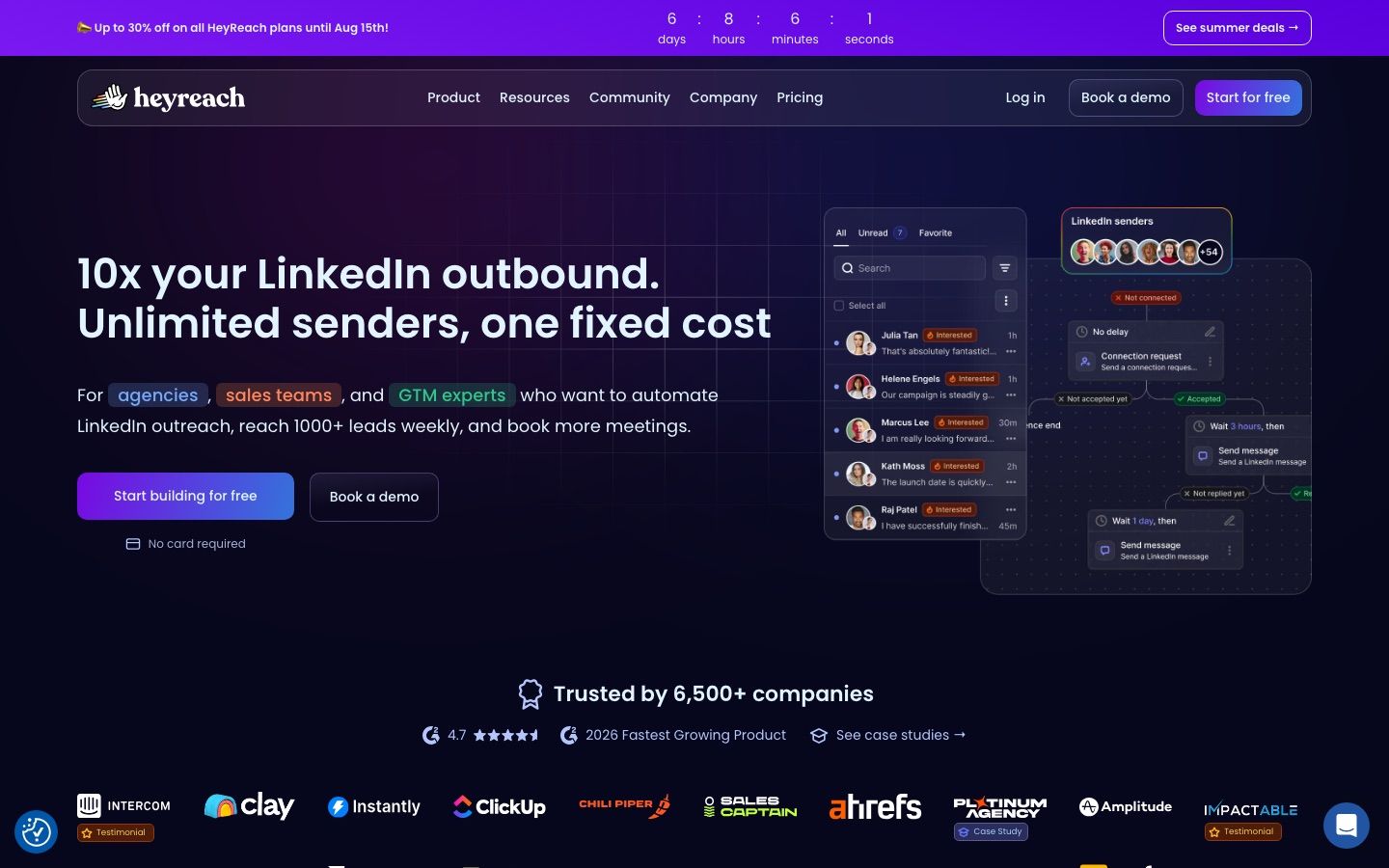
The strongest agency option among Waalaxy competitors. HeyReach prices per sender at $79 per month, flattens to $999 for 25 senders on Agency with whitelabel included, and runs one campaign across many accounts with a unified inbox. An API, webhooks and an MCP server ship on every plan. Email steps hand off to Instantly, Smartlead or EmailBison rather than sending natively, and there is no built-in prospect database, so audiences arrive from Sales Navigator or a data provider through CSV. Coming from Waalaxy, the jump is real on both price and capability: this is the tool for a team that outgrew per-seat quotas, not a cheaper substitute.
3. Expandi
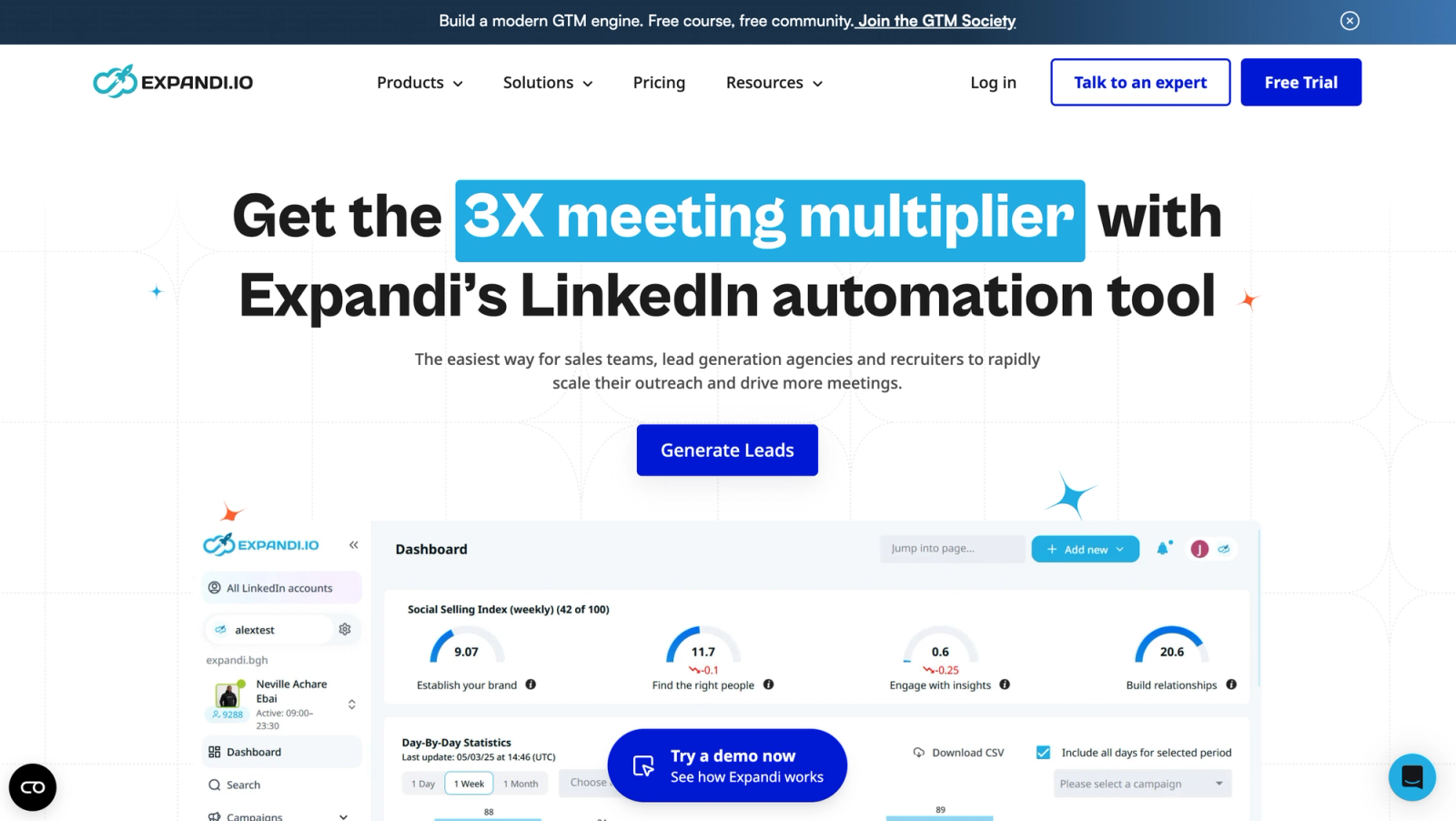
Expandi is the mature mid-market pick, known for personalized images and GIFs, sold as an add-on, in LinkedIn messages. Expandi lists $99 per month per LinkedIn account, about $79 on annual terms, with a 7 day trial and a custom Agency tier from 10 seats. Warmup and a dedicated country-based IP per account are automatic; the daily limit ranges are yours to tune, so a conservative configuration is on you. Against Waalaxy it is five times the entry price and buys a genuinely deeper product: real campaign logic, more action types, and years of edge-case handling.
4. Dripify
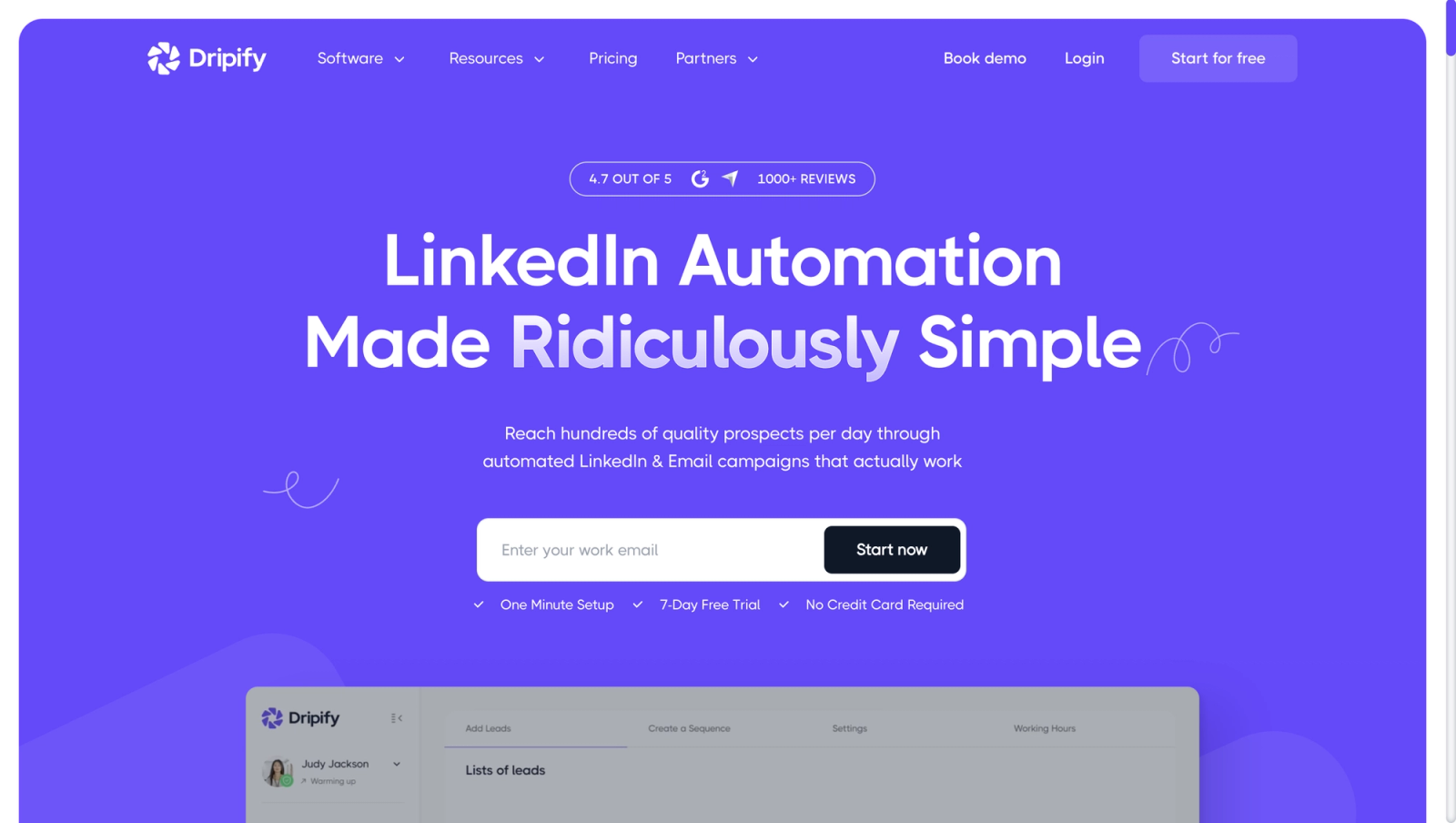
Dripify is the closest like-for-like Waalaxy competitor: clean, LinkedIn-only, priced per user, with a drag and drop sequence builder where Waalaxy has templates. Annual billing runs $39, $59 or $79 per user per month, and monthly billing costs more. Watch the same gating pattern as Waalaxy: the entry tier allows one campaign with daily quotas around 20 connection requests and 30 messages, and teams, A/B testing and the advanced protections arrive only at the top tier. If you want Waalaxy's simplicity plus a real builder, this is the natural first look.
5. La Growth Machine
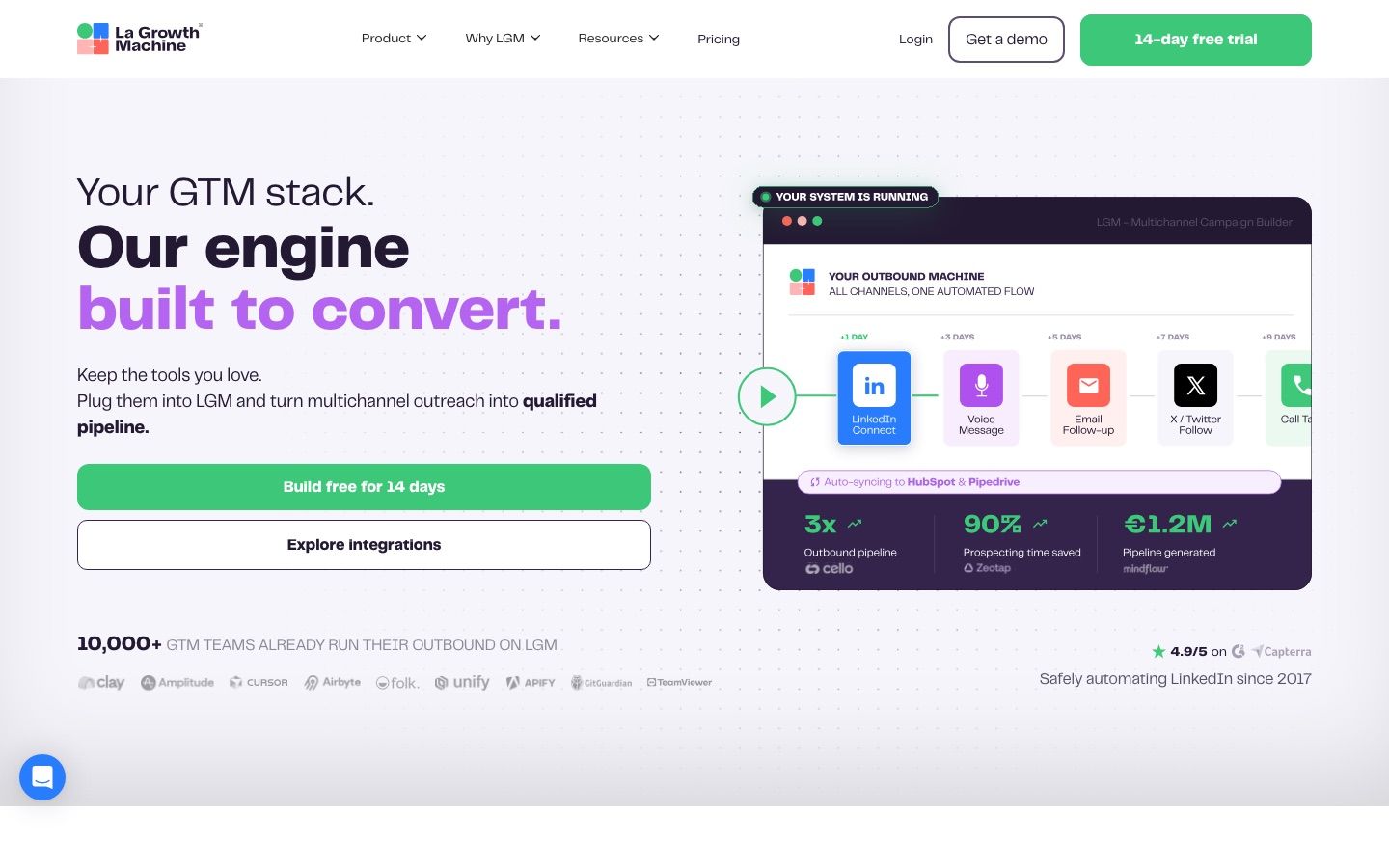
The multichannel pick. La Growth Machine prices per identity, from 60 EUR per month on Basic (about $70) to 180 EUR on Ultimate, with roughly two months free on annual terms. Basic covers LinkedIn and email, Pro adds calls, and Ultimate is the only plan in this whole lineup with a native X channel in the same sequence. LinkedIn voice messages ship on all plans, sequences use real if and else conditions, and each tier includes lead enrichment, from 250 to 1,000 leads a month. The 14 day trial needs no card. It rates 4.6 on G2 across 56 reviews. Against Waalaxy: more than three times the entry price, and the sequence logic Waalaxy deliberately does not have.
6. Linked Helper

The price killer, with a genuinely different architecture: a desktop application rather than a cloud service or extension, which the vendor frames as safer because no code is injected into LinkedIn pages. The trade is operational: campaigns run while your machine does, unless you pay for the cloud variant. Standard runs $15 a month, dropping to $8.25 on a 12 month term, but caps advanced actions at 20 a day; Pro at $24.75 annual lifts the caps and includes 3,100 data credits. It covers 30 plus action types including endorsements and post comments, offers a 14 day free trial without a card, and rates 4.5 on G2 across 149 reviews. Against Waalaxy it is less than half the price with more actions, paid for in convenience.
7. Dux-Soup

One of the oldest names in the category, running since 2015 with a claimed 300,000 users, in both browser and cloud editions. Pro Dux at $14.99 monthly, $11.25 annual, covers invitations, messages and auto-likes; drip campaigns require Turbo at $41.25 annual; the cloud edition runs $74.17 annual, with a flat $371 Cloud Agency plan for 5 plus client seats. The 14 day trial needs no card, and it rates 4.4 on G2 across 90 reviews. Against Waalaxy the entry tier is cheaper but thinner; the honest comparison is Turbo versus Waalaxy Advanced, where the prices nearly meet and Dux-Soup gives you campaigns without templates.
8. Octopus CRM
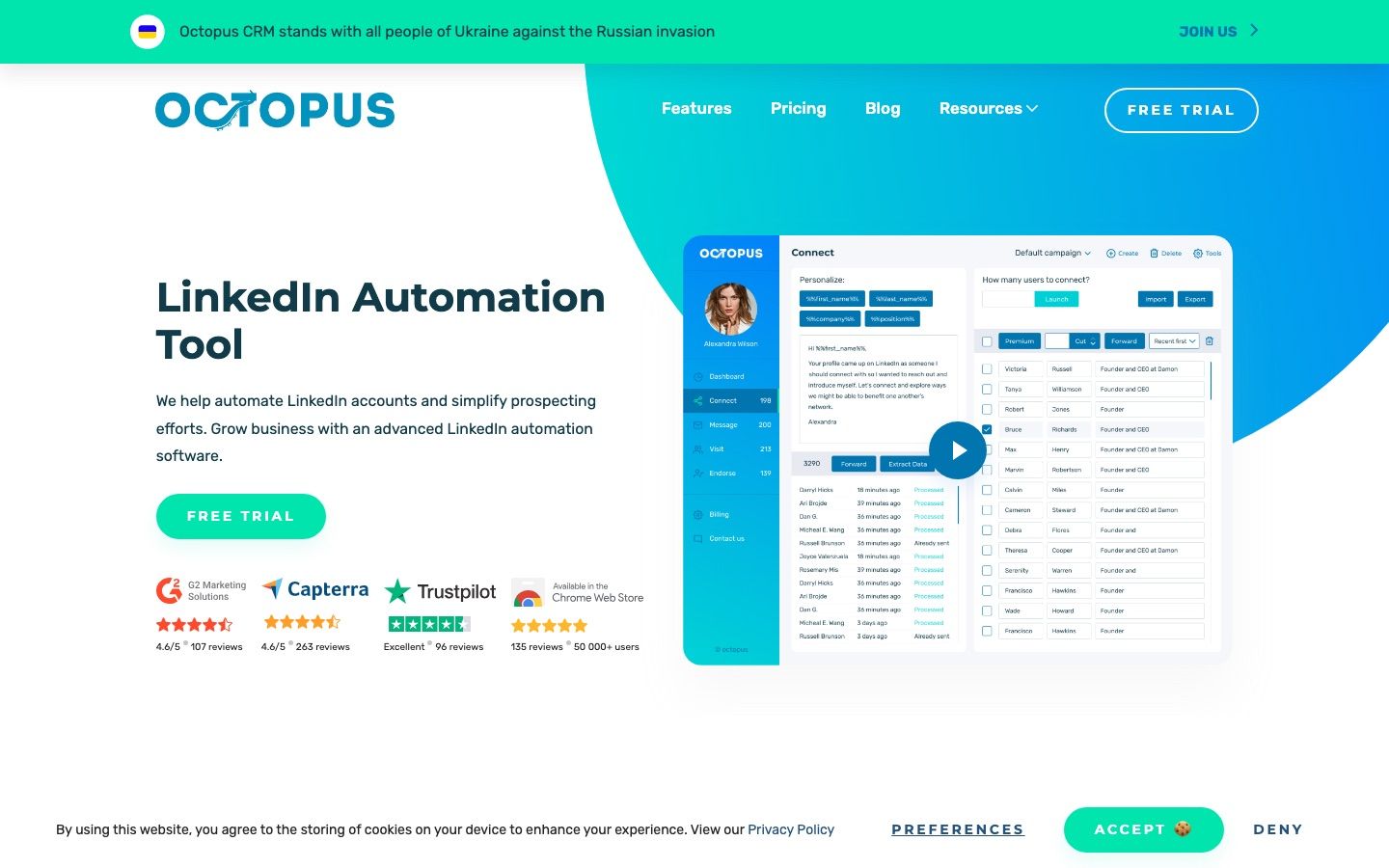
The lowest sticker price in the entire space: $9.99 a month on the Starter tier, falling to $6.99 with the 35 percent annual discount, up to Unlimited at $24.99 annual. It automates personalized invitations, bulk messages, profile visits and endorsements of up to 7 skills, builds simple funnels rather than branching sequences, integrates with Zapier and HubSpot, and sends an alert when it detects excessive activity on your account. There is no InMail automation. The trial runs 7 days, and it rates 4.3 on G2 across 118 reviews. If Waalaxy's $19 is the budget and the need is a basic invite and follow-up funnel, Octopus does it for a third of the price.
The real limits, side by side
This is the comparison that decides whether a cheap plan is actually cheap. A monthly invitation quota is a billing construct; what protects an account and fills a calendar is what the tool lets you do per day, and what it does when you approach the line. LinkedIn's own user agreement is what ultimately governs all of it.
| Tool | Published sending constraint | What happens at the line |
|---|---|---|
| Waalaxy | 300 invites a month on Pro, 800 on Advanced and Business | Quota resets with the billing month |
| Swarmhit | Separate daily caps per action, weekly invite ceiling per sender | That action pauses until the count resets; the account keeps working |
| HeyReach | Daily limits per sender across actions | Campaigns respect the per-sender limits |
| Expandi | Limit ranges you configure per account | Runs to whatever you set them to |
| Dripify | About 20 connects, 30 messages, 100 visits a day on the entry tier | Higher tiers raise the quotas |
| Linked Helper | 20 advanced actions a day on Standard | Pro removes the daily cap |
| Octopus CRM | No published action quotas | Activity alert fires on excessive use |
Two philosophies are visible in that table. Waalaxy, Dripify and Linked Helper meter usage by tier, so the limit is what you paid for. Swarmhit and HeyReach cap by account health, so the limit is what the sender can safely do. For one account the difference is academic; across a team it is the difference between a pricing page and a risk model. Architecture matters here too: Waalaxy and Octopus authenticate through the browser, Linked Helper runs as a desktop application on your machine, Dux-Soup offers both browser and cloud editions, and Swarmhit, HeyReach, Expandi and La Growth Machine run fully in the cloud, several with a dedicated IP per account. Where the automation runs decides what a reviewer or a platform check can see. Our safety guide covers what the platform itself tolerates, and our connection limits guide covers the weekly invitation math in detail.
What a Waalaxy invitation actually costs
Quota pricing invites a simple calculation nobody runs. Waalaxy Pro at $19 with 300 invitations a month is about 6 cents per invitation sent. Advanced at $39 with 800 is about 5 cents, so the upgrade barely changes the unit price; what you are really buying is the API access and the integration modules. Business at $69 keeps the same 800 invitations, which makes each one about 9 cents, because the extra $30 buys cold email, not more LinkedIn.
Run the same arithmetic on acceptance: at a typical acceptance rate, only a fraction of those invitations become connections, so the real unit is cost per accepted connection, roughly three to five times the per-invite figure depending on your targeting. This is why the cheap tiers are not automatically the cheap option: a tool that costs twice as much per month but lets a warmed account send consistently within daily caps can land at a lower cost per conversation. Price the funnel, not the subscription.
Tools we considered and left out
Three tools nearly made this list, and honesty about why they did not is more useful than an eleventh entry. Skylead prices at $100 per account and bundles unlimited connected email accounts, an email finder and verifier, and if and else smart sequences; it is a serious product priced well above what a Waalaxy shopper is trying to spend. Salesflow publishes an unusually transparent seat ladder for agencies, from $99 at one seat down to $24.99 per seat at 100 plus, but its self-serve tier is one seat and everything else goes through a demo. Zopto's website was unreachable on our verification day, so it has no publishable price, and a tool we cannot verify does not go in a pricing comparison.
MeetAlfred and lemlist are absent for a different reason: they anchor their own lineup, covered in our MeetAlfred alternatives guide, and repeating them here would make both articles worse.
Which Waalaxy competitor fits which team?
- Solo, minimal budget, simple funnel: Octopus CRM at $6.99, or Linked Helper at $8.25 if you can live with a desktop app.
- Solo or duo wanting a real sequence builder: Dripify on annual billing.
- One account, message personalization as the edge: Expandi.
- Multichannel with calls or X in the flow: La Growth Machine.
- A team or agency running several senders: Swarmhit or HeyReach, and compare the two directly on price per sender.
If none of these move you, our tools hub ranks the wider market beyond the Waalaxy-shaped corner of it.
FAQ
What is the best Waalaxy competitor in 2026?
It depends on which Waalaxy constraint you hit. For the invite quota and template ceiling at team scale, Swarmhit and HeyReach are the two serious options. For a cheaper solo tool, Octopus CRM and Linked Helper undercut Waalaxy's own price. Dripify is the closest like-for-like swap with a real builder.
Is there a cheaper alternative to Waalaxy?
Yes, three. Octopus CRM starts at $6.99 a month on annual billing, Linked Helper at $8.25, and Dux-Soup at $11.25. All three are cheaper than Waalaxy's $19 Pro tier; all three trade away something to get there, respectively depth, cloud convenience, and campaign features that only arrive on higher tiers.
Does Waalaxy have a free plan?
No. Waalaxy offers a 14 day free trial, then three paid tiers at $19, $39 and $69 per user per month on monthly billing, with 20 percent off yearly. The unified inbox is a separate paid add-on with 500 free conversations included to try it.
Waalaxy vs Dripify: which is better?
Dripify, for most people comparing the two, because $39 on annual billing buys a drag and drop sequence builder where Waalaxy offers a template list. Waalaxy wins on entry price at $19 and on how fast a first campaign goes out. Both price per user and gate their best features behind the top tier, so compare the tier you would actually need, not the entry one.
Are monthly invitation quotas a safety feature?
Not by themselves. A monthly quota spread evenly is about 10 to 26 invitations a day on Waalaxy's tiers, which is conservative, but the quota exists at the billing layer, not the account layer. Safety comes from per-action daily caps, warmup on new accounts, and stopping one action without freezing the rest, which is architecture, not pricing. Whatever tool you pick, keep inside the platform's own tolerance rather than the tool's.
The short version
Waalaxy earned its place as the easiest way into LinkedIn automation, and its constraints are the honest price of that simplicity: monthly invite quotas, template-only campaigns, a paid inbox. The competitors that matter each remove one constraint. Octopus, Linked Helper and Dux-Soup remove the price. Dripify and Expandi remove the template ceiling. La Growth Machine removes the single-channel frame. Swarmhit and HeyReach remove the one-seat, one-account model entirely.
Pick by the constraint that is actually costing you replies, price the tier you would really use, and read the limits column before the price column. When you want the full teardown of any single matchup, the compare pages linked above go tool by tool.


